How Does Movement Become Part of Your Identity? – Juca’s “Become Your Own Role Model” Psychology
Juca Csíkos, founder of ActiveMumLife and a former elite athlete, empowers an international community of nearly one million with a science-backed, authentic approach to mobility and wellbeing. Drawing on nearly three decades of competitive sports experience, her movement philosophy focuses on functional strength, mental stability, and sustainable progress for women at every stage of life.

There was a time when I genuinely believed, “If it doesn’t hurt, you didn’t train hard enough.” Today, movement means something completely different to me. For a long time, I saw it as performance, willpower, and something you simply had to finish, even on the days when you had absolutely no energy or motivation left.
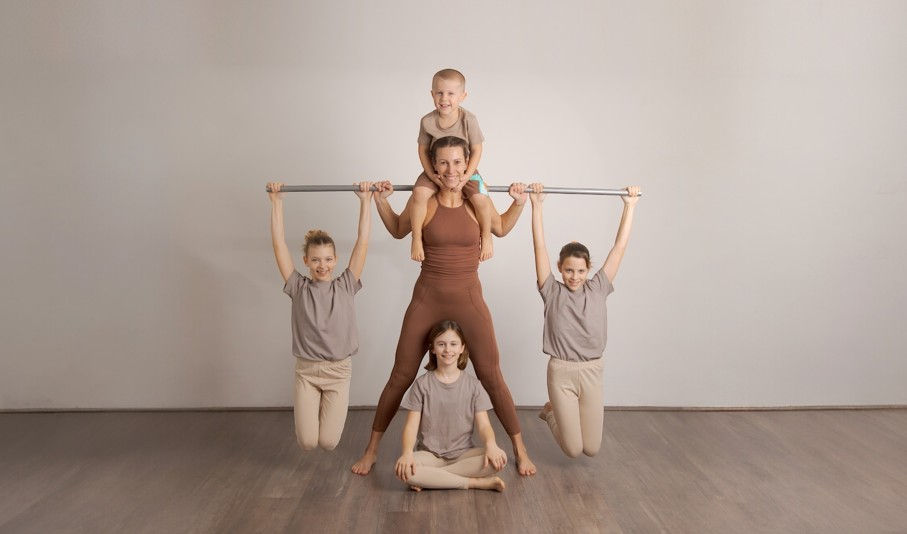
Nine years ago, I really started my own journey. With an active athletic background, I suddenly found myself “stuck” within the four walls of my home, raising premature twins. There were periods when simply finding the time and space to train felt like a huge challenge. Some nights, I honestly couldn’t even remember whether I had slept at all.
Yet, somewhere deep down, I felt that movement was exactly what I needed to recharge. That was one of my first big realizations. Movement can have value simply because it helps us reconnect with ourselves.
For many of us, exercise becomes another place where we feel we have to prove that we are good enough. Over time, I started seeing it differently. Movement became a tool that helped me feel more present in my own life. It gave me a way to reconnect with my body, pay attention to how I was feeling, and learn to recognize what I actually needed.
The biggest shift for me happened when the focus of movement moved away from how I looked and toward how I wanted to live.
I want to be the kind of person who takes care of herself today so that she can still experience the freedom of movement years from now. That is the essence of “Become Your Own Role Model.”
For me, it is a psychological reframing of my relationship with myself and how I choose to show up for myself.
The question is not only what you want to achieve, but who you want to become
Goal-oriented motivation can work incredibly well. I want to run a race. I want to get stronger. I want to lose weight. I want to get back into shape. I want to train four times a week.
For a while, these goals can be incredibly powerful. Then life changes. A stressful period arrives. A new job. A baby. Lack of sleep. Illness. Travel. Family challenges. Suddenly, the routine that worked perfectly before no longer fits into your life. That is when you really discover what place movement has in your life.
Research into physical activity identity suggests a strong relationship between how strongly someone sees themselves as an active person and how physically active they are. A 2025 systematic review and meta-analysis also found evidence that interventions can influence physical activity identity.
This matters to me because there is a completely different feeling behind saying, “I have to work out,” and saying, “I am someone who takes care of my body.”
One is a task. The other becomes part of who you are. This is where I see the power of an identity shift. Movement gradually stops being another item on the to-do list and starts becoming connected to the way we see ourselves.
What actually counts as movement?
We often think of movement as that one hour we spend in the gym. I see it much more broadly today. Walking, taking the stairs, playing with your children, doing housework, mobility work, structured strength training, or even spending an entire holiday running after your kids can all contribute to living a more active life.
Of course, these activities create very different levels and types of physical demand, so they should be understood accordingly. For me, the important part is making movement part of everyday life rather than limiting it to one designated workout.
A sustainable lifestyle is built through many small decisions. I encourage people to find forms of movement and activity that genuinely fit into their lives. A walk, a few minutes of mobility, or a shorter strength session can all become decisions that build long-term habits.
For me, consistency matters far more than performing at maximum intensity every single time. A sustainable lifestyle works because even on difficult days, we can find some way to stay connected to movement.
What happens to our nervous system?
Stress is more than a feeling. Our bodies respond to it through several systems, one of which is the hypothalamic-pituitary-adrenal axis, or HPA axis.
Movement itself also creates a physiological demand that the body has to adapt to. That is why our starting condition matters, as do exercise intensity, recovery, and the amount of overall stress already present in our lives.
During a stressful or sleep-deprived period, I think it is worth asking ourselves what we actually need before deciding what kind of workout to do.
I like to ask myself one simple question:
"What is my body capable of today?"
Maybe I have the energy for a challenging strength session. Maybe a gentler mobility session feels better. On another day, a walk or a few minutes of conscious breathing may give me exactly the connection I need.
Movement affects how our bodies function and how the body and brain communicate, and regular physical activity is closely connected with mental health.
Current evidence suggests that both aerobic and resistance exercise can have beneficial effects on depressive and anxiety symptoms. That is why I see exercise as an opportunity to support both my body and my brain.
Stress reduction through movement
When someone has been sleep-deprived for months, constantly performing, working, raising children, and carrying a heavy mental load, I believe the intensity of their training should reflect that reality.
This becomes especially important during the postpartum period, when the entire family is adjusting to a completely new rhythm.
For mothers, the postpartum period brings enormous physical and psychological changes. I see returning to movement during this stage as a process of relearning. We reconnect with the body, gradually rebuild capacity, observe how the body responds, and find forms of movement that genuinely work within our current lives.
Partners and other family members can also benefit from maintaining their own movement routines because the postpartum period involves adjustment for the whole family.
A 2025 systematic review and meta-analysis examined 35 studies involving 4,072 participants. The researchers found moderate-certainty evidence that postpartum physical activity can reduce the severity of depressive and anxiety symptoms, and the interventions studied were also associated with a lower likelihood of developing postpartum depression.
This is why I believe movement has an important place in postpartum recovery. Appropriate professional guidance, awareness of the current physical and psychological state, and gradual progression are equally important parts of the process.
My advice is to seek individualized professional guidance during the postpartum period and then gradually rebuild your training according to your body's current needs.
Breathing, mobility, and core stability
For a long time, we tend to treat these things as secondary. I see them very differently. When we slow down, pay attention to our breathing, control our movements, and learn to use our bodies with greater stability, we begin to sense ourselves again.
For me, this is an important part of nervous system regulation. Movement can also have a quieter, slower quality. During these sessions, pay attention to your breathing, the quality of your movement, your body's responses, and the way your physical sensations change throughout the practice.
Research on slow breathing has found associations with increases in vagally mediated heart rate variability, or vmHRV. HRV is one important physiological measure related to autonomic cardiac regulation.
This is why I like to look at breathing, mobility, and controlled strength work as part of the same bigger picture. They provide a different quality of stimulus and can help us become more aware of our bodies.
Strength training is about more than muscles
I love strength training because it gives you very concrete feedback. Your body can do something today that it couldn't do a few months ago.
I especially love exercises performed through a full range of motion. This is one reason I wanted to become a mobility coach. I see how simply exercise progressions can be built and how much can change through consistent practice, often without excessive strain and, more importantly for me, without pain. That feeling when you realize, “I can do this now,” is priceless.
Our bodies and nervous systems learn from these experiences, especially when movement becomes part of our lives over the long term.
Current evidence suggests that both aerobic and resistance exercise can have beneficial effects on depressive and anxiety symptoms.
That is why strength represents something much bigger to me than physical capacity. It is an internal message: I am capable of adapting, learning, and growing.
Routine is not a prison, it can be an anchor
For a long time, we associated routine with boredom. I see a well-designed routine as something that can actually create freedom.
I learned this very clearly through raising children. When every day is unpredictable, having a few habits you can automatically return to makes an enormous difference. Eventually, you stop having to make a decision about them every single time. They simply become part of your day.
The same thing happens with movement. When you regularly walk, work on mobility, strength train, or move in whatever way suits you, movement gradually becomes part of your self-image.
It starts to feel natural. I am someone who moves, takes care of my body, and does something for myself even when life isn't perfect. This is where movement begins to shift from a goal into an identity.
What if I don't have time?
Let's be honest: most of us deal with this every day. Lack of time is often a very real problem. Work, children, family, travel, household responsibilities, mental load. At some point, the day simply runs out.
When that happens, I simply redesign movement around the day I actually have. If I have an hour, I use it. If I have twenty minutes, I work for twenty minutes. If I have ten minutes, I do ten minutes of mobility. If all I have energy for that day is a walk, I go for a walk.
I believe in creating a system that can adapt to real life. That way, movement can stay with us through different seasons of life. For me, this is one of the foundations of a sustainable lifestyle.
A simple identity reframing exercise
For one week, try asking yourself this question before every movement session:
“What would the version of me who truly takes care of herself do today?”
This question helps you adapt your decision to the day you are actually having. If you have the time and energy, it might be a strength session. If you are more tired, you might choose a walk or a few minutes of mobility. If your body is asking for recovery, rest can be a conscious, caring decision.
This is where identity building begins for me. Every decision becomes a small confirmation of how you want to see yourself. When you listen to your body, move, recover, ask for help, or give yourself time, you reinforce a simple message:
“This is who I am. This is how I take care of myself.”
I believe this is one of the most powerful forms of identity reframing.
Frequently asked questions about movement and nervous system regulation
Can movement really help reduce stress? Research suggests that physical activity is positively associated with mental health, and both aerobic and resistance exercise can improve depressive and anxiety symptoms. Choosing the right level of training requires considering your current physical and psychological state.
What does nervous system regulation actually mean? I use it as a practical approach. I pay attention to my body's signals, adjust my training load, work with my breathing and movement control, and create enough space for recovery.
Can exercise support mental health? Yes. Current systematic reviews and meta-analyses suggest that both aerobic and resistance exercise can have beneficial effects on depressive and anxiety symptoms.
When should I start exercising again postpartum? Postpartum recovery is an individual process. Before returning to structured exercise, consult a doctor or appropriately qualified professional, particularly if you have experienced complications, pain, pelvic floor symptoms, or other concerns. Gradually rebuild your training load and pay attention to how your body responds. Recent meta-analytic evidence also supports the potential mental health benefits of postpartum physical activity.
How can I make movement part of a sustainable lifestyle? Start by deciding what kind of person you want to become. Then find movement and routines that genuinely fit your real life. Start small, create anchors, and allow consistency to gradually become part of your identity.
Become your own role model
Perhaps this is one of the most important shifts we can experience through movement. I love hearing other people's stories. I am inspired by people I can learn from. At the same time, it has become increasingly important for me to return to my own standards and my own path.
Build the kind of self-image in which you become your own role model. Become someone who takes care of herself even when motivation is low. Someone who can be strong when strength is needed and slow down when the body asks for it. Someone who can return to her routine after a missed workout and simply keep going.
That is why movement feels like a lifeline to me. It helps me reconnect with the one place where I will always be, my own body. Change starts in the mind. With a decision. With an honest choice. With the moment we begin to see ourselves differently.
Then come the everyday decisions. A walk, workout, ten minutes of mobility, rest day, and starting again. At some point, you realize that you are already living like the person you wanted to become. That is what Become Your Own Role Model means to me.
If you want to understand your body better, move with more awareness, and build a truly sustainable relationship with movement, stay with me. Education, community, and collaboration are all part of the same process for me: learning how to take care of ourselves while staying connected to the relationship that matters most–the one we have with ourselves.
Read more from Juca Csíkos
Juca Csíkos is the founder of ActiveMumLife, an Authentic Real Content Creator, and a certified Wellbeing & Mobility Coach. Her community of nearly one million followers consists primarily of active women and mothers who value movement, mental balance, and harmony between family life and personal wellbeing. Her work has been featured on international platforms such as Cosmopolitan, Shape, and Women’s Health, as well as in the Dove ReImagine campaign, highlighting her commitment to authenticity and self-identity.
PubMed References:
Intervention effects on physical activity identity: a systematic review and meta-analysis. PubMed – PMID 40008714
Impact of postpartum physical activity on maternal depression and anxiety: a systematic review and meta-analysis. PubMed – PMID 39500542
The Effects of Aerobic and Resistance Exercise on Depression and Anxiety: Systematic Review With Meta-Analysis. PubMed – PMID 40432290