Gurudev on Inner Peace, Human Connection, and Living With Purpose
Brainz Magazine Exclusive Interview
Gurudev Sri Sri Ravi Shankar is a global humanitarian, spiritual leader, and founder of The Art of Living. For more than four decades, he has shared practical tools for mental wellbeing, inner peace, and human connection with people around the world. His work has reached students, leaders, communities affected by conflict, and millions of volunteers committed to service.
In this interview, Gurudev shares why inner peace begins with recognising its importance, how confidence reveals itself when we are alone, and why meditation is not an escape from life but a way to recharge for it. He also reflects on division, service, artificial intelligence, and the qualities that can help us remain deeply human in a rapidly changing world.
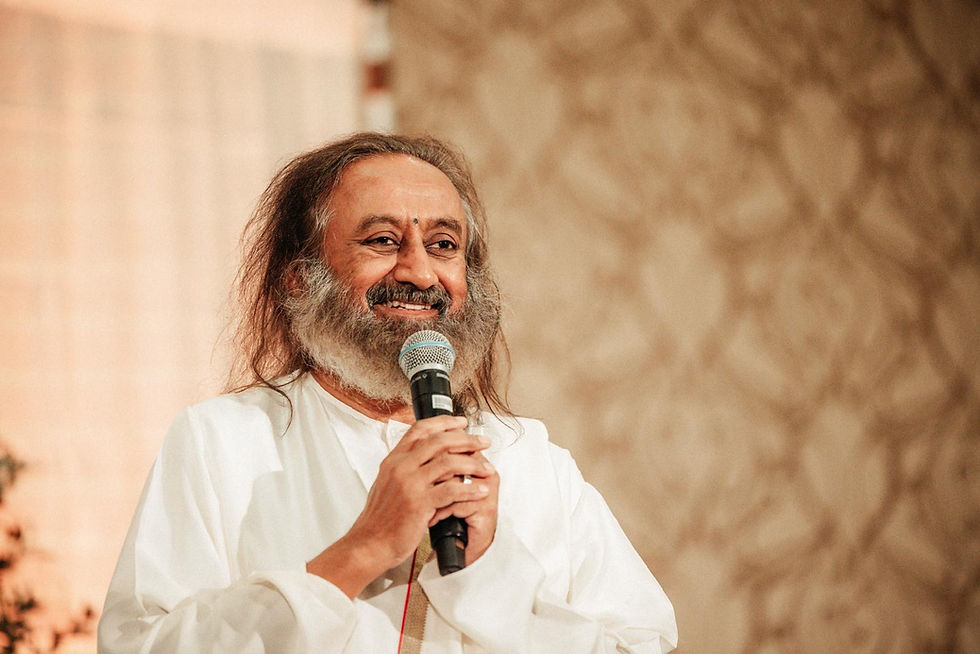
Gurudev Sri Sri Ravi Shankar, Founder of The Art of Living
Your work is built on the idea that peace in the world starts with peace within each person. What is the first step back to inner peace for someone who feels stressed, lost, or unsure of themselves?
First of all, recognise the need for peace in life. That may sound simple, but it is important. Many people live with stress for so long that they begin to accept it as normal. They continue moving, working, reacting, and carrying pressure without pausing to ask whether they are genuinely peaceful or happy.
The first step is to acknowledge that inner peace is not a luxury. It is a necessity. Once you recognise its value, you can begin to make space for it through rest, breath, reflection, meditation, and more awareness of how you are feeling.
What can our breath tell us about the state of our mind?
The breath and the mind are closely connected. When we are anxious, angry, rushed, or overwhelmed, the breath often becomes shallow or uneven. When we are calm and settled, it naturally becomes deeper and more relaxed.
Taking a few conscious breaths can create a pause between what happens around us and how we react to it. That pause is powerful. It gives us the chance to return to ourselves rather than being carried away by stress or emotion.
Even on a busy day, a few moments of stillness can help us reset. We do not always need to change everything around us immediately. Sometimes we simply need to reconnect with our own centre.
Many people appear confident online or at work, but privately feel they are not enough. What is the difference between real confidence and needing other people’s approval?
The difference becomes clear when you are by yourself. Ask yourself: Do I feel confident? Do I feel strong? Am I happy?
When a person has real confidence, their smile does not easily leave them. They are not constantly scared of what others think, and they do not need to perform for approval. Their confidence comes from within.
A lack of confidence eventually shows in our energy, in our face, and in the way we move through life. We may look successful from the outside, but feel insecure, tense, or disconnected inside. “When you are confident, the smile does not leave you.”
Real confidence is not about showing off. It is about feeling at ease with yourself.
We often hear people say, “Get to know yourself” or “Find yourself.” What does that actually mean?
People have made this idea sound very complicated. Some think they must leave their life behind, travel to the Himalayas, sit in a cave, or abandon all responsibility in order to find themselves. But self-awareness does not need to be dramatic.
Everything begins with you: your perception and your expression. If your perception is unclear, you may misunderstand others. If your expression is unclear, you may struggle to communicate what you truly feel or need.
Getting to know yourself means becoming more aware of your thoughts, emotions, reactions, strengths, and values. It means noticing what brings you peace and what takes you away from it. It also means becoming more honest with yourself, without judgment.
We can overcomplicate life, but there are also many people who remain simple, genuine, loving, and empathetic. That simplicity is something worth protecting.
You have worked in places affected by long periods of conflict. When the world feels divided and uncertain, what do people need most to move away from fear and conflict?
When people are pushed into an “either you are with me or against me” mindset, division only becomes deeper. What is needed are people who can stand with understanding on both sides, reduce misunderstandings, and bring people closer together.
That work requires a broader vision of life, as well as inner stability and inner strength. It is not easy. People who try to build bridges may receive criticism from every side. But they must be prepared to continue.
Peace is not created by making everyone identical or forcing everyone to agree. It grows when people are willing to listen, see beyond fear, and remember the humanity of those they disagree with.
After more than forty-five years of working with people around the world, what does a good life mean to you?
A good life is one in which you improve your own life and bring more happiness to the people around you.
Purpose does not have to be complicated. If we are becoming healthier, happier, kinder, and more useful to others, we are moving in the right direction. Life becomes more meaningful when our wellbeing is not only personal, but shared.
You have inspired more than one million volunteers. What makes people want to serve something bigger than themselves?
It is very natural. If you see a good movie, you do not keep it to yourself. You tell people, “Come, you have to see this.” When something makes you feel good, you naturally want to share it.
The same is true of a positive mindset. When you are happy, peaceful, and connected, you want others to experience that too. Service is not separate from joy. It is an expression of it.
“When you are in a positive mindset, you naturally want to share with everybody else.”
This is why service can be so powerful. It gives people a chance to move beyond themselves and contribute when others need support, whether through disaster relief, trauma care, community work, or simply acts of kindness.
As artificial intelligence changes how we work, think, and connect, what human qualities do we need to protect most?
I have three meanings for AI. The first is absence of intelligence, which unfortunately we see a lot. The second is artificial intelligence, which can be a useful tool to help us move faster and understand things better. But it should lead us towards a third kind of AI: authentic intelligence.
Technology should support our growth, not weaken our humanity. We need to protect our ability to think clearly, feel deeply, use good judgment, and connect genuinely with one another.
Artificial intelligence can offer information and speed, but it cannot replace presence, compassion, wisdom, or the human spirit. We must use technology as a tool while staying rooted in what makes life meaningful.
Burnout is so common, especially among people who care deeply about their work. What are the early signs that we are no longer working from purpose, but from pressure?
Think of the fuel gauge in a vehicle showing empty. That is the sign to stop and recharge. You cannot keep driving without fuel, and you cannot fill a moving car with petrol. You have to stop.
The same is true for us. When our energy, enthusiasm, patience, and joy are running low, we need to pause. Meditation is one way of doing that. It is like charging your phone: if you want it to keep working, you have to plug it in.
“You have to stop the car and fill it. In the same way, you have to stop.”
A short daily break can help us restore our energy and return to our responsibilities with greater clarity. Meditation is not about avoiding life. It helps us meet life with more strength, enthusiasm, and balance.
Gurudev’s message is ultimately a simple but important one: peace, confidence, and purpose are not things we need to search for far away from ourselves. They begin when we pause, listen, recharge, and remember that our wellbeing is connected to the wellbeing of others. In a world moving quickly through technology, uncertainty, and division, authentic intelligence may be the most valuable quality we can cultivate.
For more information about Gurudev Sri Sri Ravi Shankar and his work, visit his official website or connect with him on Facebook, Instagram, LinkedIn, YouTube, and X (Twitter).