Exclusive Interview With Netflix Co-Founder Marc Randolph - Entrepreneur And Best Selling Author
Brainz Magazine Exclusive Interview
Marc Randolph is a veteran Silicon Valley entrepreneur, advisor, and investor. As co-founder and first CEO of Netflix, he laid much of the groundwork for a service that’s grown to over 200 million subscribers, and fundamentally altered how the world experiences media. He also served on the Netflix board of directors until retiring from the company in 2003. Marc’s career as an entrepreneur spans four decades. He’s founded or co-founded six other successful startups, mentored hundreds of early-stage entrepreneurs, and as an investor has helped seed dozens of successful tech ventures (and just as many unsuccessful ones).
Most recently, Marc co-founded analytics software company Looker Data Sciences, which was acquired by Google in 2019 for $2.6 billion. He currently sits on the boards of Solo Brands, Augment Technologies, Dishcraft Technologies and the Truckee Donner Land Trust.
Marc is also the author of the internationally best-selling memoir, That Will Never Work: The Birth of Netflix and The Amazing Life of an Idea which tells the untold story of Netflix. He is the host of the top-10 Apple podcast That Will Never Work, where he works directly with entrepreneurs to provide 1-on-1 mentoring... Marc is also a judge and investor on Entrepreneur Magazine’s Elevator Pitch web series.
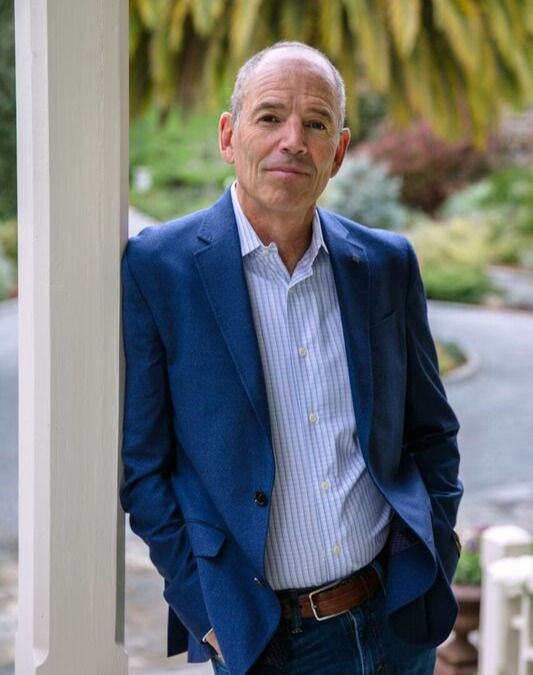
With a successful career as a serial entrepreneur, what does a normal day in your life look like?
The defining aspect of entrepreneurship is unpredictability. It’s just about as far away from a 9-5 job as it’s possible to be – but what that means is that there truly is no such thing as a normal day and that’s something I like. But the other critical aspect of entrepreneurship is that you are always under-resourced; there is always more to do than you have the time or people to take care of. And unless you’re exceptionally careful, it is just too easy to work all the time.
That’s probably why I’ve always been about balance. I’ve always carved out the time for the things I always felt were really important in my life. In my past what this meant was that sometimes I’d get up early a couple of hours before the family, but then I’d shut the lid and be there while my kids are up and getting ready for school.
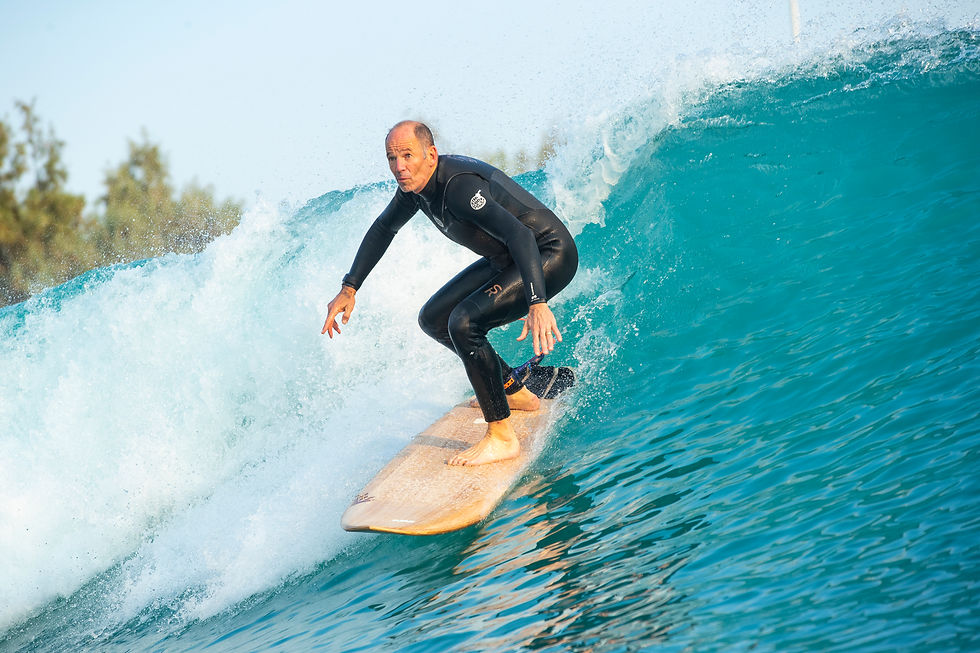
I learned it was possible to wake up at 5:00 am and get out to surf for an hour and a half, then be out of the water and in the office in time for my morning meetings. At Netflix, I would come home from 6-8:30 so I could have dinner, help put my kids to bed, and then get back to the office and work until midnight. From my experience, establishing this work-life balance is crucial. You have to carve out those blocks of time, because they won’t just magically appear.
What were the biggest challenges for Netflix in the early years?
When you’re building something from scratch, everything is a struggle. There are hundreds of challenges. From day one, we started finding that most of our assumptions were wrong. Just to pick one, when Reed Hastings and I first tested the idea of mailing DVDs to people, we simply mailed a CD in an envelope to Reed’s house, and it got there in one piece. But it turned out that this was a fluke. When we went to begin mailing DVDs for real, they were breaking, they were jamming the machines, and they were costing twice as much as we expected to mail. It ended up being more complicated than we ever imagined designing an envelope that could protect the DVD, serve as a return mailer, not get stolen, not get mangled, and do all of that for the price of a single postage stamp. After countless test runs, we finally found a way to mail DVDs and then we were off to the races.
You and Hastings met with Jeff Bezos in the early years of Netflix to seek investment, but turned down his offer on your way home. Tell us about that day, why did you and Hastings turn down his offer, and what was the “Elevator pitch” to get Jeff Bezos's eyes on Netflix?
There was no pitch; Amazon simply called us out of the blue. At that time Amazon was only selling books, but Jeff Bezos had made no secret of his desire to be ”The Everything Store” and that music and video were the next two categories. So when they called, It didn’t take much imagination to realize that they were interested in us to jumpstart their entry into video.
We flew to Seattle to sit down with Jeff Bezos, and it was really fantastic because – compared to us - he was already making things happen – he had real volume. You could see as we were talking that he was getting so jazzed up talking about the early days of Amazon. We were sharing stories about what our names were prior to launch. I shared that at Netflix our beta name was Kibble. Jeff told me he had originally wanted to name Amazon ”Cadabra,” which he thought evoked magic. However, his lawyer thought otherwise, saying it sounded too much like ”cadaver,” so that idea quickly got nixed.
The fact that Jeff Bezos was potentially interested in acquiring us was very validating. I named my book That Will Never Work because that’s what everyone told me when I pitched them the idea of renting DVDs by mail. So, if Jeff Bezos - the king of e-commerce at the time - was seeing potential in what we were doing, then we must have been doing something right.
But Reed and I thought it was too soon to sell the company. We (mistakenly) thought that most of our hard work was behind us. We felt that we had just gotten the engine to turn over – so we weren’t quite ready to hand the keys to someone else. It’s hard to say what would have happened if we had sold back then, but I can confidently say that the media landscape we see today would be vastly different.
"Maybe people would be asking each other to Amazon and Chill?"
What have you learnt as an entrepreneur during your journey with Netflix?
I’ve learned that there is no such thing as a good idea. Every idea is flawed. And once you accept that as a truth, it’s tremendously liberating, because no longer do you have to wait until you have a good idea. You just take whatever you’ve got and start; you build something, you try something, you sell something, you test something. I’m convinced you learn more in 10 minutes of doing it, than you do in 6 months of “studying the problem.” I’ve learned that it’s not about having good ideas. Instead, it’s about building a system, a process and a culture for trying bad ideas.
With that in mind, the early days of Netflix were one massive test. We were the first to mail DVD’s, we were the first to have a queue of movies, and we were the first eCommerce site with a subscription service. All of them were bad ideas that we tried anyway - and that’s an experience that I’ve carried with me throughout every single project since.
How many businesses are you involved in at the moment?
After Netflix, I did one more startup (Looker Data Sciences) but now I spend my time trying to help other entrepreneurs get their businesses off the ground. I’m currently working closely with 4 other startups, but every week I speak casually with at least half a dozen other entrepreneurs.
And as an investor, I do seed-stage investments in a dozen or so companies per year – and continue to provide advice to my portfolio companies.
But that’s just the companies I’m working directly with. My one-on-one mentoring sessions that I do on my podcast are listened to by more than 20,000 people per episode. And I reach tens of thousands more through my writing and social media activities.
What have been some of your best memories as an entrepreneur?
It’s funny, but my best memories come from those moments when things were the hardest, when our backs were against the wall, when we knew that if we didn’t fix things we would be out of business. There is something about the shared experience of being under fire that makes this the most exciting business in the world.
And as you can imagine, I have hundreds of those memories to fall back on.
As an entrepreneur who comes up with new business ideas on a regular basis, how do you know if one idea will be more successful than another?
My favorite saying is “nobody knows anything”. You simply can’t tell. And all the time you spend trying to ”figure out” if it’s going to be a success or not is wasted. You just have to try it. And the skill these days is not coming up with the idea – it’s how clever you can be about finding a quick, cheap and easy way to try it. Success is directly proportional to how many ideas you try – and the amount of ideas you try is directly proportional to how quickly, cheaply and easily you can try them.
You are the author of the internationally best-selling memoir, "That Will Never Work: The Birth of Netflix and The Amazing Life of an Idea". Tell us about this book, who is it for?
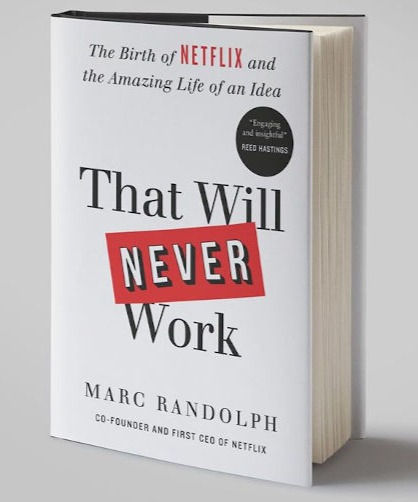
The truth is, I only started thinking of writing a book a couple of years ago, when I was giving a talk to a small group of passionate business owners. I was covering my usual topics — how nobody knows anything, how if you want to make a dream a reality, you have to get up and just start.
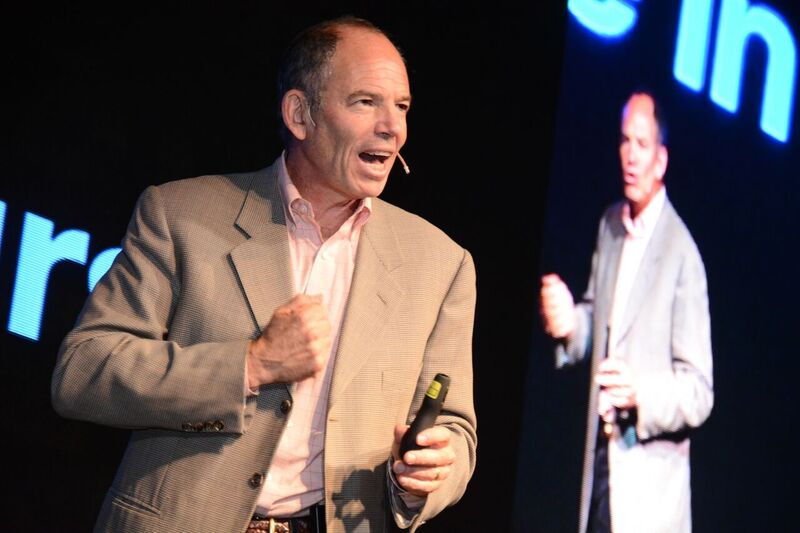
As I was standing there, I was thinking about how there’s a lot you can do with fifty minutes, a microphone, and five thousand butts in seats. You can boil down years of your life into a couple of easy-to-digest lessons. You can get a laugh. You can inspire. But you can’t tell the whole story.
I wanted to give this small group of people the type of in-depth help and insight that I usually could only provide over thousands of hours with the CEOs and start-ups that I mentored. I wanted to use my story of starting Netflix— the whole thing, warts and all — to show how a dream could make it from the inside of one’s head out into the real world.
So I decided to write a book about the thing I’m most passionate about:
How to turn a dream into a reality.
On June 7th this year, Marc will be releasing the paperback edition of That Will Never Work.
The That Will Never Work podcast is available on Apple, Spotify, Stitcher, and Google Podcasts. Listeners can apply to be on the podcast at https://marcrandolph.com/guest/.
FACT BOX

Name: Marc Randolph
Age: 64
Family: Wife and 3 children
Likes to do: Get outside – Surfing, Kayaking, Mountain Biking, Trail Running, you name it!
Dislikes to do: Argue
Favourite Netflix Show: Drive to Survive
Dream job when you were young: Advertising account executive