

Emotional Intelligence ‒ The Ultimate Super-Power For Today’s Leaders
Written by: Tara Sutorius, Executive Contributor
Executive Contributors at Brainz Magazine are handpicked and invited to contribute because of their knowledge and valuable insight within their area of expertise.

I recently had the privilege of co-facilitating “Mindsets and Behaviours” training for several hundred leaders. It was a career highlight for me. I witnessed countless profound moments where connections were made by participants who leaned in to learn about ‒ and embrace ‒ their emotional intelligence (EI).
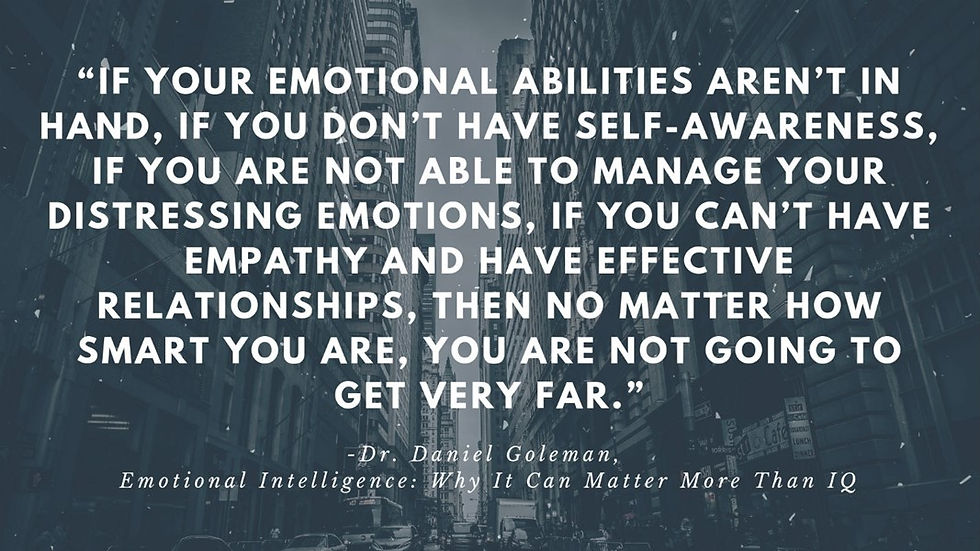
Renowned author and psychologist Daniel Goleman, defines EI as: “The ability to recognize, understand, and manage our own emotions, and the ability to recognize, understand, and influence the emotions of others”. I believe, today more than ever, EI is paramount to being an effective and inspirational leader who has the emotional tools to bring out the best in their people. In fact, many experts, like Goleman, believe EI is more important than IQ in a leadership position. So, what is EI in a nutshell? The model introduced by Goleman outlines the following competencies and skills that drive leadership performance:
Self-awareness – the ability to know one's emotions, strengths, weaknesses, drives, values, and goals and recognize their impact on others while using gut feelings to guide decisions.
Self-regulation – involves controlling or redirecting one's disruptive emotions and impulses and adapting to changing circumstances.
Social skill – managing relationships to get along with others
Empathy – considering other people's feelings, especially when making decisions
Motivation – being aware of what motivates them
To be an emotionally intelligent leader, one must understand, above all else, that emotions drive behavior and that we must “manage” our emotions and develop the values-driven mindset and behaviours this era’s leaders desperately need. The good news: Unlike your IQ, your EI is highly malleable, and will thrive quickly with a growth mindset. In other words, as you train your mind by repeatedly practicing new EI behaviours, it builds the reflexes needed to make them into habits that stick. If you are newer to the concept of EI or want to boost your leadership super-power, here are a few tips and tricks:
Experiment: The next time you are in a 1:1 with a team member, ask open-ended questions. Get curious and wait for the answers. Don’t jump to answer yourself. Your job is to give space to help others grow, not find all the solutions yourself. And bonus: you will likely learn something new or be challenged to think differently.
Reflect: Treat yourself to a nice new journal and record your EI experiments and the results. Did you know journaling is a proven EI booster? So, write down your thoughts, feelings, and observations and see if you can uncover any patterns or behaviours that are no longer serving you.
Analyze: Still not convinced that EI is your most important leadership super-power? Take a moment to analyze the opportunity cost to you, your team, and your organization if you don’t change behaviour. You’ll be surprised at how a less than desirable behaviour can quickly negatively impact you, your team, and your company.
Deposit: Start small. Choose 1 behaviour you are willing to shift to become more emotionally intelligent and bit by bit, like a savings account, these behaviors will compound over time to make lasting change for you, your team, and your organization.
Finally, remember it’s not your job to have all the answers as a leader of people. Rather, it’s your great privilege to be responsible for building a diverse, inclusive equitable, and talented team of people who don’t possess the same skills you have, but instead, have the necessary subject matter expertise and differing world views to ensure you can deliver relevant, sustainable, and impact-driven services, products and experiences for your customers and stakeholders. Happy exploration!
Tara Sutorius, Executive Contributor Brainz Magazine
As a certified professional coach trained with Erickson International Coaching, Barrett Values Centre and Career Joy, as well as an accredited PCC-level coach with the International Coach Federation (ICF), Tara Sutorius specializes in helping individuals better understand their personal core values so they may live a more purpose-driven life in alignment with what is most important to them in their personal and professional lives.
Tara is also the Director of Corporate Communications at Export Development Canada (EDC) and the founder of “Tara Sutorius Coaching and Wellness” – a coaching company offering compassionate, transformational and values-based personal leadership, career and wellness coaching. Working alongside senior leaders in both the private and public sector for over 20 years, Tara has a keen sense of what is required to be able to connect with one’s personal and professional leadership mission in order to effect meaningful change over the long-term and build greater resiliency both at home and at work.
What Tara loves most about coaching is helping guide individuals through powerful questioning and transformational conversations. Her coaching style is compassionate, action-oriented, motivational, connected and intuitive. She can help guide you to better align your values with your dream job, clarify your passions, set clear goals and take greater ownership of your career and overall wellness.


