Eco-Anxiety on the Rise and Here’s How to Solve It
Norm Leo is a climate scientist, speaker, and consultant who makes climate science easy to grasp and inspires confident action by highlighting the tangible benefits of climate solutions. He is also the author of "Look At It This Way," helping readers see climate challenges as opportunities for growth and impact.

Eco-anxiety is rising fast as people absorb a constant stream of alarming climate headlines. But fear alone doesn’t inspire action. Hope does. This article explores why climate anxiety is increasing, how it affects our minds, and how shifting the narrative toward solutions can dramatically reduce stress while empowering meaningful change.
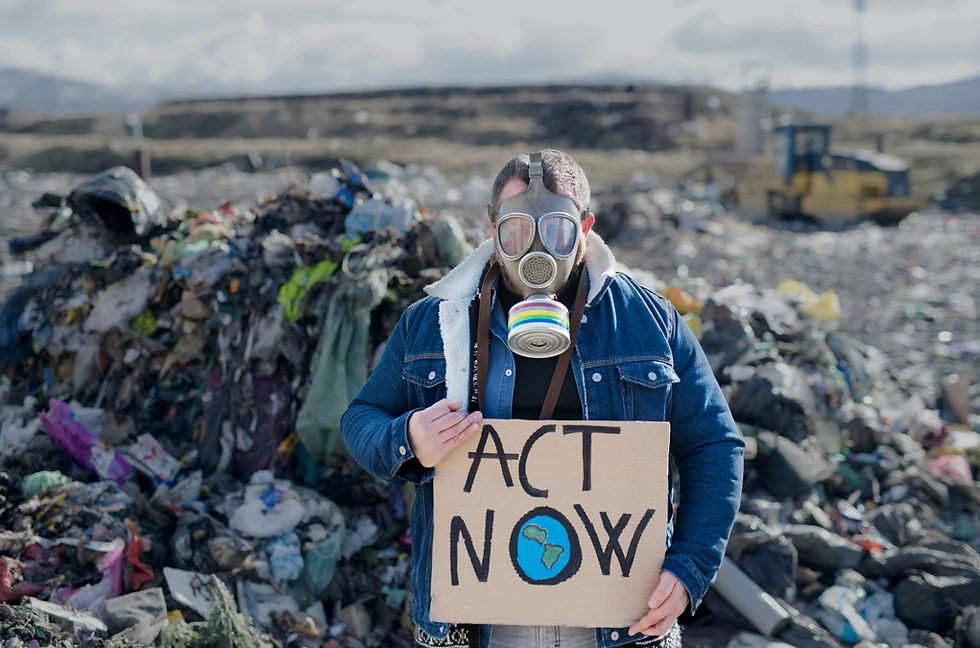
What is eco-anxiety?
Eco-anxiety is the persistent fear that environmental destruction will make life harder, shorter, or more unstable. It’s not a fringe concern. A global survey of youth aged 16 to 25 found that 62% experience eco-anxiety, and 67% feel sadness and fear when thinking about the future. [1]
This anxiety is rooted in lived experience. People watch basements flood repeatedly, breathe wildfire smoke, and see crops fail. To use a metaphor, “the Earth has a fever.” When someone we love has a fever, we act. But when the planet does, many people freeze, overwhelmed by the scale of the problem.
Why eco-anxiety is rising
Doom-heavy messaging: News outlets often highlight catastrophic climate impacts, including flooded homes, burning forests, and collapsing ecosystems. Research shows that fear-based messaging grabs attention but rarely inspires action. Instead, it leaves people feeling powerless. I’ve seen this firsthand. Many years ago, after teaching ninth graders about climate impacts, they left the classroom as if heading to a funeral. Fear without solutions shuts people down.
Climate change is no longer abstract: Climate predictions from numerical models used to feel far away. But now, most of us know someone who has experienced weird weather. A homeowner experiences a flooded basement five times, a woman's allergies worsen because pollen seasons get longer, and communities are displaced by wildfires. These aren’t predictions anymore. They’re lived experiences. When people see impacts up close, anxiety naturally rises.
Youth carry the heaviest emotional load: When young people hear descriptions of future climate impacts, they calculate how old they will be when those predictions come to pass and imagine experiencing those difficult conditions. For many, this leads to existential questions. A few years ago, a 16-year-old ran up to me and asked, “Should I have children?” She had absorbed so many catastrophic climate videos that she questioned whether having a family in the future was ethical.
How eco-anxiety affects mental health
Eco-anxiety can manifest as chronic worry, sleep disturbances, difficulty planning for the future, or a sense of helplessness. Some people experience grief for the natural environment they fear will disappear. Others avoid climate conversations entirely because the topic feels too overwhelming. But here’s the turning point. Eco-anxiety decreases when people learn about solutions.
Why fear doesn’t motivate action
My experience giving hundreds of presentations on climate change, along with what I’ve read in research on the psychology of climate communication, shows that fear-based messaging backfires. Most people either feel anxious or disengage. When people hear only about disasters, they shut down. Fear without efficacy leads to paralysis.
Here’s the good news. Talking about climate change impacts is only half the story. Hope paired with solutions leads to action.
The science of hope: How to reduce eco-anxiety
Shift the narrative from doom to possibility: A study of 1,486 middle school students found that hope about climate solutions increases pro-environmental behavior. Hope isn’t naïve. It’s strategic. When people believe solutions exist, their anxiety decreases and their motivation increases.
Focus on immediate co-benefits: My book, Look At It This Way, shows that climate action improves daily life right now. Cleaner air reduces hospital visits. Green cities lower stress and boost mental health. Renewable energy lowers electricity bills. Resilient infrastructure protects homes and communities. When people see personal benefits, eco-anxiety drops.
Highlight real success stories: Give hope-building examples, such as cities like Louisville, Kentucky, planting tens of thousands of trees [2], rooftop farms in Montreal, Quebec, feeding tens of thousands of families [3], and the citizens of Georgetown, Texas, saving $15 million thanks to renewable energy [4]. These stories prove that solutions are already working.
Reframe climate action as improving quality of life: For too long, climate activists have told people to make sacrifices, including less travel, less energy use, and less consumption. Although this helps solve climate change, it is not a great selling point. I see it quite differently. Climate solutions are not just necessary. They’re desirable. When people understand that climate action boosts health, wealth, and happiness, eco-anxiety can turn into optimism.
How individuals can ease eco-anxiety
Consume solution-focused media: When searching for “climate solutions” on YouTube, a ton of videos appear. They counterbalance doom with innovation and hope. There are also some amazing documentaries out there, such as:
2040 (by Damon Gameau, Madman Entertainment)
Tomorrow (by Cyril Dion and Mélanie Laurent, Mars Films)
We the Power (by David Garrett Byars, Patagonia Films)
Catching the Sun (by Shalini Kantayya, 7th Empire Media)
Kiss the Ground (by Joshua and Rebecca Tickell, Big Picture Ranch)
Take small, meaningful actions: Action reduces anxiety. Even modest steps, such as taking public transit, improving home energy efficiency, reducing meat consumption, and supporting local farmers, create a sense of agency.
Connect with others: Join a group of like-minded people who have projects to reduce our impact on the climate, such as community gardens, tree planting, and shoreline cleanups. Community is one of the strongest antidotes to eco-anxiety. Social ties increase resilience and even extend lifespan. When people act together, anxiety melts away.
Talk about climate change differently: Start conversations with, “Look at it this way.” Then share a solution, a health or wealth benefit, or a hopeful example. This reframing is powerful.
A hopeful future is already emerging
When we communicate the benefits of climate solutions, eco-anxiety decreases and eco-action increases. Climate change is man-made, which also means we have the capacity to solve it. We gain cleaner air, stronger communities, better food, safer water, resilient infrastructure, and a more peaceful world. Hope is not a fuzzy feeling. It is rooted in action.
Share a new way of talking about climate
If you enjoyed discovering a new way to talk about climate change to reduce eco-anxiety, you'll love my new book, Look At It This Way: Climate Change Solutions Will Benefit Your Health and Wealth, available on Amazon and in many other bookstores. A whole chapter is dedicated to food. Its unique reversible design makes learning about climate change more engaging, more visual, and a lot more fun.
If you are a professional who is trying to craft messaging that truly resonates without causing anxiety, whether you are a sustainability officer in a city, a project manager in a museum, or someone responsible for public engagement, my expertise is at your service. I help organizations communicate climate solutions in ways that inspire action, build trust, and connect with real people.
Read more from Norm Leo
Norm Leo, Climate Scientist, Keynote Speaker & Climate Communication Specialist
Norm Leo is a climate scientist and leading voice in climate communication, known for making complex environmental issues clear, relatable, and actionable. With over 2,000 presentations delivered worldwide, including TEDx, he helps audiences understand climate change without overwhelm or eco-anxiety. As the author of "Look At It This Way" and former Head of Science Education at the Biosphere, Environment Museum, he blends scientific expertise with innovative messaging techniques. Norm's talks empower entrepreneurs, executives, and organizations to navigate sustainability with confidence and clarity. His solution-oriented approach leaves audiences inspired to contribute to a more resilient future.
References:
[3] Lufa Farms:
[4] Guggenheim, B. (Producer), & Cohen, J. (Director). (2017). An inconvenient sequel: Truth to power [Film]. Paramount Pictures.