

Don’t Forget Your Bones – (Like I Did)
Updated: Jan 23, 2024
Written by: Laurie Levin, Executive Contributor
Executive Contributors at Brainz Magazine are handpicked and invited to contribute because of their knowledge and valuable insight within their area of expertise.

I certainly understood the concept "use it or lose it" as it applies to brain cells and muscles. I’ve come to understand—quite painfully so, that the same holds true for our bones. Use ‘em or lose ‘em. Our bones are vitally important in our daily lives and longevity. We couldn’t move without them. They protect our organs from injury and store minerals that our bones and body require.
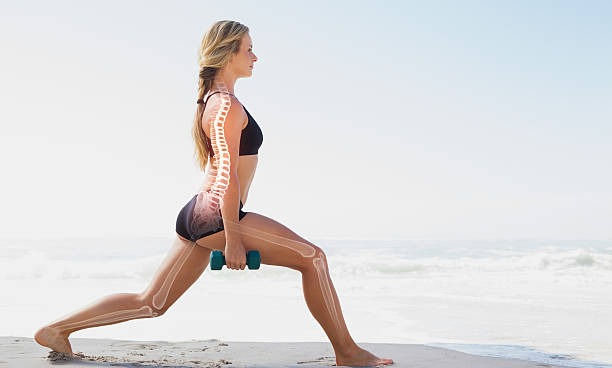
Osteoporosis is the most common form of bone disease. As a result of osteoporosis, bones become weak and brittle; either due to the body not making enough bone or losing too much bone. When this happens, bones are much more likely to break. In 2017-2018, almost 20% (19.6%) of women and 4.4% of men over the age of 50 had osteoporosis.
For those of us who have smaller frames and a low Body Mass Index, particularly women 50 and older, we haven’t had enough weight bearing down on our bones with each step taken over the years, as do people who carry more weight. Over time bones can thin without even noticing it until we begin to experience back pain, very painful muscle spasms, and less mobilization. Others of larger frames and weight certainly can get osteoporosis too. Calcium-draining activities are oftentimes why.
Fortunately, there is good news!
“Bones are living tissue which has their own blood vessels and are made of various cells, proteins, minerals, and vitamins. This structure enables them to grow, transform and repair themselves throughout life.” (International Osteoporosis Foundation)
I’ve been a Coach supporting clients to optimal health for twenty years. As a Certified Coach and HeartMath® Certified Coach, my expertise lies in the areas of nutrition, stress/anxiety reduction, and reaching and maintaining a healthy weight.
Two years ago, I was quite surprised to learn that my bones were as thin as they are. In fact, I had a couple of compression fractures. While I would have liked to have learned more about bone health from courses and books rather than pain and sleepless nights, I am thankful to be learning it now because the sooner the better when it comes to bone health. We can repair and strengthen our bones over time without taking medications that can do more harm than good.
So, first things first. Let’s eliminate calcium-draining activities:
High salt and sugar intake including soft drinks
Smoking
Alcohol
Caffeine
Meat and dairy consumption
Antacids
Unmanaged emotions and stress
Sedentary lifestyle
Not doing enough weight-bearing exercise
Not getting enough sunshine
Next, put in the good stuff:
Sunshine
Weight-bearing exercise
More plant-based calcium sources such as broccoli, kale, collards, mustard greens, Brussels sprouts, beans, prunes, figs, nuts and seeds, soy, almond butter
Stress-reduction tools like the HeartMath® techniques
You might have noticed, that dairy is on the calcium-draining list. That’s because cow’s milk is not a good source of bio-available calcium and it comes at a high cost—high calories, high acidity, saturated fat, and no fiber, a strong link to breast cancer, and obesity (The China Study by T. Colin Campbell). Stick with plant-based sources of calcium for strong bones, a healthy heart, weight, and an immune system.
Ongoing learning is also very important to support bone health over time. We can all fall back into routines that include bone-draining activities or lose sight of the bone-building activities we need to stick with for the rest of our lives.
Here are three resources to get you started:
Do I wish I could go back about two decades to implement more bone-building activities? Absolutely! What’s most important is to take action now, wherever you are in your health journey. Our bones need as much attention as other aspects of our health and well-being.
One of the most exciting things I’ve learned to reverse osteoporosis, the one that gives me great hope, is wearing a weighted vest for two hours each day and walking with it three times per week with hand weights. Research suggests we can reverse osteoporosis as we wear the vest, eliminate calcium-draining activities, and put the good stuff in. Take care of yourself—take care of your bones. That kind of support we cannot do without.
Laurie Levin, Executive Contributor Brainz Magazine
Laurie Levin is an author (Call Me A Woman: On Our Way to Equality and Peace) and Transformation Coach. She specializes in optimal nutrition, healthy weight loss, and the leading HeartMath® stress reduction techniques. She has been a featured speaker on each of these topics. Laurie has an MBA, is a Certified Coach, and HeartMath® Certified Coach, supporting clients globally to achieve their health and well-being goals. Her new book, Call Me A Woman: On Our Way to Equality and Peace, provides real-life experiences, global studies, and insights, and the 7 Habits of Equality that will reshape the world into one where all children have equal opportunities, from the beginning to the end of their lives. Healthy, Happy, Equal: It takes all 3 to thrive!







