Dogs Are Not Wolves
Written by: Alexandra Malone, Executive Contributor
Executive Contributors at Brainz Magazine are handpicked and invited to contribute because of their knowledge and valuable insight within their area of expertise.

How is the pack leader theory outdated and what should we do instead?
Since I started working with dogs many, many years ago, my philosophy of “dog training” has evolved. When I was young, the mainstream theory of dog training was the theory of the pack leader. As outdated as it is today, it is still evoked by many and taken as if it gives us, humans, the right to overstep boundaries and disrespect anyone else’s right to be.
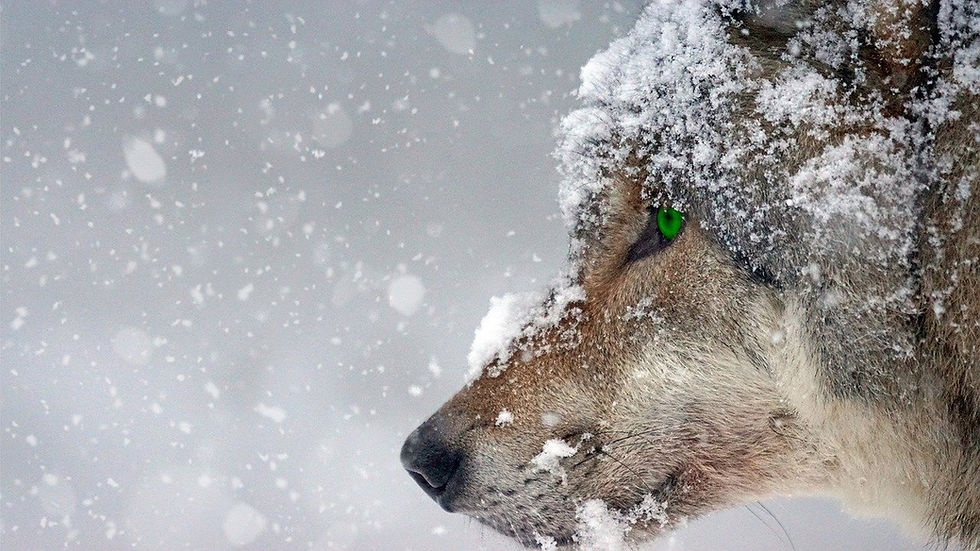
The pack leader theory is a misconception based on very old research which I will get to below (circa 1947). Now, if we really take note of the words, we should most certainly know that we could never be a pack leader to our dogs. Why? Mainly because dogs are not stupid, they know very well that humans are not dogs. And even if we were dogs, they don’t function according to the outdated theory. So where did this theory come from? In 1947, Robert Schenkel released an observational paper titled “Expressions Studies on Wolves”, where he describes his observations of wolves lodged at Basle Zoological Garden. His notion was based on the idea that wolves fight to gain dominance within a pack, hence becoming the alpha wolf.
When we dissect what Schenkel observed we find that he was observing captive wolves who were not familiarly related and were forced to live in an unnatural environment hence in very stressful conditions. These wolves could not behave naturally in a familial pack as they would in the wild. Any observations of behavior were skewed by unnatural conditions. These wolves were forced to adapt to poor conditions and their behavior was driven by the necessity of finding safety, ensuring survival, and reproductive success among other stranger wolves. This was a very dysfunctional and unnatural group of wolves.
Unfortunately, the theory stuck around for many years and was somehow adapted to dogs because they are descendants of wolves. Besides the very obvious that dogs (Canis Familiaris) are not wild wolves anymore (Canis Lupus) and even though they are technically the same species it still cannot be assumed they act in a similar manner. Dogs also know that humans are not dogs so we cannot pretend we are pack leaders and submit them to our will. Can we display leadership and help our dogs navigate this very stressful human world they are thrown into? Of course! And our leadership needs to be compassionate, fair, humane, fear-free, considerate, loving, and respectful.
Currently, a lot of research has been done on wolves in the wild and we now know that most wolf packs are composed of a pair of adult wolves (male and female aka the parents) and their offspring. The hierarchy of pack leader in the sense that was considered by Schenkel does not exist and the familiar relationships consist of freely offered submission as part of the family structure.
Humans use the concept of “pack leader” to justify “teaching” dogs by utilizing aversive and painful tools and violent methods to dominate and intimidate dogs into submission. It is not, however, necessary to use painful or aversive methods to teach dogs just as it is not necessary to use aversive methods to teach humans. By using aversive methods, we are not teaching a dog what we would like them to do, instead, we are punishing and instilling fear, not respect. Dogs have the same sense of respect as human toddlers do, meaning they don’t. When we try to teach anyone (dogs and humans alike) after punishing, we are doing a disfavor to the species because we did hurt them unnecessarily. Now, we can teach a dog (and/or a human) by showing them what we would like them to do. Let’s consider the following example:
If we want to teach a kid to open a door, we first show that kid how to open the door, then we start rewarding him/her for trying it out. The closer the kid gets to open the door the better reward he/she will get. If the kid misses it altogether, we ask him/her to try again.
If we want to teach a dog to sit, we show him/her how to do it by putting a treat in our hand and slowly going over the dog’s head so they follow the treat with their gaze and end up sitting. We reward the approximations until the dog is capable of doing it without having to follow the hand.
In both cases, we don’t need to punish the misses and instead, we do not reward the incorrect behavior. Both kid and dog will start making the association between the approximations and reward and they both will avoid the wrong behavior so they can get the reward.
There are several ways we can teach a dog a new trick: luring, shaping, desensitizing, sensitizing, and capturing. All of these methods are methods that can be and are used with humans as well.
Luring: we lure someone to perform a behavior by using a treat. As I mentioned above, we can lure a dog into a sit by placing a treat over his/her head until they offer a sit.
Shaping: similar to luring but in this case, we dissect the behavior in smaller pieces so they work on approximations until they get the behavior altogether.
Desensitizing: it’s used when we need to help a dog get used to stimuli, environment, people, other dogs, etc. In this case, we pair what the dog finds aversive with a positive reinforcer (high-value food, for example). The response to stimuli will decrease over time.
Sensitizing: it happens when a response to a certain stimulus is strengthened over time instead of decreasing, even in response to other stimuli.
Capture: in this case, we are not asking for behavior but we reward behavior that is offered by the dog. This is usually a behavior that was not taught and it is occurring naturally.
Methodology to positively change behavior in dogs abound and it works. Research in the field has suggested that the use of aversive training methods is not in any way more effective in changing behavior. In fact, studies have found that using aversive training methods (which includes positive punishment) can jeopardize bot physical and mental health of dogs. So, get that treat pouch from the closet and start rewarding your dog for what you would like him/her to do. It will pay off!
Alexandra Malone, Executive Contributor Brainz Magazine
Alexandra Malone is an accredited and certified dog trainer as well as a certified dog separation anxiety pro trainer and the Founder of The Yin Yang Dog.
She supports and coaches owners of dogs suffering from separation anxiety navigating the process of acclimating their dog to calmly staying home alone using systematic desensitization.
With over 20 years in the animal industry as a veterinary technician, boarding manager, certified dog trainer and separation anxiety coach, elite fear free certified professional, along with graduate work in psychology and anthrozoology, Alexandra has helped hundreds of owners and their dogs overcome behavioral challenges while focusing on their emotional wellbeing.
When she’s not helping owners help their dogs with separation anxiety, she’s probably working with her dogs, or creating oil and acrylic paintings.
Her motto: Keep calm and trust your dog.
References:
Gal Ziv, The effects of using aversive training methods in dogs—A review. Journal of Veterinary Behavior, Volume 19, 2017, Pages 50-60, https://doi.org/10.1016/j.jveb.2017.02.004
John W.S. Bradshaw, Emily J. Blackwell, Rachel A. Casey, Dominance in domestic dogs—useful construct or bad habit?. Journal of Veterinary Behavior, Volume 4, Issue 3, 2009, Pages 135-144, ISSN 1558-7878, https://doi.org/10.1016/j.jveb.2008.08.004.
Wendy van Kerkhove (2004) A Fresh Look at the Wolf-Pack Theory of Companion-Animal Dog Social Behavior. Journal of Applied Animal Welfare Science, 7:4, 279-285, DOI: 10.1207/s15327604jaws0704_7