Divine Timing or Delayed Action? Knowing When to Wait and When to Act
Tatiana Aleobua is a registered nurse, certified Reiki practitioner, and certified NASM wellness and nutrition coach with over a decade of medical experience that shaped the foundation of her holistic wellness business. She supports individuals through integrative mind, body, and energy-based care.

“Everything happens in divine timing.” For many people, this familiar expression offers comfort during periods of uncertainty, disappointment, and transition. It acknowledges that life does not always unfold according to our expectations and that some experiences require patience. Yet what happens when waiting becomes a habitual response rather than a temporary necessity? When hesitation is interpreted as divine timing, fear as patience, or avoidance as surrender, it becomes important to examine what is guiding our decisions.
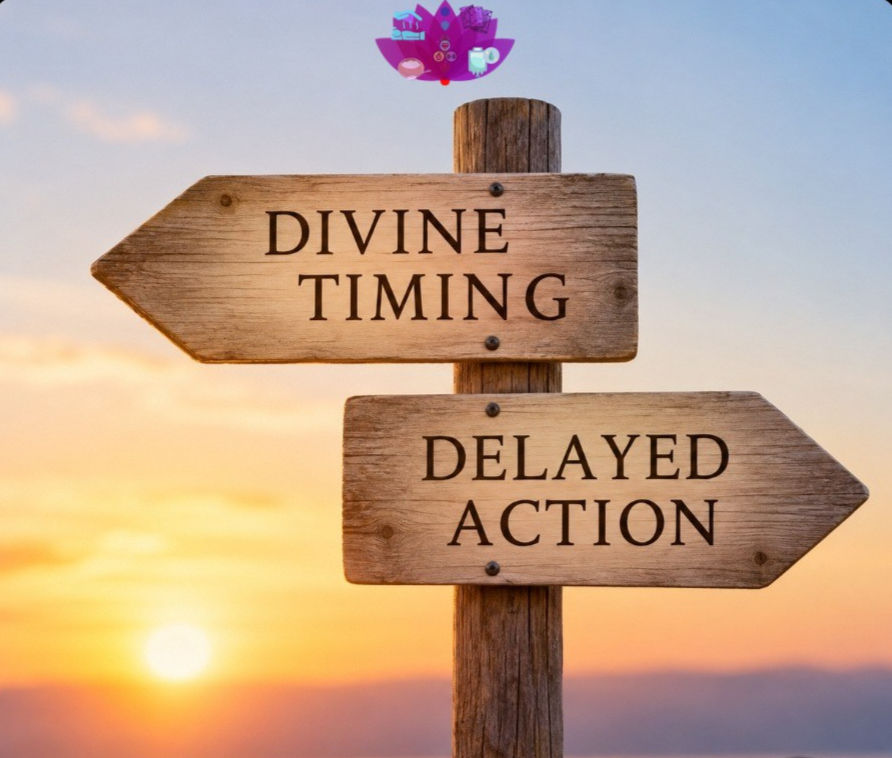
An important part of spiritual growth is learning to distinguish between trusting the process and declining to participate in it. Faith and personal responsibility need not be opposing forces; they can support one another.
Understanding divine timing
Divine timing is often understood as the belief that certain experiences, opportunities, and relationships unfold when the time is right. For those who embrace this perspective, it can offer reassurance when circumstances lie beyond their control.
Trusting divine timing, however, does not require passivity. An opportunity may call for preparation, a meaningful relationship may require emotional maturity, and greater financial stability may involve thoughtful planning and consistent effort.
Faith can sustain us through uncertainty, while action helps us prepare for the possibilities ahead. Each has a role to play.
When patience becomes procrastination
Patience allows us to tolerate uncertainty without demanding immediate results. There is nevertheless a meaningful distinction between giving something time to develop and repeatedly postponing the steps that could support progress.
Someone may aspire to start a business but delay developing a plan. Another person may want healthier relationships while avoiding difficult conversations about recurring patterns. Someone seeking financial stability may postpone reviewing spending habits or existing commitments. In each case, the question is whether waiting serves a practical purpose or leaves an important next step unaddressed.
These situations do not necessarily indicate a lack of faith or commitment. Fear, limited resources, and uncertainty about where to begin can all make action more difficult. Recognizing those obstacles allows us to approach them with compassion rather than judgment.
Personal growth involves acknowledging both the constraints we face and the choices available to us. A delay may call for continued patience, but it may also be an invitation to make a considered decision.
The role of fear in spiritual decisions
Fear is not always easy to recognize. It can appear in explanations that sound reasonable or spiritually reassuring:
“I am waiting for another sign.”
“I need to feel completely ready.”
“If it is meant for me, it will happen.”
“There must be a reason nothing is moving forward.”
These statements may express sincerely held beliefs. They may also serve as protective explanations that help us avoid the possibility of disappointment, rejection, or failure. The distinction lies less in the words themselves than in the motivations behind them.
Not every delay reflects avoidance. Health challenges, financial limitations, external circumstances, and personal responsibilities can create substantial barriers. These realities deserve acknowledgment, not dismissal.
When a reasonable action is available and fear is the main obstacle, however, indefinite waiting can keep us from pursuing what matters to us. Honest reflection can help clarify whether we are honoring our intuition or protecting ourselves from discomfort.
Faith and active participation
Faith can provide strength when an outcome remains uncertain. It does not, however, replace preparation, education, accountability, or practical decision-making.
Prayer for better health can coexist with seeking appropriate medical care. A vision of financial stability can be supported by a realistic plan. Belief in meaningful relationships can be expressed through healthy boundaries, just as a sense of purpose can be supported by developing relevant skills.
Spiritual beliefs can offer meaning and motivation, while intentional behavior gives those aspirations practical expression. The aim is not to control every outcome, but to take responsibility for the choices within reach.
Knowing when to wait and when to act
Not every situation calls for immediate action. Rest, reflection, healing, and preparation can be appropriate and necessary responses. Waiting may be wise when information is incomplete, emotions are overwhelming, or a decision requires careful consideration.
Waiting becomes less productive when it repeatedly prevents reasonable steps toward a meaningful goal. To assess the difference, consider three questions:
Which aspects of this situation are within my control?
What realistic step can I take with the resources and information currently available?
Am I waiting because patience is necessary, or because moving forward feels uncomfortable?
These questions encourage self-awareness without dismissing spiritual beliefs or individual circumstances. They create space for a response that is both thoughtful and practical.
Spirituality and personal responsibility
Spirituality can deepen our connection to our values and the world around us, encouraging compassion, gratitude, reflection, and a sense of purpose. Personal responsibility complements that connection by inviting us to examine how our actions reflect our intentions.
We may seek peace while continuing to engage in unnecessary conflict. We may want change while holding tightly to familiar patterns, or desire growth while resisting the uncertainty it brings. Recognizing these tensions is an opportunity for honest reflection.
Accountability need not involve shame or blaming ourselves. It means acknowledging where we have influence and making choices that more closely reflect our values, while remaining compassionate toward our limitations.
Final thoughts: Trust the timing, honor your responsibility
Divine timing and personal responsibility need not be opposing forces. Faith can provide the courage to continue without certainty, while thoughtful action allows us to participate in meaningful change.
Some experiences genuinely require time, and some circumstances remain beyond our control. In other situations, progress begins when we stop waiting for perfect conditions and take a realistic first step.
You do not have to force what is not ready, rush your healing, or control every outcome. You can remain present, prepare within your capacity, and act when an appropriate opportunity arises. Trust the timing of your life while honoring your responsibility to participate in it.
Read more from Tatiana Aleobua
Tatiana Aleobua, RN, Reiki Practitioner, Wellness & Nutrition Coach
Tatiana Aleobua specializes in nervous system regulation and burnout recovery, a focus shaped by her own journey of healing chronic stress and burnout. As a holistic and spiritual nurse, she blends clinical knowledge with mind, body, and energy-based practices to support sustainable healing. As the founder of Wholistically Yours LLC, she helps individuals restore balance, clarity, and long-term vitality through approaches grounded in both experience and care.