

Chakras ‒ How They Affect Every Aspect Of Your Life
Updated: Jul 13, 2022
Written by: Stacey B. Shapiro, Executive Contributor
Executive Contributors at Brainz Magazine are handpicked and invited to contribute because of their knowledge and valuable insight within their area of expertise.

Do you feel stuck, stressed, or overwhelmed? Well, you might need to have your chakras balanced. But, what are chakras? Why do you need chakra balancing? What does any of that really mean? As an intuitive coach, I understand that it all sounds confusing at first.
Chakra is a Sanskrit word that means “wheel” or “circle.” Chakras are part of a system of energy centers within the human body, according to Eastern traditions. They are located in specific areas of the body and govern different aspects of our life.
What Are the 7 Chakras?
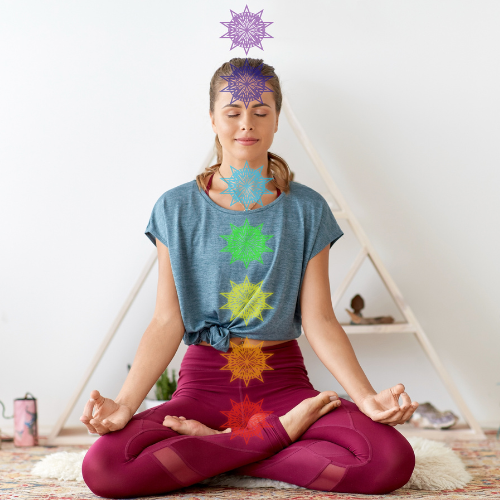
The seven major chakras can be activated to promote physical, mental, and emotional well-being:
Root Chakra (Muladhara): Located at the base of the spine, this chakra is associated with our sense of security and belonging to something greater than ourselves. These are our foundational needs for survival.
Sacral Chakra (Swadhisthana): Located below the navel, this chakra is associated with sensuality and creativity.
Solar plexus Chakra (Manipura): Located in the stomach area, this chakra is associated with confidence and power.
Heart Chakra (Anahata): Located in the center of the chest, this chakra is associated with love and compassion for oneself and others.
Throat Chakra (Vishudda): Located in the throat, this chakra is associated with speaking our truths and protecting our voice.
Third eye/brow Chakra (Ajna): Located near the bridge of the nose, this chakra is associated with inspiration and creativity through concentration on the inner world of symbols, ideas, and meaning.
Crown Chakra (Sahasrara): Located at the top of the head, this chakra is associated with enlightenment and connection to our spiritual nature and higher purpose.
How Do Chakras Affect Our Bodies and Mind?
Even though each chakra has a physical association with the body, this view can be limiting in its definition of chakras. They all play a part beyond their anatomical associations. The seven chakras are seven centers of metaphysical energy—subtle energy.
Each one vibrates in a circular pattern to funnel energy from a larger source of collective energy into our bodies. When a chakra is blocked, subtle energy can’t flow into our bodies. This causes problems for the blocked areas.
A 2016 study shows the traditional central nervous system (CNS) model can be cross-referenced with a subtle energy model (the chakra model system) to exhibit a rigorous system of how we can approach meditative practices.
Chakras have also been a subject of interest in psychology. The chakra system has also been compared to Maslow’s hierarchy of needs. Anodea Judith made this connection in her book Eastern Body, Western Mind.
Maslow's hierarchy of needs is a motivational theory of needs to be fulfilled. The hierarchy is made up of five levels:
Physiological: This is about the most basic need and includes things like food and water. This aligns with the root chakra.
Safety: The safety needs are next and include security from physical and emotional harm. This aligns with the sacral chakra.
Social: Social needs include love, friendship, family relationships, and sexual intimacy. This aligns with the solar plexus chakra.
Esteem: This includes self-esteem as well as respect from others. This aligns with the heart chakra.
Self-actualization: This includes personal growth, independence, and a higher purpose. This aligns with the throat, third eye, and crown chakras.
Judith also noted the connection between the chakra system to Erik Erikson’s theory of eight stages of psychosocial development. Further research has also presented the chakra model as a system of lifespan development.
What makes the subtle energy model of chakras different is the connection to the body and the mind because chakras are optimally placed on meridians, which channel subtle energy.
Why Do Chakras Need Balancing?
Chakras are all related to one another and work together interdependently—like a plant connected to its roots, stem, leaves, and flowers. For it to grow, it needs sunlight, water, and nutrients. In our case, to grow and thrive, we need to properly channel subtle energy through our bodies—without blockages.
The primary function of each of these seven centers is to integrate different aspects of our being, including physical, emotional, mental, and spiritual components into a cohesive whole. So, why do people balance their chakras? They do it to get better aligned. For example, if your root chakra is blocked, this could manifest as feeling insecure, like you’re on shaky ground, or unstable in your professional life.
As an intuitive coach, I help remove blockages from my clients to allow for a free flow of subtle energy. That’s how intuitive coaching helps my clients. Reach out if you want to feel more centered, more safe, or looking to increase your intuitive skills.
Do you want to create a work-life balance and overcome stress? Connect with Stacey on Facebook, Instagram, and Linkedin or her website.
Stacey B. Shapiro, Executive Contributor Brainz Magazine
Stacey Shapiro is a Transformative Life/Work Balance Coach, Energy Healer, and Speaker. With a Master in Social Work from Rutgers University, she went on to improve the lives of many with over 20 years of experience working as a trauma-informed mental health therapist. She has also extended her support as a business consultant for service providers. She hosts therapist and corporate workshops to give attendees the tools to live a balanced professional and personal life.
Shapiro went on to expand her expertise to gain certification as a Master Life Coach, Spiritual Mentor, Relationship Consultant, and Health and Wellness Practitioner from the Behavioral Health and Leadership Dynamics coaching school. In addition, she is a Board Certified Hypnotherapist. Passionate about healing and helping others overcome obstacles, she provides compassionate, practical guidance for anyone who feels stuck, disconnected or unfulfilled through her private practice Awareness Coaching LLC.


