Can Learning to Cook Change the Way We Consume? – An Interview with Donna Goldman
Donna Goldman, creator of Recipes 4 Survival and Director of The Refill Revolution, helps people build confidence in the kitchen while making more thoughtful use of food and resources. Her approach took shape after working on Peter Gabriel’s first North American WOMAD tour, when a simple breakfast prompted her to reconsider what it means to feel nourished.
In this exclusive interview, Goldman shares how basic knife skills, familiar pantry staples, and a willingness to improvise can make home cooking more manageable. She also explores the connection between mindful meals, less waste, and the wider changes needed to make refill and reuse systems part of everyday shopping.
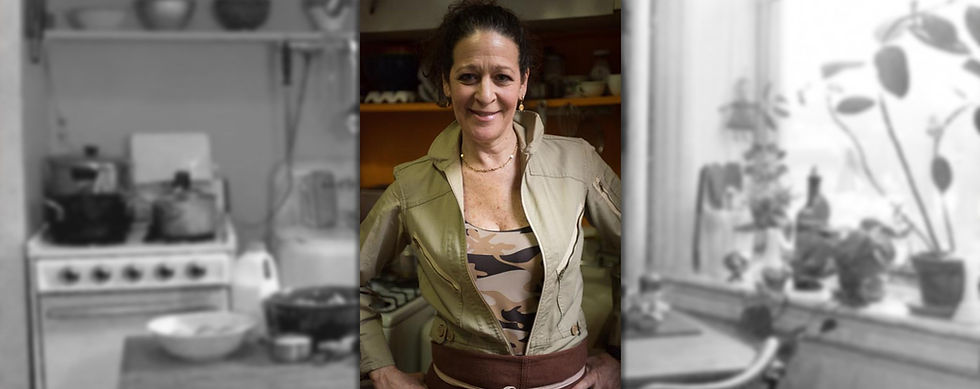
Donna Goldman, Culinary Intuitive & Refill Revolution Director
What first led you to see cooking as more than a practical skill and as a way to live more mindfully?
What first led me to see cooking as something other than a practical skill and more as a way I could live more mindfully was when I had my first aha moment the morning after I finished working on Peter Gabriel’s first North American World of Music, Arts and Dance (WOMAD) tour and I made myself a simple breakfast of toast with peanut butter, spun honey, and a cup of tea at a friend’s place in the hills of Oakland, California, where I realized that, even though I was surrounded by catering and anything one would want was made available at the ready, I never felt satiated. Something was missing, and it wasn't simply about the food. That experience prompted me to look more closely at what it means to nourish ourselves and how our relationship with food affects our overall sense of well-being.
This hunch became the catalyst for Recipes 4 Survival, Utilitarian Cooking and Much More, which began as a public access show on the Manhattan Neighborhood Network in April 1997. What started as an exploration of utilitarian cooking gradually grew into a broader philosophy: maintaining basic staples and cooking seasonally with organic ingredients could help hone one’s mindfulness practice and develop one’s intuition and creativity, building confidence not only in the kitchen but in everyday life.
Cooking is a surefire way to ground oneself and come into the present moment. All our senses are engaged, which invites creativity and teaches us to trust our instincts. In other words, I feel a connection to the energy of unlimited potential, which I think of as channeling Source energy.
I want people to discover that cooking isn’t merely another task on the daily list of things to do. It’s a mindfulness practice, an exercise in resourcefulness, and a way to nourish ourselves and others with greater intention.
How do you help someone develop culinary intuition and trust their own instincts in the kitchen?
I always begin a cooking session by encouraging my clients to engage all six of our senses, and maybe even more. We look, smell, listen, taste, and touch. I also explain that cooking is a much more creative venture than simply following a recipe.
Recipes are valuable guidelines, but they rarely account for the realities of an individual cook’s skill level, attention span, equipment, nutritional knowledge, or personal preferences. These are just a few of the variables that can make following a recipe challenging.
Once someone feels confident with a few basic knife skills, I’ve given them the fishing pole to go after whatever they wish. Every one of my clients experiences a shift in mindset after a knife skills lesson lasting an hour with me.
As the familiar proverb suggests, “Give a man a fish and you feed him for a day. Teach a man to fish and you feed him for a lifetime.” That’s precisely what I want my Cutting Edge 101 and Kitchen Confidence workshops to offer: not just recipes to follow, but the practical skills and confidence to create meals independently, trust their instincts, and become resourceful in their own kitchens.
My goal is not simply to teach someone what to cook, but to help them understand how to think in the kitchen. That independence is where culinary intuition begins.
Where do you think modern convenience culture has most changed our relationship with food and cooking?
I’m sorry to say it, but I see convenience culture going hand in hand with what I call the throwaway mentality, and I think it’s utterly unhealthy. When takeout and prepared, packaged meals become the norm, I worry that people lose their connection to the food they eat and confidence in their ability to feed themselves holistically. Cooking and grocery shopping can begin to feel like burdensome chores, when they can actually help us develop practical skills, creativity, and greater independence.
An organized kitchen and a few reliable techniques can make home cooking surprisingly manageable, even in a small space with limited equipment. We don’t need elaborate meals. We need practical skills, flexible thinking, and a willingness to start where we are.
What needs to change beyond individual habits for refill and reuse systems to become part of everyday consumer life?
First off, meaningful change requires businesses to design containers and packaging to be refilled and reused. Large retail stores could dedicate space to refill stations that become vibrant community hubs, making reuse a convenient part of everyday shopping.
Through my work as director of The Refill Revolution, I want to help advance a model in which people pay for the product they need rather than repeatedly paying for packaging that quickly becomes waste. Ultimately, the goal is to make reuse part of the infrastructure of everyday life, not an extra responsibility reserved for people who already have the time and resources to pursue it.
What is one simple kitchen habit that can make someone both more resourceful and less wasteful?
When I’m asked what a beginner habit could be to inspire mindful cooking, I typically respond with, “It’s great to know what YOUR arsenal of basic staples is.” Then, what’s in your fridge or freezer will guide your grocery shopping trip and really help to cut down on the overwhelm. Know what you have, and you’ll begin to see the possibilities.
This way, when you see a dish or recipe that inspires you, you know you can give it a go with staples you feel comfortable working with. Instead of seeing staple vegetables, a jar of rice, or leftover grains as unrelated odds and ends, you know you can make something. Hearty vegetables and some fruits can make great soups. Changing up a dressing with tahini instead of Dijon can make a dish completely different. A stale baguette can become French toast just as easily and quickly as it can become pappa al pomodoro or Parmesan breadcrumbs for a great pasta dish.
It also helps you shop more economically because you’re purchasing what you need rather than buying ingredients without a plan. I encourage people to think of recipes as flexible frameworks. Once you have basic knife skills and a few cooking techniques under your belt, you can adapt a dish to the ingredients you have available. Resourcefulness is about recognizing the value in what we have, using our creativity, and wasting less.
How can home cooks reduce their reliance on packaged foods without making cooking feel complicated or restrictive?
It’s funny: just as I started working on these interview questions, a New York magazine article titled “Eating Dinner in New York’s Prepared Food Boom” landed in my inbox and immediately grabbed my attention. The article described an influencer who treats shopping for prepared food as a hobby. I’ll spare you the gruesome details of this lengthy article, but this, combined with my natural disdain for feeding into the disposable, throwaway mentality of whatever generation happens to be trending, reinforces just how vital the message I want to share has become.
The impetus for my latest iteration of Recipes 4 Survival, Mindful Meals & Sustainable Living, came from reading the ingredient labels on everything. Scary! Take breakfast cereals, for instance. Many contain added vitamins in the form of supplements I’d rather avoid. Now I make granola once a week. It takes about five minutes of active time to mix the ingredients and spread them on a tray, followed by roughly 20 minutes in the oven. I use natural ingredients that I can buy in bulk at a more economical price.
Yes, cooking takes some time, but I believe your heart and soul are better served by spending that time this way than by running into a store for a packaged dinner in a throwaway container. Much of that packaging can remain in landfills for a long time, regardless of how compostable it may claim to be.
Take hummus, for instance. Homemade hummus is so much tastier, takes very little effort, and uses wonderful, basic, nutritious staples. In about 20 minutes, you can have it made in your own home, with your music playing, feeling calm and clear, while avoiding another plastic container.
Recipes 4 Survival, Mindful Meals & Sustainable Living is here to demonstrate that sustainable cooking has nothing to do with perfectionism. It’s about making thoughtful choices that work in real life.
What does your philosophy of “cook more, spend less, and live mindfully” mean to you today?
These three ideas, “cook more, spend less, and live mindfully,” are interconnected. Cooking more gives us greater control over what we eat, how we prepare it, and how we use the ingredients we purchase. Spending less is about getting more value from what we buy, reducing waste, and developing skills that make us less dependent on expensive convenience options.
Living mindfully means paying attention to the consequences of our choices. Where did our food come from? Are we supporting farmers and producers whose practices align with our values? Are we buying more than we need?
This philosophy is also about empowerment. Knowing how to feed yourself is a fundamental form of independence. When we become more resourceful in the kitchen, we can make choices that support our health, our finances, and the environment. We begin to recognize that ordinary routines can become opportunities for meaningful change.
Through Recipes 4 Survival, I want “cook more, spend less, and live mindfully” to serve as a guiding philosophy people can put into practice every day. Mindful living doesn’t require perfection, a large kitchen, or an unlimited budget. It begins with awareness and grows through the everyday decisions we make.
What is one change you hope people make in the way they eat, shop, or consume after encountering your work?
I hope to inspire people to pause and ask themselves two simple questions before making a purchase: “Do I really need this?” and “Is there a more thoughtful way to meet that need?” This applies to more than food. I think about it when I see how easily we can fall into habitual spending. How many white shirts do I really need? Sometimes, the more meaningful choice is to use what we already have.
When it comes to eating, rather than grabbing food to go, ordering takeout, or dining out, start simply. Make yourself eggs any style you like, starting with scrambled. Steam a sliced potato. Brew a cup of tea or coffee, and take your time enjoying it at home. These small acts of caring for yourself can make a surprising difference in how you feel about yourself and how you approach the rest of your day.
Choosing groceries at a farmers market or a product without unnecessary packaging can also be a more thoughtful choice without sacrificing pleasure or quality. I recognize that not everyone has access to these options. I’m sharing possibilities, not prescribing a set of rules.
My work brings together cooking, mindfulness, and sustainability because I see them as connected expressions of resourcefulness and independence. The kitchen is a wonderful place to begin: it’s tangible, familiar, and full of opportunities to make different choices every day.
Ultimately, I hope people feel more capable and less overwhelmed. Whether they become more confident cooking for themselves, waste less food, spend more thoughtfully, or begin questioning our disposable culture, that’s meaningful progress. Individual actions matter, especially when they inspire others and help create demand for better systems.
Read more from Donna Goldman