Building Student Confidence Through Personalized Education – An Interview with May Chahine
Combining engineering expertise, research, and a passion for education, the founder of Tutorat Excellence is redefining academic support through personalized learning and a deeper understanding of each student's needs. In this interview, she shares how confidence, inclusive teaching, and the right learning strategies can help students overcome challenges, excel in STEM, and discover their full potential.
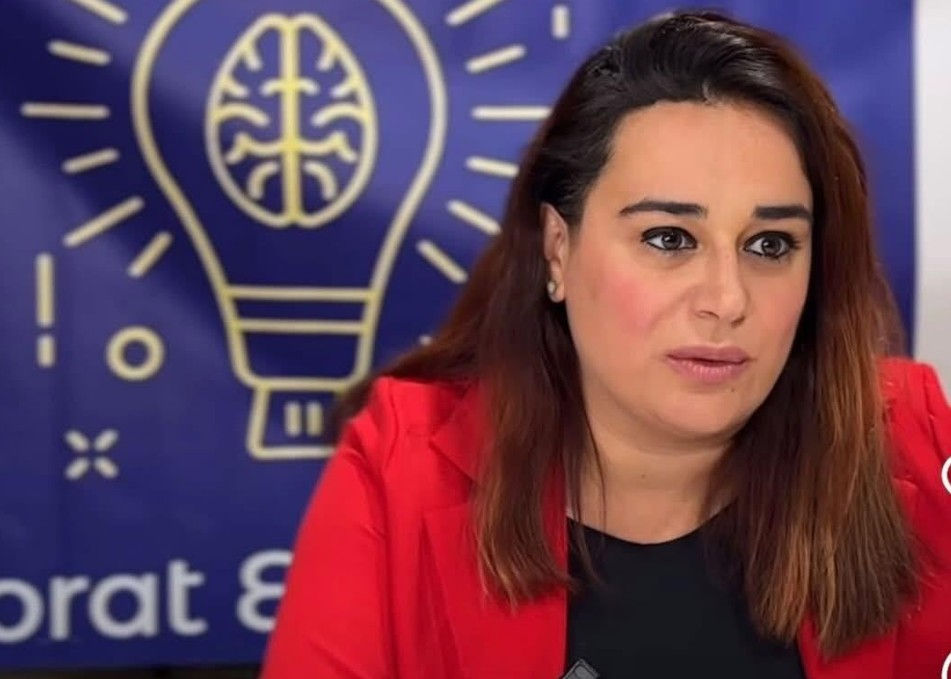
May Chahine, Mechanical Engineer
What drew you to build a career that combines engineering research, teaching, and personalized education?
Curiosity, passion for knowledge, and the desire to make a meaningful impact have always driven my career. Engineering taught me how to understand complex systems, research taught me how to challenge existing knowledge, and teaching gave me the opportunity to share that knowledge. Founding Tutorat Excellence was a natural evolution of this journey, allowing me to combine scientific expertise with my passion for education and human development.
What did your research on combustion and flame behavior teach you about solving complex problems in a structured way?
My research on combustion and flame behavior taught me that complex problems require patience, precision, critical thinking, and adaptability. It reinforced the importance of breaking problems into manageable components, identifying underlying mechanisms, testing hypotheses, and continuously refining solutions. These principles extend far beyond engineering and are equally valuable in education, entrepreneurship, and everyday life.
How has your engineering background shaped the way you assess and support students at Tutorat Excellence?
My engineering background allows me to approach learning difficulties analytically and strategically. Rather than focusing solely on a student’s mistakes, I seek to understand their root causes. I believe effective academic support begins with identifying knowledge gaps, understanding individual learning needs, and developing personalized strategies that encourage measurable and sustainable progress.
Where do traditional teaching approaches most often fall short for students who learn differently?
Traditional teaching approaches often assume that students learn at the same pace and respond to the same methods. However, every student has a unique combination of abilities, challenges, and ways of processing information. Education becomes more effective when we adapt our teaching methods to the student rather than expecting the student to adapt to a rigid educational model.
Why do you think confidence can be just as important as subject knowledge when helping students succeed in STEM?
Many students struggle with science, technology, engineering, and mathematics (STEM) not because they lack intellectual ability, but because they have developed a fear of failure. Confidence encourages curiosity, persistence, and the willingness to take intellectual risks. When students begin to believe in their abilities, they become more comfortable tackling complex problems and viewing mistakes as opportunities for growth rather than limitations.
How do you decide when a student needs a different explanation, pace, or teaching approach?
I believe effective teaching begins with observation and active listening. A student’s hesitation, frustration, recurring mistakes, or inability to apply a concept independently can indicate that a different approach is needed. I adapt explanations through visual representations, practical examples, real-life applications, and progressive exercises until the student develops genuine understanding rather than simply memorizing information.
What have you learned from working with special-needs and immigrant students about creating more inclusive learning environments?
Working with students with special educational needs and those from immigrant backgrounds has reinforced my belief that educational equity does not mean offering everyone the same support, but providing each student with the support they need to succeed. Language barriers, cultural transitions, and learning differences should never define a student’s potential. Empathy, flexibility, patience, and personalized instruction are essential to creating an environment where every student feels valued and capable.
What principle guides you most when balancing academic rigor with creativity and enjoyment in learning?
I strongly believe that excellence and enjoyment are not mutually exclusive. Academic rigor provides structure and discipline, while creativity stimulates curiosity and engagement. My guiding principle is to make learning both challenging and meaningful. When students understand the relevance of what they are learning and enjoy the process of discovery, excellence becomes a natural outcome rather than an imposed expectation.
What do you hope students ultimately carry with them beyond better grades or stronger STEM skills?
Beyond academic achievement, I hope students develop independence, resilience, critical thinking, and an enduring confidence in their own abilities. My ultimate goal is not simply to help students succeed in school, but to empower them to succeed in life. I want them to understand that challenges are opportunities for growth and that their potential is not defined by a grade, a difficulty, or someone else’s expectations.
For me, teaching is not merely a profession. It is a passion, a responsibility, and an opportunity to transform lives.
Read more from May Chahine