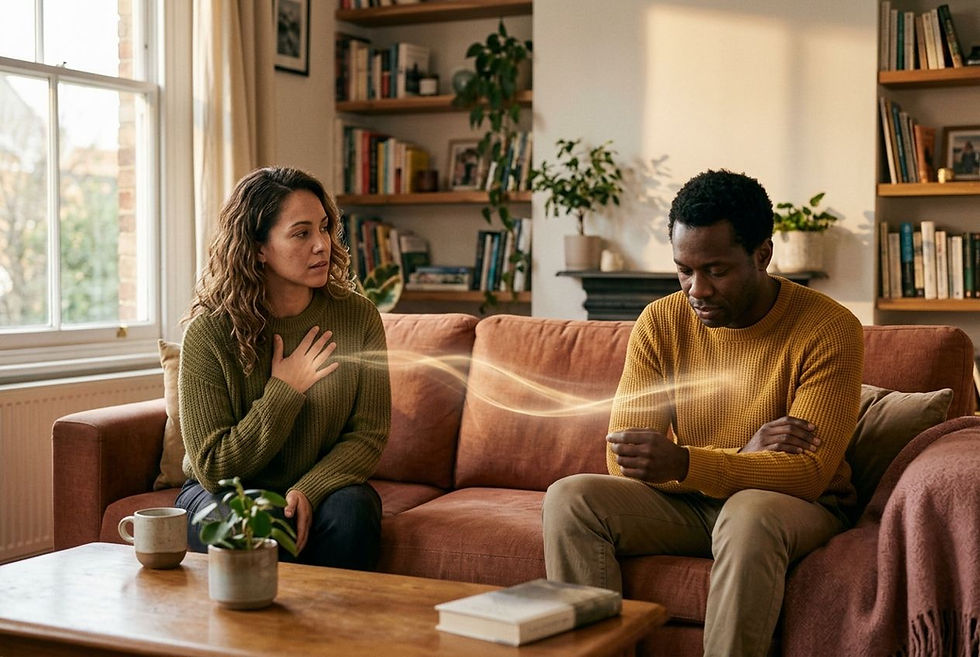
Bridging Generations, Building Future Leaders
Maria Bleahu is an award-winning filmmaker, author, educator, and founder of Bleahu Creative LLC. With over 20 years of experience in education and media, she is expanding into speaking, leadership development, and coaching, helping people and organizations navigate generational change, resilience, and reinvention.

What if the greatest leadership opportunity isn’t finding better talent but learning to recognize the talent already in front of us? After more than two decades in education and media, I’ve learned that developing future leaders begins with seeing people beyond their credentials, circumstances, and perceived limitations.
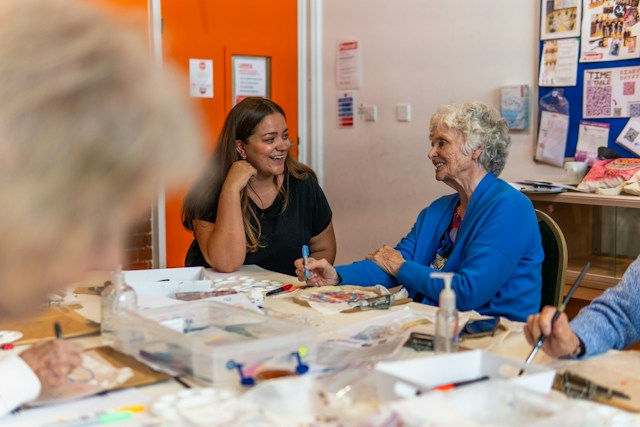
What are we missing when we evaluate talent?
Throughout my career as an educator, filmmaker, and academic program leader, I’ve encountered students whose abilities were far greater than their confidence. Some were the first in their families to attend college. Others were working parents, career changers, or individuals who had struggled in traditional academic environments.
They didn’t always arrive with impressive grades, professional connections, or a clear career plan. But many brought something equally valuable: determination, curiosity, creativity, loyalty, and a willingness to learn.
When I built a college video production program from the ground up, I wanted students to experience more than classroom instruction. I wanted them to understand how their abilities could translate into meaningful professional opportunities. That meant connecting education with the real world. It also meant recognizing that a person’s starting point doesn’t have to determine their destination.
Why potential matters more than a perfect academic record
I remember a student who was the first in his family to attend college and came to me feeling overwhelmed by his coursework. He told me he had never considered himself a particularly strong student. I encouraged him to consider what success could look like in filmmaking without letting his academic history define his expectations.
I explained that while grades and degrees matter in certain educational and professional settings, employers in film and video also want to see what someone can create. A strong portfolio, a professional attitude, practical skills, and the ability to collaborate can open doors that a transcript alone cannot. I also encouraged my students to continue their education when possible because credentials can broaden their professional opportunities.
Years later, that student contacted me during a difficult period in my own life. He told me how much my encouragement had meant to him. He had completed his initial college program and gone on to earn both a bachelor’s and a master’s degree while raising his child as a single father.
His achievements belonged to him. He had done the work. But his message reminded me that encouragement, offered at the right moment, can have an influence far beyond the classroom.
How opportunities in the real world develop future leaders
Another student entered my video production class almost by accident. He was studying communications and needed to borrow equipment for a class assignment. I explained that he needed proper training before using professional equipment and suggested that he enroll in my introductory video course. He did, and he discovered a passion for production.
Later, a community organization supporting children with communication difficulties needed help establishing its digital presence. It had limited resources, so I presented the opportunity to my class. This student volunteered. He developed branding and promotional materials, helped create an online presence, and began gaining practical experience with real clients.
That opportunity led to referrals and additional projects. Eventually, he became so busy with paid video work that he needed help managing the workload. When he considered changing his major to video production, I encouraged him to finish his communications degree, which he was only one semester away from completing. I arranged for him to take advanced video courses while staying on track to graduate with his communications degree.
He later established a video production business. Years afterward, he contacted me to share that the skills he had developed helped him build his career and buy his first home for his family.
What began as a request to borrow a camera became a pathway toward entrepreneurship. The experience reinforced a principle I’ve carried throughout my career. People often discover their potential when they have meaningful opportunities to apply what they’re learning.
Bridging the gap between education and employment
As an educator and program leader, I worked to connect students with the professional environments they hoped to enter. I organized industry experiences, introduced students to working professionals, cultivated community partnerships, and encouraged participation in real production projects.
Students attended film festivals, industry events, and professional workshops. They worked on projects that required them to write, direct, produce, collaborate, and edit. These experiences helped them understand the technical demands of their chosen field and the professional behaviors that contribute to success. They learned to communicate with clients, meet deadlines, solve problems, and take responsibility for their work.
This is where I believe educational institutions and employers have an important opportunity to collaborate. Education should develop knowledge and capabilities. Employers should recognize those capabilities and continue developing them. When the two work together, the transition from student to professional becomes more purposeful.
What generational leadership gets wrong
Much of the conversation about today’s workforce focuses on differences between generations. We hear discussions about what millennials want, how Generation Z communicates, or why established leaders struggle to connect with younger employees. These conversations can be useful, but generational labels alone cannot explain an individual’s motivation, character, or potential.
Not every younger employee lacks experience in the same areas. Not every older employee resists change. No generation has a monopoly on commitment, creativity, or leadership.
A 2024 report from Harvard Business School and the Burning Glass Institute, Skills-Based Hiring: The Long Road from Pronouncements to Practice, highlights a significant gap between what employers announce about hiring based on skills and the changes they make in their hiring decisions. The findings reinforce an important lesson. Recognizing talent requires more than changing job descriptions or removing degree requirements. Organizations must also reconsider how they evaluate and select candidates.
Throughout my career, I’ve taught students of different ages and backgrounds, including young adults entering college for the first time and experienced professionals returning to education. Their circumstances differed, but several needs were remarkably consistent. They wanted to be respected. They wanted their efforts to matter. They wanted opportunities to develop. They wanted someone to recognize what they could contribute.
Effective leadership begins with understanding the individual rather than assuming a generational label tells the whole story.
5 ways leaders can recognize and develop untapped talent
Gallup’s research on employee engagement emphasizes the importance of meaningful work, opportunities for development, supportive managers, ongoing coaching conversations, and recognition of employees’ strengths. These findings reinforce the value of leadership practices that help people feel supported while giving them opportunities to grow and contribute.
Look beyond conventional credentials: Education and experience matter, but so do demonstrated skills, adaptability, reliability, and initiative. Evaluate people using criteria relevant to the actual responsibilities of the role.
Create opportunities to demonstrate ability: Give emerging professionals meaningful projects with appropriate support. Practical experience can reveal strengths that aren’t immediately visible in an interview or résumé.
Recognize transferable skills: A student managing a demanding job in the service industry may already be learning how to lead, work in a team, resolve conflicts, and manage time. Help people connect those abilities to new career possibilities.
Make mentorship part of professional development: Mentorship shouldn’t depend entirely on chance encounters with supportive teachers or managers. Organizations can create opportunities for guidance, feedback, networking, and career exploration.
Build environments where people feel seen and heard: People are more likely to contribute their ideas and ask for help when they believe they will be treated with respect. Leaders should create opportunities for honest communication and respond constructively to concerns.
These practices are valuable across generations because they focus on human development rather than stereotypes.
Leadership begins with seeing the person
My philosophy of leadership developed long before I had language for it. Growing up in an immigrant family without an established professional network in the United States, I understood the importance of education and opportunity. I also understood what it felt like to navigate unfamiliar systems without someone showing me the way.
As a teacher, I wanted to give my students the encouragement, mentorship, and opportunities I had often wished for myself. Sometimes that meant introducing them to an industry professional. Sometimes it meant helping them recognize a skill they didn’t know they possessed. Sometimes it meant simply listening when they needed someone to hear them.
Over the years, former students have contacted me to share news of their careers, businesses, educational achievements, and families. Those messages have reminded me that leadership isn’t measured only by what we accomplish personally. It’s also reflected in the opportunities we help others discover.
As organizations prepare the next generation of leaders, I believe we need to move beyond asking how to manage different generations. We should also ask a more important question. How can we become the kind of leaders who recognize potential, develop people, and open doors?
Because the future of leadership isn’t simply about preparing people for tomorrow’s jobs. It’s about helping them recognize what they’re capable of becoming.
Read more from Maria Bleahu
Maria Bleahu, Founder of Bleahu Creative LLC, Author & Educator
Maria Bleahu is an award-winning filmmaker, author of 22 books, educator, and founder of Bleahu Creative LLC. Over the course of more than 20 years, she has held leadership roles with the Ohio Board of Regents, in a NASA-related STEM curriculum collaboration, and at iD Tech’s Teen Academy at MIT. She is expanding into public speaking, corporate leadership training, and one-on-one coaching, helping people and organizations navigate generational change. Her work explores resilience, reinvention, and the power of storytelling. She is also developing Somatic Matriarch, a podcast focused on maternal resilience and intergenerational healing.