Breaking Limiting Beliefs and Creating a New Identity – An Interview with Lisa Mistry
Lisa Mistry is an Energy & Mindset Activator who focuses on personal transformation and human development. She brings together the structure and experience of corporate people development with holistic and energetic approaches. Her work goes beyond healing and release, she is equally interested in and pursues what comes next: creating new identities, thought patterns, emotional responses, and ways of being.
In this interview, Lisa shares why human potential is something to be continually explored. Her philosophy challenges people to question their perceived limitations, discover the capacity of their internal human technology, and become active participants in shaping their future.
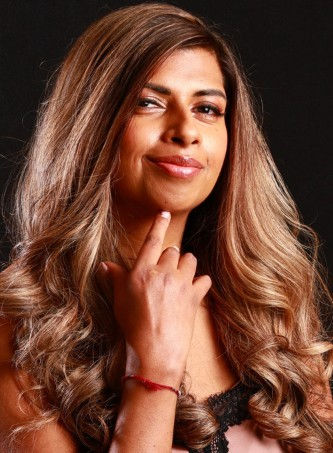
Lisa Mistry, Energy & Mindset Activator
Lisa, you bring together corporate People Development and holistic healing in your work as an Energy & Mindset Activator. What led you to combine these two worlds?
For me, these two worlds were never as separate as they might initially appear. Throughout my 20 years in corporate People Development, I was fascinated by what really lay underneath the surface. What enabled people to grow professionally was underpinned by more than IQ, EQ, and heightened memory. Their ability to overcome challenges and realise their potential was driven by more than technical expertise. It was the extent to which they were tuned into their higher intelligence.
Alongside this, I had spent over two decades exploring energy work, consciousness, and holistic healing approaches. I didn’t know it at the time, but it was the bedrock of my work in personal transformation. I later recognised that professional development often focused on what we need to learn or do differently, but deeper transformation required further examination beneath the surface. So, I became increasingly interested in the deeper dimensions of change, including subconscious conditioning, emotional patterns, and the metaphysical aspects of our experience.
Bringing these worlds together was a natural evolution. Combining my corporate experience with accredited energy techniques, I felt fully aligned with my individual path. Everything felt purpose-driven. Creating unique offerings spoke to the creative in me, and guiding people through deep transformation felt like a natural way to lead others. I built structure, frameworks, and practical application around all offerings to ensure the less tangible aspects still addressed the individual as a whole, something many businesses in this industry have yet to amalgamate.
How has your experience in corporate learning and development shaped the way you help people create lasting personal change?
My corporate experience has given me a strong understanding of how people develop, what influences behaviour, and why meaningful change requires more than simply acquiring knowledge.
Working with a global Big Four accounting firm, I was involved in identifying learning needs, coaching individuals, and creating development programmes. One of the most valuable lessons was that development cannot be approached with a one-size-fits-all mentality. People have different starting points, motivations, challenges, and ways of learning.
I've carried that philosophy into my transformational work. I believe it's essential to understand the individual before deciding what approach will best support them.
This involves understanding their mental paradigms, emotional patterns, physical routines, and energetic cellular composition. All of this contributes to the blueprint of a person and highlights how and where change is required to meet the version of themselves attaining their goals.
I also understand the importance of translating insight into practical application. Awareness is the first step, but what happens afterward matters hugely. New perspectives need to be reinforced through different choices, behaviours, the embodiment of new identities, and daily practices.
What role do practices such as Reiki, hypnotherapy, and NLP play in your approach to transformation?
Each modality offers a different lens through which to explore personal transformation. I don't view them as interchangeable, nor do I believe one approach is necessarily right for everyone.
Reiki is a complementary energy practice that clears our energy centres (chakras) so that trapped emotional and mental blockages can be removed. It can provide a space for relaxation, inner connection, and reflection. Hypnotherapy allows us to explore subconscious associations, beliefs, and patterns that may influence how we respond to life. Neuro-Linguistic Programming (NLP) offers techniques for examining language, perception, and habitual thought patterns, helping people explore alternative ways of interpreting experiences.
What interests me is how these approaches can complement one another when used appropriately. Sometimes the starting point is understanding a deeply ingrained belief. At other times, it's creating space to reconnect with yourself or develop a different relationship with an emotional response.
I draw on my training and experience to select approaches according to the individual and their needs. My intention is to facilitate greater self-awareness, choice, and personal agency, rather than encourage dependency on any particular modality.
Why do you believe breaking free from limiting beliefs is only part of the journey toward lasting transformation?
Because knowing what you no longer want to be is very different from knowing how you want to live, think, feel, and show up instead.
We can identify a limiting belief, understand where it originated, and even begin to release its influence. However, if we don't consciously establish new patterns, behaviours, and ways of responding, we can find ourselves returning to familiar territory.
I see transformation as having two equally important dimensions, release and creation. The first involves recognising self-sabotage, challenging conditioned thinking, addressing emotional blockages, and breaking longstanding cycles. The second involves developing a new identity, building confidence, establishing healthier habits, and creating a different internal reference point.
This is where repetition and intentional practice become important. New neural pathways are supported through repeated experiences and behaviours. We need to give ourselves opportunities to experience being different, not simply think about it.
For me, lasting transformation isn't just about leaving an old version of ourselves behind. It's about consciously building, embodying, and sustaining the person we want to become.
What do you think conventional approaches to personal development often overlook about human potential?
I think two of the biggest oversights are the tendency to focus predominantly on the physical self and the conscious mind. Believing that all change and progress can only be achieved by taking physical action, and that the conscious mind is purely responsible for setting goals, changing behaviours and mindset, and developing skills, is only half the picture.
These are all valuable, but human technology is much more complex. Our reality is also created from our thoughts, frequency, and energetic signals. Our responses are also influenced by subconscious associations, emotional conditioning, past experiences, physical states, and deeply established patterns that we may not consciously recognise.
On an intellectual level, we can understand that we’re capable of more, yet still find ourselves responding from unhelpful energetic imprints, mixed electromagnetic signals, old beliefs, or familiar emotional patterns. This is why simply telling someone to think differently or physically create a change doesn't always translate into meaningful transformation.
I also believe personal development often dismisses the importance of individuality. We each have our own energetic blueprints, different experiences, internal landscapes, and ways of processing change. A good portion of this is linked to our internal human technology. The incredible capacity this has to take us to new heights in life is worth exploring. Developing self-mastery with our internal technology is a game changer, a journey that I’ve personally invested in and now teach my clients how to master.
I'm interested in exploring human potential beyond the limitations of our existing self-concept. What if many of the boundaries we operate within are learned rather than absolute? What could be possible if we expanded beyond our current understanding of human biology and approached development as an exploration of the whole human experience?
How can someone begin to recognise the self-sabotaging patterns that may be holding them back?
The first step is developing the willingness to observe yourself honestly, without judgement. Self-sabotage isn't always obvious. It can appear as procrastination, perfectionism, people-pleasing, avoiding opportunities, repeatedly seeking external validation, or finding reasons why something won't work.
I'd encourage people to look for recurring patterns rather than isolated incidents. Where do you repeatedly experience the same frustrations? What happens when you're close to achieving something important? Do you suddenly lose confidence, become distracted, or create reasons to retreat?
Pay attention to the internal dialogue accompanying these moments. What are you telling yourself? What are you afraid might happen if you succeed, become visible, or step outside your familiar identity?
Sometimes behaviours that appear to hold us back have developed as protective responses to earlier experiences. Other times, it’s our ego keeping us safe within what’s familiar. Recognising their original purpose can help us approach them with deeper understanding.
The important shift is moving from reacting to responding. This means moving away from a mindset where you’re resigned to the outcome and consciously observing, then utilising your mind to co-create your reality. This is the key. Once you can recognise a pattern, you create an opportunity to question it and choose a different response.
Once someone has released old patterns, what practical steps can help them build a more confident and empowered identity?
This is where the real work of ‘becoming’ begins. I encourage people to move beyond simply defining what they don't want and start getting very clear about who they are choosing to become.
What does this version of you believe? How do they communicate, make decisions, manage challenges, and treat themselves? What boundaries do they establish? What daily practices support the way they want to feel and live?
From there, it's about translating that identity into consistent action. Start with manageable commitments and follow through on them. Practise making decisions from a place of self-trust rather than fear. Operate from love and the heart space more than the head and conditional programming. This switches you from dominant left-brain thinking to right-brain activation. The right brain is where we bring in flow, alignment, creativity, trust, and confidence from our inner knowing, cellular memory, and unique gifts. Challenge the familiar inner dialogue and consciously introduce more empowering perspectives.
Repetition matters because new behaviours and experiences can help reinforce new neural pathways. Confidence, in particular, develops through evidence. Each time you take action, honour a commitment, or navigate something challenging, you give yourself another reason to trust your capabilities.
I also believe emotional balance, supportive environments, and healthy routines are essential. The goal isn't to create a perfect version of yourself, but an authentic, more empowered identity that you can sustain in everyday life.
Your podcast, Born To Thrive, Not Just Survive, explores the journey from adversity to purpose. What has it taught you about the human capacity for transformation?
One of the most important things the theme of Born To Thrive, Not Just Survive represents is that our circumstances do not have to become our permanent identity. Experiences can shape us profoundly, but they don't have to dictate every chapter of your story that follows.
I believe there’s huge wisdom to be gained and potential to make life better in the space between what’s happened to us and how we choose to move forward. That space gives us an opportunity to examine our beliefs, reconsider the stories we've attached to our experiences, and discover possibilities we may not previously have considered.
I also think it's important not to romanticise adversity. Painful experiences can be deeply challenging and valuable teaching moments, but it’s important not to get stuck there and hold them as a core part of your identity. With the right support, reflection, and willingness to explore new possibilities, we can develop a different relationship with our past and give ourselves permission to author a new, more positive chapter.
For me, thriving is about reclaiming choice and personal power. It's recognising that we are not simply here to repeat familiar patterns or exist within the limitations of our history. We can evolve, redefine ourselves, and create a future that feels free from our past, where we are sovereign from darkness, more authentic, and aligned with who we want to be.
For someone who feels stuck between who they are and who they want to become, what is the most important first step toward reclaiming their personal power?
I would say, stop waiting to feel ready and start becoming consciously aware of the choices you are making today.
Feeling stuck often comes from a disconnect between what we know we want and the beliefs, behaviours, or fears that keep us anchored to what is familiar. The temptation is to search for a dramatic breakthrough, but transformation can begin with something much simpler: an honest decision to stop abandoning yourself.
Start by asking yourself three questions. What am I no longer willing to carry? What do I genuinely want my life to look and feel like? What can I do today that reflects that direction?
You don't need to have the entire journey mapped out. You need a willingness to question what you've accepted as inevitable and to open up to a different possibility.
Personal power isn't about controlling everything around you. It's about connecting to your authentic nature, taking ownership of your internal world, developing discernment, recognising that you have choice, and taking responsibility for how you move forward.
The moment you begin making choices that align with the person you want to become, you’ve already started changing your trajectory.
Transformation often happens in the small steps we take consistently and the new ones we open up to along the way.
“Let’s celebrate our extraordinary ability to evolve emotionally, mentally, and spiritually throughout life, taking on new ideas, thoughts, philosophies, and ways of being and living.” – Vishen Lakhiani, The Code of the Extraordinary Mind: 10 Unconventional Laws to Redefine Your Life and Succeed On Your Own Terms
Read more from Lisa Mistry