Andie Simon Interview on Deep Thinkers, Breathwork and Why Change Should Feel as Easy as an Exhale
“I want your life to feel as easy as an exhale.” This sentence drives everything Andie Simon does. She spent ten years in corporate marketing, able to explain every pattern she had and still living by them. Today she is the founder of UnBREATHE®, a method that combines breathwork, subconscious work and micro-habits to help analytical high performers turn insight into change. With degrees in psychology and communication science, she works with high-achieving, brilliant people, in person and online.
In this interview, Andie explains why overthinking is a habit with a Deep Thinker underneath, why smart people repeat patterns they can already explain, where the science of breathwork ends and the hype begins, and how to stretch your nervous system like a muscle.
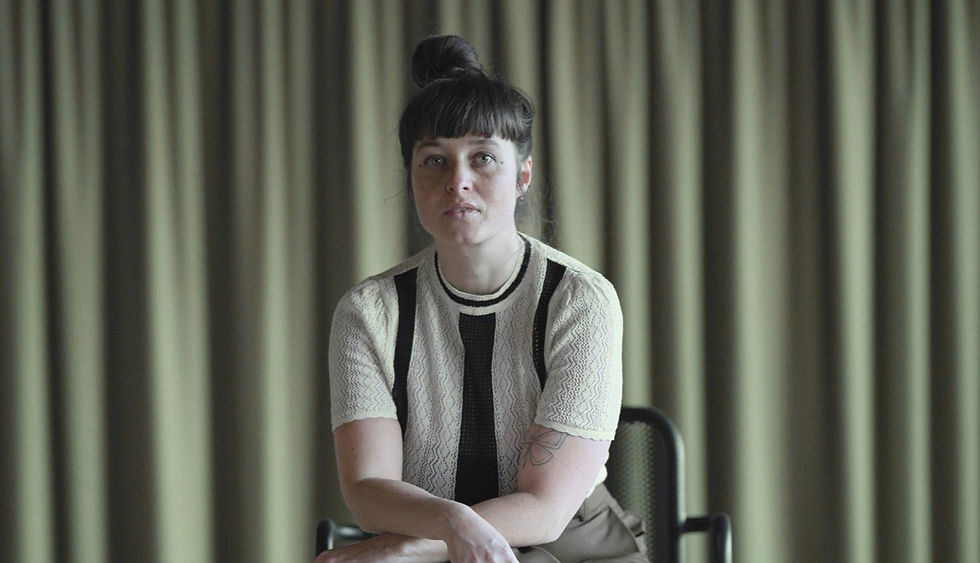
Andie Simon, Breathwork Coach
What first showed you that breathwork could offer something your corporate life and mindset tools could not?
For ten years I worked in corporate marketing. I had the psychology degree, the frameworks and the books. I could explain every pattern I had. I still lived by them. I was insight-rich and change-poor.
My biggest pattern was a belief about safety. Safety meant a 9-to-5 job. So I pushed harder whenever something felt uncertain, even when my body had clearly said no. In the end, exhaustion made the decision for me.
Breathwork was the first thing that reached the place where that belief actually lived. In one session, with nothing to do but follow my breath and the music, my thinking finally went quiet. In that quiet I saw that this idea of safety belonged to my parents’ generation. It had never been mine. I felt it, and once I felt it, I could let it go.
That’s the difference. Mindset tools gave me better explanations. Breathwork took me from insight-rich to change-confident.
Why can high performers understand their patterns intellectually and still keep repeating them?
Because overthinking is a habit, not a personality trait. And underneath that habit, there is something I call a Deep Thinker.
Here’s how I see it. Your whole life shows up in patterns. When something keeps repeating—the same kind of problem, the same argument, the same decision you can’t make—it’s your brain saying: this is unfinished business. The reaction was never completed. The emotion was never fully felt. So you meet the situation again and again until you finally finish it.
High performers try to finish it in their heads. They analyse, plan and explain. But overthinking is the mind wandering on its own, doing everything by itself, without the body and without the emotion. It can understand the pattern perfectly and still not close the gap.
That’s why I say your overthinking is a map. It points straight at the place that still needs finishing. Follow it, and you meet the Deep Thinker underneath: someone who sees more, feels more and has very good reasons for being careful. What helps that person most is to stop thinking alone.
How does UnBREATHE combine breathwork, subconscious work and micro-habits to create change beyond a single session?
I built UnBREATHE® to bring your subconscious mind out in front of you, so you can look at it with enough distance to stay calm and enough clarity to see what’s going on.
Breathwork opens the door. I see the breath as the gatekeeper to the subconscious. In my experience, when you focus only on your breathing and the music, your thinking quiets and you connect to yourself without having to try.
Systemic constellations make the beliefs visible. They show where a pattern comes from, and often that it was inherited rather than chosen. A rule that belongs to someone else is much easier to put down.
Micro-habits do the stretching. Small daily changes stretch your nervous system and your beliefs a little further each time, until the new perspective feels normal.
What do you mean when you say that changing your life should feel as easy as an exhale?
Think of change as one full breath.
The inhale is taking in. Information, learning, courses, podcasts, books. It also includes the evening on YouTube or Netflix when we’re avoiding something. Most high performers are excellent at inhaling.
Then comes the hold. That’s everything we keep inside: the unfinished business, the unresolved situations, the unfelt emotions. And all an emotion wants is to be felt. A mind that wanders without the emotion is a nervous system that has disconnected from itself.
The exhale is different. It comes on its own, it’s easy, and it supports the whole breath. It’s also the part most of us neglect, and the part that settles us. How fully you breathe out makes room for how deeply you can breathe in. That’s why I’d change the old advice: don’t take a deep breath. Take a deep exhale, so you can breathe in deeper.
Change works the same way. Your next mindset shift comes from letting go of what you’re holding. Then the new comes in on its own, as easily as the next breath.
Where do you draw the line between evidence-based breathwork benefits and claims the science cannot yet support?
What the research supports is solid. Slow breathing with a longer exhale is linked to higher heart rate variability, a common marker of how well the body recovers from stress. A 2023 Stanford study found that just five minutes of daily cyclic sighing improved mood and lowered physiological arousal, with a stronger effect than mindfulness meditation in that trial.
What I do not claim: that breathwork detoxifies the body, rewrites DNA, cures anxiety or replaces therapy.
Intense breathwork is not for everyone. Certain heart conditions, pregnancy, epilepsy and some psychiatric histories need medical clearance or a gentler practice. I screen for that before every session.
One example: I often describe the breath as the gatekeeper to the subconscious. That’s my language for what I see in sessions. Studies do show that breathing patterns change brain activity, but I won’t promise anyone a specific brainwave. My rule is simple. If I can’t point to the evidence, I describe it as my experience.
What signs suggest that ambition or overperformance has shifted from a strength into a protective pattern?
When it stops feeling like a choice. Healthy ambition moves toward something. Protective ambition moves away from something: failure, criticism, not being good enough. You see it when success brings no joy, when rest has to be earned, and when you start avoiding decisions.
In my work, I see five ways this protection shows up. I call them the Deep Thinker types, and I named each one after the mask it wears. The Manufacturer overproduces to prove their worth. The Armorer overprotects and needs no one. The Shapeshifter over-adapts to every room. The Keeper over-functions and holds everything together. The Sprinter overcommits to the new, starts brilliantly but changes direction too fast. The Overthinker Test shows you which one is yours.
I chose masks on purpose. A mask is put on for a real reason, to protect something vulnerable, and it works. Over time, people mistake it for their personality. I’m a Manufacturer myself, so I know how convincing that mask can be.
The question I always ask is: What is your ambition protecting you from? Once that’s clear, the mask can come off, and you get to be the Deep Thinker you already are.
What if your limits are not as fixed as they feel?
They rarely are. Most of our limits live in the room we keep inside: the subconscious mind. It holds our memories, everything we’ve experienced, and our definitions of who we are and what is safe to be.
To help people step into that room, I designed a five-day challenge called The Inner Decision Room. Over five live days, we use breath to look at those limits from a new angle. Often what needs to change is simply your perspective on what is expected of you.
It started as my own way of meeting my subconscious mind. I was curious how I make decisions, and why I make the ones I make.
Where does the name UnBREATHE come from?
From taking away things that are no longer needed. UnBREATHE® grew out of everything I had to unlearn: the roles, thoughts and beliefs I had picked up about what safety meant, what my job meant, what my future meant. I needed to unblame myself. I needed to undecide the decisions I had made from fear. I needed to unavoid the feeling underneath. All of these led to UnBREATHE. Stripping away whatever was not mine, so I could be fully myself and do it my way. Not waiting for approval. Not afraid of being judged. Believing, with every cell of my body and not just my mind, that being me is enough to create something extraordinary.
In my work, I apply the same principle. Most people arrive with too much: too many options, too many opinions, too many tools they already know but do not use. I look for the one belief that keeps the rest in place and help them put it down.
The less you carry, the more room there is for who you really are.
What is one change in the way we breathe or respond to pressure that could make the biggest difference over time?
Here’s one thing to take away and use in your day-to-day life. It’s a tool I call NOOA, and it takes under two minutes.
Notice what is happening around you, and what is happening inside you. How do you feel? What’s going on?
Oxygenate with a few breaths, each with a slower exhale. Most of us meet pressure by taking something in and holding our breath. A long exhale tells your system you are safe, and a settled mind sees options where a braced one sees threats.
Own the feeling by naming it and giving it a place in your body. Find where the tension sits.
Act from this space, from the calmer state you reach after you’ve exhaled.
Do it daily and it becomes a stretch. Overwhelm is simply your nervous system telling you that you’ve reached the limit of what it believes is safe. That limit is not fixed. Every small new thing you do after an exhale stretches it like a muscle, until new situations start to feel like home.
I want your life to feel as easy as an exhale. And it starts with your very next one.
Read more from Andie Simon