

An Unusual Tool to Improve Your Speaking Voice – A Straw
Written by: Katarina Hornakova, Executive Contributor
Executive Contributors at Brainz Magazine are handpicked and invited to contribute because of their knowledge and valuable insight within their area of expertise.

If you have never heard about straw phonation, then the following recommendation may sound like a total farce to you. If you use your voice for speaking all day long, use a simple straw to relax and rebalance your voice before going to bed. Yes, I said it: a simple straw that you used to blow bubbles into your drink as a kid. As a voice coach and therapist, I recommend this unusual tool to all my clients. Straw phonation simply means that you make sounds while blowing through a straw for a few minutes.
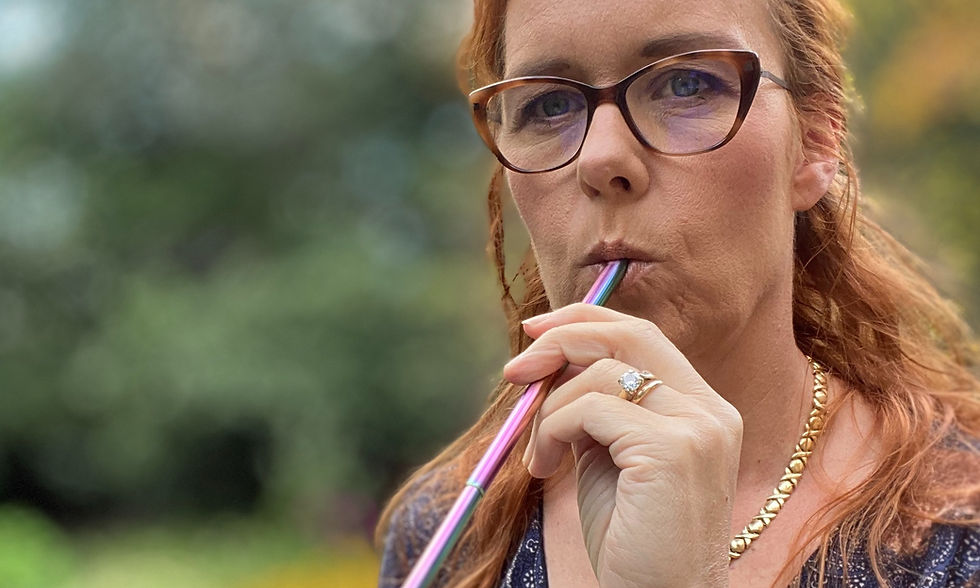
In fact, this tool is not as unusual as you may think. Straws or tubes have been used in voice therapy for a couple of decades, and there is a huge body of research behind this practice. Dr. Ingo Titze, a famous vocologist (vocology is the science of vocal rehabilitation, training, and therapy), started the whole idea of using straws to improve the function of the voice. And now, even speakers and singers with healthy voices discovered the magic of straws.
Straw Exercises
Straw exercises are one of the safest and gentlest exercises for the voice because they take away vocal effort and strain. During these exercises, the pressures above and below the vocal folds are equalized, and therefore the voice works more efficiently. It’s like exercising your body in the pool. There is less impact on your joints, but you still get a good workout. Using straw exercises regularly also leads to improved vocal endurance and strength.
Straw exercises are easy, and anyone can do them in the comfort of their home. Here are three simple steps to start (for demonstrations, visit my YouTube channel):
Get a simple straw (any straw that you have at home) and place it in your mouth. Make a good seal around the straw with your lips and just blow air through it. Don’t let air come out of your nose.
Say “ooo” while blowing through the straw the same way as in step 1. With your hand, feel the air coming out of the other end of the straw.
Continue for 5 minutes. You can just prolong simple sounds in your comfortable speaking range. You can choose different notes (low or high) to challenge yourself. You can imitate sirens or use the melody of a simple song (e.g., Twinkle, Twinkle).
Size Matters
Different sizes of straws have different benefits for your voice. It all comes down to resistance. The thinner the straw, the more resistance you get when exercising your voice. Thin straws to your voice are like heavy weights to your body muscles. Voice therapists, singers, and speakers use thin straws to build vocal strength and endurance. You can use thin straws to warm up your voice before giving a speech, lecture, or presentation.
On the other hand, thick straws (similar to those for bubble tea) have low resistance. They are used more for the rehabilitation of a tired or strained voice. They still give your voice a good workout but with a lighter load. You can use thick straws at the end of the day to help your voice relax and cool down.
Straw exercises are becoming more and more popular, and therefore, you can find all kinds of straws on the market. They are made of various materials, including plastic, paper, silicone, stainless steel, or even silver and gold. They come in a fun colour or with fancy attachments. It really does not matter what your straw looks like or is made of. Cheap straws can be as effective as fancy and expensive ones. The key to success is a consistency of practice.
Katarina Hornakova, Executive Contributor Brainz Magazine
Katarina Hornakova is a licensed speech-language pathologist, vocal health coach, and educator with 20+ years of experience working with diverse groups of people from all corners of the world, including speakers, singers, musicians, teachers, presenters, voice-over actors, entrepreneurs, yoga instructors, health educators, and others. She has published several books and articles on speech, language, and voice disorders. Katarina is most passionate about helping people who experience vocal tension, strain, or even pain when speaking find more vocal ease and confidence to share their message with the people around them. Her mission is to give voice to those who have lost it. She continues to develop her deep fascination with the human voice through the Estill Voice System model, which formed her belief that “every voice is beautiful”. Katarina has helped hundreds of people discover their true vocal potential. She is a curious life-long learner herself who loves to meet new people, cook, and travel.



