7 Signs Your Weight Gain After 35 is Actually Perimenopause
Marianne Waldbroel is a holistic health and weight loss coach for women, specializing in sustainable weight loss, women’s hormonal health, and behavior change. She helps women 35+ understand their changing bodies and build lasting habits that support a healthy weight and long-term well-being.

You eat well, you move your body, and still the scale creeps up. Your sleep is lighter, your patience is shorter and your jeans fit differently. If that sounds familiar, you may be in perimenopause, and you wouldn’t be the only one who didn’t realize it. Here are the signs most women miss and what you can do about them.
What is perimenopause?
Perimenopause is the transition phase before menopause. You reach menopause once you’ve gone 12 months without a period. Perimenopause is everything that leads up to it.
During this phase, your ovaries don’t simply switch off. Estrogen and progesterone rise and fall unpredictably, sometimes from one week to the next. Progesterone often drops first, and estrogen can swing higher than ever before it declines.
For many women, perimenopause starts in their early to mid-40s. For some, the first changes show up in their late 30s. It usually lasts several years and can last up to ten years for some women. That is a long time to feel “off” without knowing why.
You can still have regular periods and be in perimenopause. That is exactly why so many women don’t connect the dots.
Why so many women miss the signs
If you’re not sure whether this is you, you’re in good company. A 2026 study of more than 7,600 women in the United States aged 35 and older found that about one in three weren’t sure of their reproductive stage. Among women aged 40 to 44, that figure rose to 42%.
The main reason was symptom confusion. More than half of the women who were unsure couldn’t tell whether their symptoms came from hormones, stress, aging or something else. Honestly, how could they? Poor sleep, low energy, mood swings and weight gain all look like “just a busy life” when you’re juggling work, family and everything in between.
Many of my clients tell me the same story. They thought they had lost their discipline when, in fact, their bodies had changed the rules. Weight gain is often one of the first signs women notice, but it rarely comes alone. When you know what to look for, the pattern becomes much clearer.
7 signs your weight gain is linked to perimenopause
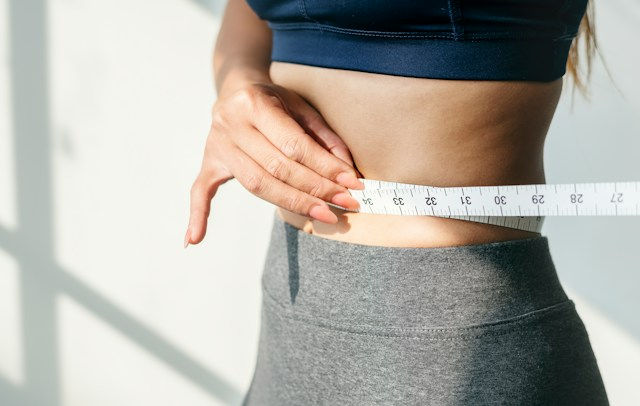
The weight settles around your belly: You haven’t changed how you eat, but your waist is getting wider. As estrogen declines, the body tends to store more fat around the abdomen than around the hips and thighs. Research from the University of Pittsburgh found that this belly fat starts to build up faster about two years before the final period.
It is not just a cosmetic issue. The American Heart Association links the extra belly fat of the menopause transition to a higher risk of heart disease, which is why it is worth taking seriously.
You wake up at 3 a.m. and can’t fall back asleep: Falling asleep may still be easy, but staying asleep is not. Night sweats, a racing mind and suddenly feeling wide awake in the early hours are all very common in perimenopause. Poor sleep raises levels of hormones that make you feel hungry and lowers levels of those that tell you you’re full, so your cravings are louder the next day.
You feel tired but wired: You’re exhausted, yet you can’t switch off. The Seattle Midlife Women’s Health Study, which ran for many years, found that cortisol, your main stress hormone, rises in some women during the later stage of the menopause transition. Higher cortisol makes it easier to store fat around the middle and harder to recover from stress, workouts and late nights.
Your cravings have changed: Suddenly you need something sweet after dinner, or you reach for snacks in the late afternoon. Around menopause, women gain abdominal fat and become less sensitive to insulin. That means blood sugar can fluctuate more, and every dip brings a new craving. It is not a lack of willpower. It is chemistry.
Your cycle is shifting, even slightly: Your period may come a few days earlier or be heavier or lighter, and your premenstrual syndrome (PMS) symptoms may feel stronger than they used to. These changes are often subtle and easy to dismiss, but they are among the clearest early signs that your hormones are fluctuating.
You’re losing strength faster than before: According to Harvard Health, we lose about 3% to 5% of our muscle mass each decade from age 30, and the menopause transition speeds this up. Less muscle means your body burns less energy at rest. Carrying shopping bags or getting up off the floor may feel harder, and your body composition can shift even when the number on the scale barely moves.
What used to work doesn’t work anymore: The diet that helped you lose five kilos at 32 does nothing now. Running more or eating less may even make things worse because it adds stress to a body that is already under pressure. If you want to understand more about the hormonal reasons behind this, the Brainz article on what causes weight gain in menopause is a good place to start.
If you recognize three or more of these signs, perimenopause is worth considering. The good news is that once you know what is happening, you can work with your body instead of against it.
What actually helps with perimenopause weight gain
The old advice to eat less and move more often backfires in this phase. What your body needs now is support, not punishment. These are the foundations I work on with my clients.
Put protein first: Protein helps you maintain muscle, feel full for longer and keep your blood sugar steady. At every meal, especially breakfast, aim for a portion of protein about the size of your palm. Eggs, Greek yogurt, fish, legumes, tofu and lean meat are all good options.
Lift something heavy: Strength training is the most powerful tool you have in midlife. Two to three sessions a week protect your muscles and bones, improve how your body handles sugar and lift your mood. You don’t need a gym. Bodyweight exercises, resistance bands or dumbbells at home are a great start.
Balance your blood sugar: Pair carbohydrates with protein, fiber or healthy fats, and avoid grazing on sugary snacks throughout the day. A short walk after meals can also make a real difference. Steadier blood sugar means fewer cravings and more stable energy.
Protect your sleep: Stick to a regular bedtime, keep your bedroom cool and dark, and limit alcohol and caffeine in the afternoon and evening. Alcohol in particular can worsen night sweats and make you more likely to wake up at 3 a.m.
Calm your stress response: You can’t remove every stressor from your life, but you can give your nervous system regular breaks. Slow breathing, time outdoors, gentle movement and saying no more often can all help bring cortisol down. If eating is how you cope with stress, mindful eating during menopause can help you tell the difference between physical hunger and emotional hunger.
None of this needs to be perfect. Small, consistent changes work far better in this phase than strict plans you can’t keep up.
When to talk to your doctor
Lifestyle changes are powerful, but they are not the whole picture for everyone. Talk to your doctor or gynecologist if your symptoms affect your daily life, if your periods become very heavy or irregular, or if you simply want clarity. Thyroid problems, iron deficiency and other conditions can cause symptoms similar to those of perimenopause, so they are worth ruling out. Your doctor can also talk you through treatment options such as hormone therapy if that’s something you want to explore.
Your body isn’t broken, it’s changing
Weight gain after 35 is not a sign that you’ve failed. It is often a sign that your hormones have started a new chapter and that your approach needs to change with them. Once you understand that, you can stop fighting your body and start working with it.
Not sure whether perimenopause is behind your symptoms or where to start? Book a free discovery call with me, and together we’ll create a plan that fits your body, your hormones and your life.
Follow me on Instagram for more info!
Read more from Marianne Waldbroel
Marianne Waldbroel, Women’s Health & Weight Loss Coach
Marianne Waldbroel is a holistic health and weight loss coach for women with over a decade of experience in health and wellness. Her professional journey includes extensive experience at Lanserhof, one of the world’s leading medical and longevity clinics. She specializes in sustainable weight loss, women’s hormonal health, and behavior change. German-born and based in Dubai, Marianne works with women 35+ worldwide through personalized online coaching. Her mission is to help women feel healthy, strong, and empowered to thrive as they age.
References:
The Menopause Society (2026). Many Women Still Confused About Perimenopause.
American Heart Association News (2023). The connection between menopause and cardiovascular disease risks.
University of Pittsburgh Medical Center (UPMC) and University of Pittsburgh (2021). Belly fat and heart disease risk during menopause.
Seattle Midlife Women’s Health Study. Cortisol levels during the menopausal transition.
The Journal of Clinical Endocrinology & Metabolism (2005). Hormone therapy, body fat and insulin sensitivity in menopausal women.
Harvard Health Publishing. A guide to combatting sarcopenia and preserving muscle mass as you get older.