3 Hormone Secrets From Women With Some of the Lowest Recorded Cortisol Levels
Courtney Lochner is a leading expert in psychedelic medicine for treatment-resistant anxiety, depression, and trauma. An Eric Hoffer Award-winning author and founder of the Intuition Rehab Lab (IRL), she teaches her signature holistic healing method to students, healers, and retreat participants around the world.

Does this sound like you? You wake up at 3 a.m. Sometimes drenched in sweat. Always wide awake, mind racing. You drag yourself through the morning on coffee. You crash at 3 p.m. Then at 10 p.m., when you should finally be tired, you’re wired. Your cycle has started doing things it never did before. Shorter cycles. Heavier periods. Spotting days before you bleed. The week before your period hits like a storm, with anxiety, rage, and tears over nothing.
You walk into a room and forget why. You lose words halfway through a sentence. Your libido has quietly left the building. One glass of wine wrecks your sleep. There’s a new anxiety humming under everything, and you can’t pinpoint where it’s coming from.
You crave sugar like it’s oxygen. The weight settles around your middle and won’t move, no matter how cleanly you eat or how hard you train. Your doctor says your lab results are “normal.” Maybe someone said the word perimenopause and moved on.
Here’s what nobody tells you. Some of this may be perimenopause. Progesterone can drop as ovulation becomes less predictable, and stress can turn the volume up.
You are not crazy. You are not lazy. Your body is answering a question your life keeps asking it. Are we safe yet? For many women juggling careers, kids, aging parents, and a phone that never stops, the answer is no.
Secret 1. Some of the lowest cortisol levels come from communities facing real hardship
Deep in the Bolivian Amazon live the Tsimane, who hunt, fish, and farm much as their ancestors did. When researchers measured their cortisol, they found something stunning. The Tsimane had some of the lowest cortisol levels on record at the time. Not a little lower. Dramatically lower.
It’s not just one group. Researchers have also documented distinct daily cortisol patterns among the Shuar of Amazonian Ecuador and the Garisakang of Papua New Guinea.
Here’s the part that should stop you cold. These are not easy lives. These communities deal with heavy physical work, limited food, and high rates of infection. Yet the Tsimane study found lower cortisol levels than those measured in other populations.
What’s stressing us out? Not lions. Not famine. Inboxes. Traffic. Screens at midnight. Isolation. A nervous system that never gets the signal that the danger has passed.
Secret 2. Lower progesterone can still go hand in hand with fertility
You’ve probably heard the story that stress hormones “steal” from your progesterone. More cortisol, less progesterone. So women with lower cortisol must have sky-high progesterone, right? Wrong. This is where it gets wild.
In one study, peak progesterone levels among rural Bolivian Aymara women averaged about 71% of those measured in women from Chicago. Yet, women in the Aymara study conceived at lower progesterone levels.
Read that again. Lower progesterone, and they still conceived. The researchers suggested that the way progesterone changes over time may matter more for conception than a single number on your lab report.
More isn’t always better. One comparison across five countries found that higher average progesterone levels coincided with higher breast cancer rates. Other researchers questioned the comparison, and the findings can’t tell you how your own progesterone level affects your risk.
The experience of menopause can also vary. In one study of rural Maya women in Yucatán, estrogen levels fell after menopause, yet none of the participants reported hot flashes. Other studies have linked stress to a more difficult experience of hot flashes.
Your body isn’t a tank running low on fuel. It’s an orchestra that has lost its conductor.
What is cortisol actually doing to your cycle?
Stress can change the conversation between your brain’s stress and reproductive systems. Constant threat tells your body that survival comes first and everything else can wait. If you’re still cycling, stress can disrupt ovulation or cause you to skip it. Since most progesterone is made after ovulation, levels can drop.
In perimenopause, ovulation is already less reliable. Stress piles on top. That’s why everything can feel louder in your 40s. After menopause, your ovaries step back, but your stress system doesn’t.
Your brain also counts undereating and overtraining as threats. The 5 a.m. high-intensity interval training (HIIT) class on 1,200 calories and four hours of sleep? Your body may read that as a threat, too.
Secret 3. Some women have about four times as many periods in a lifetime
One researcher estimated that Dogon women in Mali had about 100 periods in a lifetime, compared with about 400 for North American women. Four times the menstrual cycles, with more of those monthly rises and falls in estrogen and progesterone.
Some reproductive factors that extend exposure to ovarian hormones, such as starting your period earlier or reaching menopause later, are associated with a higher risk of breast cancer.
The good news is you can change the pattern, starting today
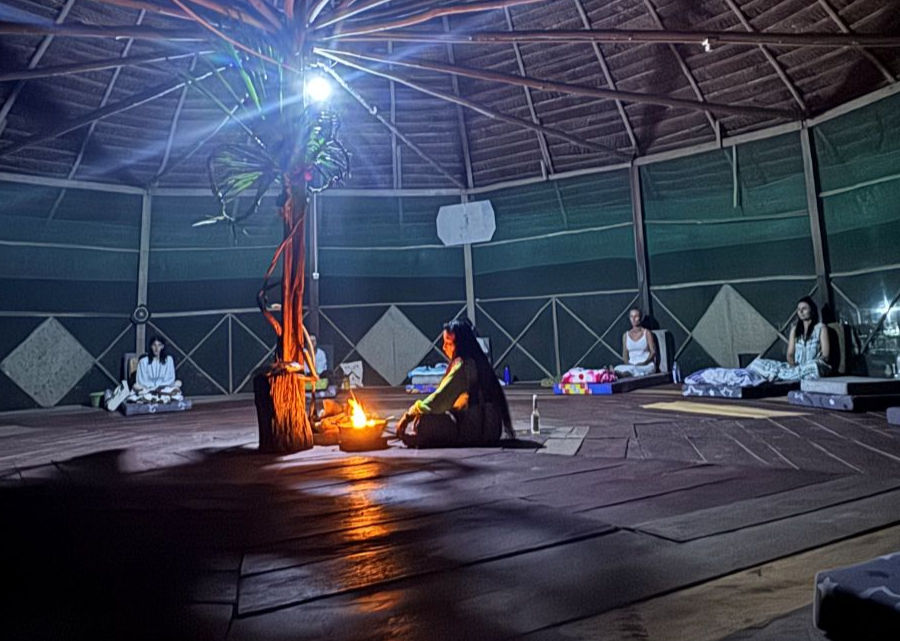
You probably can’t move to the Amazon. You don’t need to. If you’re curious about learning from Shipibo women in Peru, I lead retreats there throughout the year. At home, you can start by giving your body more chances to get the signal that the danger has passed.
Get some morning light. Try ten minutes outside before checking your phone. Morning light helps set your body’s daily rhythm.
Eat enough. Really. Especially if you train hard. Consistently eating too little can disrupt ovulation.
Rethink your coffee. Caffeine can temporarily raise cortisol. If you’re running on fumes, try having your coffee after breakfast, sticking to one cup, and cutting it off by noon so it doesn’t follow you into the night.
Get off the blood sugar roller coaster. If sweets and refined carbs leave you feeling like you’ve crashed by 3 p.m., try building meals around protein, healthy fat, and fiber.
Trade some intensity for rhythm. When you’re depleted, swap a hard workout for a long walk or strength training. Movement is medicine. Punishment is not.
Gather your people. Humans regulate in community. Shared meals, real conversation, touch. Isolation is a stressor your body cannot ignore.
Test with timing. If you’re checking progesterone to confirm ovulation, the test is generally timed about a week before your next period is expected. A single result can help confirm ovulation. Work with a provider who can help you time and interpret the test.
Skip the hormone guessing game. Don’t start pregnenolone or progesterone on your own because of an Instagram post. Get the full picture first. Need lab tests ordered? I’m happy to order them for you.
Keep an eye on research into psychedelic therapy. Mood changes and brain fog can hit hard in midlife. Researchers are exploring how women describe their experiences with psychedelics during perimenopause and menopause. Whether psychedelic therapy helps with these symptoms is still an open question.
Why your mind must come with you
Here’s what nobody tells you. You can do every one of those things perfectly and still wake up at 3 a.m., because chronic stress doesn’t just live in your schedule. It lives in your patterns. The hypervigilance you learned as a kid. The belief that rest must be earned. The part of you that never stops scanning for what could go wrong. You can’t make a nervous system that learned the world isn’t safe feel safe just by drinking green juice.
This is where psychedelic therapy gets interesting. Research suggests that psychedelics like psilocybin may open a window of neuroplasticity, a period when the brain may be more able to form new connections and loosen old, rigid patterns. Clinical trials are exploring psychedelics for conditions such as depression, posttraumatic stress disorder, and addiction. In one study comparing psilocybin with a placebo, two markers of inflammation were lower in healthy volunteers a week after a single dose.
Let me be honest with you, because you deserve honesty. A psychedelic is not a cortisol pill. In that same study, cortisol rose temporarily after participants took psilocybin. A week later, the researchers found no significant change in how participants responded to a stress test.
The medicine isn’t the magic. The shift is. The ceremony cracks open the door. The integration afterward is what walks you through it. That’s where the new habits, the new stories, and the new way of meeting your life come in.
Ready to come home to your body?
I’m Courtney Lochner, a National Board Certified Health and Wellness Coach and psychedelic guide. I spent years studying with Shipibo healers in the Amazon, and I’ve worked with women from Hollywood to Israel to Japan who want to move out of survival mode and come back into their bodies.
If you’re done being told your lab results are “normal” while you feel anything but, let’s talk. Together, we’ll look at how your stress, your cycle, and your patterns fit together. If psychedelic work is a fit for you, we’ll prepare for it carefully and make time to integrate the experience afterward. We’ll consider whether you’re ready to join me deep in the Amazon jungle of Peru. If that isn’t the path, we’ll find the one that is.
Book your free discovery call. Your body isn’t broken. It’s waiting for the signal that it’s safe. Let’s send it together.
"Psychedelic work isn’t right for everyone. A personal or family history of psychosis or bipolar disorder, as well as the medications you take, should be reviewed by a qualified clinician before you consider using psychedelics. Legal status varies by location."
Read more from Courtney Lochner
Courtney Lochner, Holistic Health Coach & Psychedelic Practitioner
Courtney Lochner is one of the foremost voices in psychedelic medicine for treatment-resistant anxiety, depression, and trauma. An Eric Hoffer Award-winning author, board-certified health coach, and founder of the Intuition Rehab Lab (IRL), she has built a global reputation for turning the most complex healing modalities into accessible, life-changing practice. Certified in nutrition design from Harvard Medical School and medicinal plants from Cornell, and shaped by a career that has taken her across continents as a professional dancer and healer studying under various tribes in the Amazon, Lochner teaches her method to students and retreat participants around the world.
References:
Nyberg, Tsimane daily cortisol rhythms, Psychoneuroendocrinology (2012). Study
Liebert et al., daily cortisol patterns among the Shuar of Amazonian Ecuador. Study
Urlacher et al., Garisakang cortisol rhythms, Stress (2018). Study
Vitzthum et al., progesterone levels among Bolivian Aymara women and women from Chicago, Proceedings of the National Academy of Sciences (2004). Study
Strassmann, lifetime menstruation estimates among Dogon and North American women, University of Michigan. Research summary
ZRT Laboratory, “Reassessing pregnenolone steal.” Article
“The science of psychedelic medicine,” Nature Medicine (2026). Review
Mason et al., psilocybin, immune markers, and the stress response in healthy volunteers, Brain, Behavior, and Immunity (2023). Study
Jasieńska and Thune, progesterone and breast cancer rates across populations, The BMJ (2001). Original article and published response
Martin et al., menopause symptoms among rural Maya women (1993). Study
Perceived stress and hot flashes among Maya women and women from other backgrounds in Campeche, Mexico. Study