3 Brain Science Hacks To Enhance Your Creativity
Written by: Deirdre Morrison, Executive Contributor
Executive Contributors at Brainz Magazine are handpicked and invited to contribute because of their knowledge and valuable insight within their area of expertise.

Creativity is one of those things that can mystify people. To witness it, or be part of it, feels like magic.
But this magic has solid benefits. According to research by creative software giant Adobe, 70% of people recognise creativity’s value to society, and 64% say it benefits the economy.
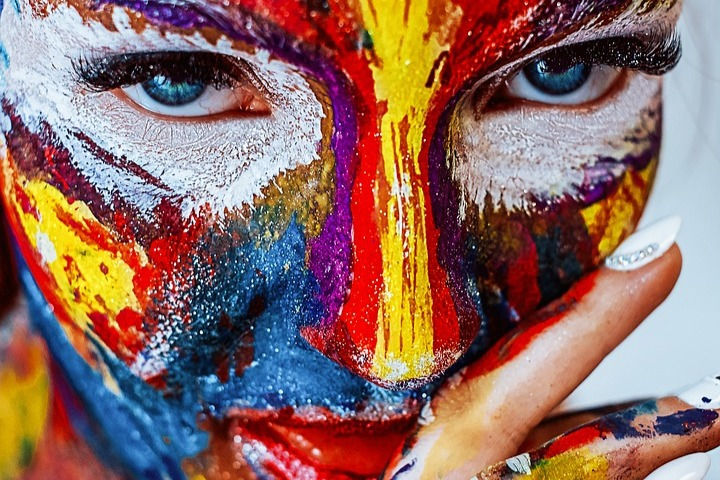
Unfortunately, not everyone believes that they are creative. In fact, Adobe’s State of Create report (2016), reveals that approximately 60% of us don’t feel creative.
Interestingly, studies done on creativity in kids, have put as many as 98% of them in the creative genius bracket. This drops off sharply by the age of 10, and keeps sliding right into adulthood.
We may well ponder what is happening to create this drop-off, but maybe more interestingly, whether or not we can turn the tide.
The figures from the 2016 Adobe report showed significantly more people feeling creative than previously - up from approx 25% to 40%
And another point of note is that younger people are more likely to feel creative. According to the 2016 data, 36% of baby boomers felt creative, compared to 55% of Gen Z.
But whatever generation you are, it’s clear that there’s plenty of room to feel more creative.
Information derived from neuroscience research can help us reconnect with our creative side. We all have one, by the way, but sometimes, we lose touch with it. Here are three things to keep in mind if you want to access your creativity.
1. Provide fuel for your creativity: Cast your net wide for inspiration, and then follow the threads. In his 2010 TED talk, the ultra-creative Taika Waititi gives the audience a snapshot of his creative journey. It’s a very broad range of interests and activities. He’s probably best known for his movies, but his talents expand well beyond this. And he shows us the work of his eleven-year-old self, saying “I’m not even embarrassed by it.”
So get out there, try new things. Go to see exhibitions, take taster classes in a new skill. Read a book that’s completely unrelated to what you do. Go hear a lecture. Join one of my TED Circles!
2. Bear in mind how much of creativity is actually persistence and technical skill. Another way of phrasing this is ‘focus and attention’. An artist/artisan/craftsman I’ve been following for about 20 years is the calligrapher, Seb Lester. Lester’s mesmerising and beautiful work looks incredibly natural and free-flowing on the page, but when you watch videos of his work being created, you realise that each of the letters that he pens is actually the cumulative result of years of study, and his hand movements are executed with no less precision than a great concert pianist.
To see how this might work for you, choose a skill you want to improve - one that you’re willing to set aside a little time for. It might be learning a language, or macrame, or cooking. Now, here’s the important bit - record your progress. Don’t worry about creating something original. Just watch your progress. Journal it. When you’ve been practising for a while, look back, and appreciate your progress, even if it is slow. This helps create reward loops for your brain by recognising that you’re improving.
3. Play. I cannot stress enough how much play is central to creativity. And let’s put it this way, if it was good enough for Albert Einstein and Richard Feynman, then it’s good enough for me! Being playful and curious is one of the keys to neuroplasticity - our brain’s ability to learn, change, and require itself. Being playful puts us in a good mood, and guess what… Being in a good mood makes us more creative!
So, here’s a great, fun and playful game you can play with friends, colleagues, or family.
Level 1: Start with a standard version of Pictionary, or a similar ‘draw it game’.
Level 2: Crank it up by doing your drawings blindfolded…
Level 3: Keep your blindfold on, and now draw with your non-dominant hand!
I dare you not to have fun with this, and I’d love to see the results!
Deirdre Morrison, Executive Contributor Brainz Magazine
Deirdre Morrison is the founder of The Ambition Incubator platform and podcast. Her mission is to deliver practical tools from the field of neuroscience to help entrepreneurs and leaders be happier, healthier, more effective and successful in all the areas of their lives that matter to them.
Deirdre is a proponent of life-long learning, an interest that ultimately led her to study applied neuroscience.
She works with individual clients and runs group programmes, including The Ambition Incubator Collective, which specifically helps women who have taken a child-care career break to pull off the post-parenting pivot often necessary to reboot their careers.
Her other interests include the Japanese sword art of Kendo, road cycling, and reading. She runs free weekly development groups based on dynamic co-readings of business classics.