

Who Are You Without the Job Title?
Written by Dawn Sanders, Performance Coach
Dawn Sanders, Director of WinWell, is a trusted and respected performance, lifestyle, wellbeing, career, and transition coach. She brings over 20 years of experience working in elite sport, supporting individuals through performance, personal growth, and career transitions.

Career identity can become so deeply intertwined with personal worth that a change in role, retirement, or redundancy can leave even high performers questioning who they are beyond their professional achievements. Drawing on her experience coaching elite athletes and senior business leaders, Dawn explores why understanding identity, values, and strengths beyond the job is essential not only for navigating transitions but also for sustaining performance and wellbeing.
The question behind every transition
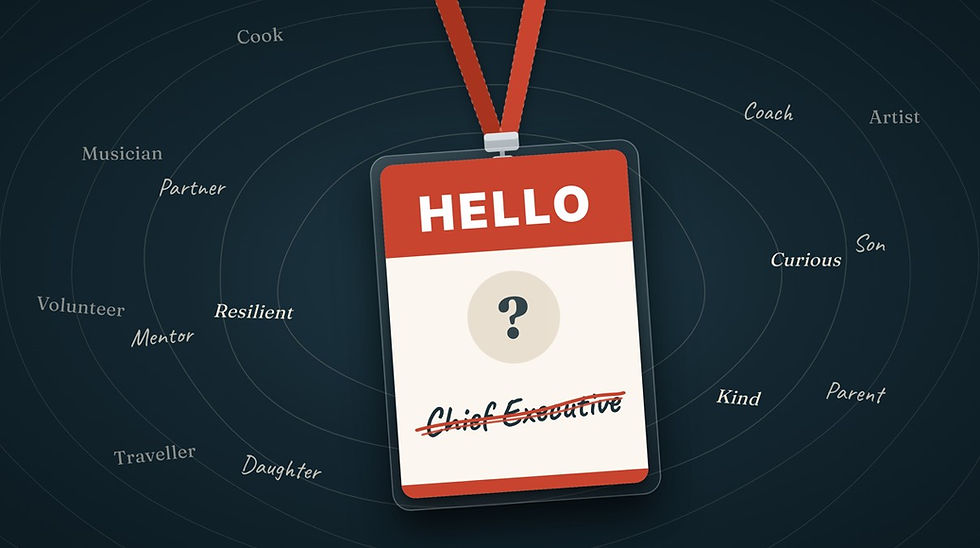
Whenever I support someone through uncertainty, change, transition, or retirement, or coach them to manage their life and career in a high-pressure, high-performance role, there is one theme that comes up again and again, and that is identity. It doesn’t matter whether I am working with elite athletes or senior leaders in business, because the question sitting underneath it all is always the same. Who am I if I am not this anymore?
Most of us have spent the best part of our lives allowing our careers to become the largest part of who we are, and in many ways, we are encouraged to do so. We are rewarded for it, we attach value and self-worth to it, and we are promoted because of it. Quietly, over time, we are shaped by it.
Though not always intended, organisations can almost compound this issue, and I know from experience that sport certainly does. Elite sport consumes you in a way that is necessary to achieve your performance targets and milestones, and business can do exactly the same when your key performance indicators (KPIs) are built entirely around the value you add to the company. But what does all of this mean for you and for your own sense of purpose and identity?
We define the company, but do we define the person?
Organisations spend an enormous amount of time and energy developing what their corporate identity means, from the company values and mission to the brand identity and vision, with away days built around them and words proudly printed on the walls. But how much time is spent helping people to understand and connect with their identity and values as individuals?
This matters for performance as much as it does for wellbeing. A major meta-analysis by Kristof-Brown and colleagues (2005) found that when people feel a good fit with their organisation and their role, they report higher job satisfaction and commitment and are less likely to want to leave. Gallup’s research points in the same direction, showing that employees who strongly agree that their employer cares about their overall wellbeing are three times more likely to be engaged at work, 69% less likely to be actively looking for a new job, and 71% less likely to report burnout.
So, we know that when someone’s values and needs are met by their work and career, their motivation and engagement increase, and they want to stay longer. This raises a really simple question for every leader and manager. How do you actually know what someone’s values are? Have you ever taken the time to ask them, and how do you know they are aligned with those of the company?
The many layers of the onion
Of course, exploring identity can feel complex, as there are so many layers of the onion to peel back. Our identity is shaped by our socioeconomic status growing up, our race, our religious beliefs, our family structures, the educational opportunities we have had, as well as the language and messages we hear, the life experiences we have had, what we have and haven’t been exposed to, and our own personality traits and behaviours.
Psychologist Dan McAdams describes this as narrative identity, the evolving internal story we build from our experiences that gives our lives a sense of unity, purpose and meaning, and which is shaped by those experiences and the cultures we grow up in. What I find really hopeful about his research is that, unlike our personality traits, our life stories are fluid. They can be explored and edited, and chapters can grow and evolve. That is exactly where I think coaching can help.
Simple ways to explore who you are without the job title
The good news is that you don’t need to unpeel every layer at once. It’s about building that sense of self-awareness and understanding of your life story and what it has given you, both enriching and challenging, along the way. Coaches use some great tools to help facilitate this narrative, enabling reflection and connection to what makes you who you are.
Tools that have really helped my coaching include the autobiographical timeline, which explores life’s peaks and challenging moments, the turning points along the way, the strengths and people that have helped you through hardship, and the people who have supported you along the way. It is amazing how quickly patterns of values, strengths, cultures people feel they belong in, and needs start to appear on the page.
Peak experiences have often worked best when asking for two very different peak moments in someone's life. Athletes, for example, will often give a sporting example, but that doesn’t always feel empowering when they feel they have nothing to give to the world other than their sporting skills and experiences. So, I would suggest asking for two, one from their career and one from outside of it, because for people who feel trapped in some way by their career identity, work doesn’t always feel empowering, and they can’t always see their whole self in that scenario. A non-career peak experience often reveals the parts of someone that have been quietly waiting to be noticed.
Strengths and belonging are also important. Many high performers often find it hard to connect to their ‘non-technical’ strengths, and I have known many elite athletes who feel they don’t have any transferable skills to offer the world. They feel that all they can do is execute a skill really well, cycle a bike around a velodrome, hit a shuttlecock over a net, or have an awesome sprint start.
It’s about helping people to connect to their strengths and often asking them what other people see as their strengths, as it is often easier for people to hold that mirror up for us than to see it in ourselves. Make it example-specific rather than philosophical or theoretical to make it feel real. “I influenced someone when I.”, “I had an impact when I.”, “I was great at leading a team when I.”
I always find it fascinating that we only start to think of these things when we have to update our CV. Why not connect to those things now?
I have also felt and seen that many people feel their identity needs aren't met when they don't feel as though they truly belong. So, ask questions such as: When do you feel most like yourself, or where do you feel you don't have to perform to be accepted? In what moments can you truly be yourself? These answers are a powerful reminder that who you are is so much bigger than what you do.
What do you say at a party?
I would urge you to ask yourself one simple question, which is how do you define yourself at a party? More often than not, we all give our job title as our whole identity, and people will make some kind of assumptions about us on that basis. But what happens when you are made redundant from that role, or it is no longer providing the level of freedom of expression or progression you need? What do you say at a party then, and how much hurt or pain might that cause you?
In sport, we call this identity foreclosure, where someone becomes so absorbed in the athlete role that other careers, interests and ways of seeing themselves are never really explored (Brewer and Petitpas, 2017). The research here is consistent, showing that a strong and exclusive athletic identity is linked to greater difficulty adjusting after retirement from sport, and that when athletes base their self-worth solely on their performance, stopping can bring a real sense of identity loss and emotional difficulty.
Business is no different. Research with Australian executives who had been made redundant found that they experienced anger, sadness, fear and embarrassment, describing it as an assault on their identity. Meanwhile, a study of professionals at City, University of London, found that those who stayed healthier after redundancy were the ones who were able to separate the loss of their job from their overall sense of who they were.
When elite athletes have so fully invested their time, energy and lives into one singular goal, it is incredibly hard for them to think beyond it, and many fear that thinking about anything other than this goal will have a negative impact on their performance. It won’t. In fact, it has the potential to do the opposite.
Research by David Lavallee in Australia's National Rugby League, which I wrote about in Eight Career Development Lessons from Elite Sport, found that athletes who engaged in career transition planning had longer playing careers and improved performance. Psychologist Patricia Linville’s work on self-complexity found that people who see themselves through many different roles and aspects of their lives were less prone to depression, stress, and illness following difficult life events. A broader identity doesn’t dilute performance. It has the potential to sustain it.
Not just for the exit, but for every day in the role
This work isn’t only about preparing for the day the role comes to an end. In elite sport, performance lifestyle support exists to help athletes manage the demands of their lives and careers and develop their holistic selves while they are still performing, whether that is juggling training and competition schedules, travel, relationships, finances and education, or living with the constant pressure of selection and results. In my experience, the athletes who sustain their performance for the longest are rarely the ones who give everything else up, but the ones who are supported to manage the whole of their lives alongside their sport.
The same is true for people in high-pressure, high-performance roles in business. When your whole sense of self rides on the next quarter’s numbers, a restructure, a lost pitch or a difficult board meeting, every setback can feel like a verdict on who you are as a person. When your identity is broader, a bad day at work stays a bad day at work, so you recover more quickly, think more clearly, and lead more steadily. This is exactly what Linville’s research on self-complexity would suggest.
So the questions we need to ask are practical, and they belong in the present. How are you managing the demands on your time and energy right now? What are the non-negotiables outside of work that keep you well? Who are you, and what do you need on the days when the job feels hardest? Leaders who ask these questions of themselves and their teams aren’t being distracted from performance. They are protecting it.
It takes longer than you think
If you think you can address your broader sense of identity, health, life balance and wellbeing once you have made a change in your life, then I would encourage you to think again. In my experience, it has taken around 18 months to two years for the majority of elite athletes I have supported to make their transition stick, as that is how long it takes to work through the psychological and emotional impact of change, reconnect with who they are and their broader identity, and develop a sense that they have a purpose, a new direction and something to give the world.
Research suggests that athletes often underestimate the identity challenges that come with retirement, which leaves them underprepared for the social and psychological impact, and I see exactly the same pattern in senior leaders. It takes time to figure this identity thing out, so why not start working on it now?
There is a really important health argument here too. I love the passion with which David Warnier speaks about lifespan and the impact that the stresses we all face throughout our lives will have on the quality of our lives in retirement. The long-running Whitehall II study of British civil servants has shown how psychosocial factors such as work stress and work-family conflict contribute to heart disease and diabetes. Researchers following that group have also found that work stress combined with caring demands raises what is known as allostatic load, the cumulative wear and tear of chronic stress on the body, which is linked to poorer health and physical and cognitive decline in later life.
So, here is my question to you. If addressing this now, in your current career, meant that you could have the quality of life, physical ability, and health to do all of the things you felt you never had the time to do when you were consumed by your career, would you take it?
Why I call it friction
When I developed the Creating Lasting Performance coaching needs analysis, I included a reference to the level of friction that your current identity, lifestyle, or career might be creating in your life. People have asked me why I chose to call it friction, and that’s because I want to encourage people to take action in the present, rather than assuming they will be afforded the time to do it at some other point in their lives.
If you could see friction in your team dynamics or in your company finances, would you take action? Of course you would. So, I would invite you to ask yourself the following questions.
If your identity is completely consumed by your career, what impact might that be having right now on your own stress levels and on those of your team?
What might it be costing your wellbeing or the quality of your relationships with your friends and family?
What happens if you can’t be that thing anymore because your role is made redundant or restructured in a way that becomes untenable? What would you do if it took you 18 months to figure out what comes next?
The bottom line
Whether you are an athlete or a CEO, this is why it is so important to do this work now. Exploring your identity, values, and strengths beyond your role won’t take your eye off performance. It has the potential to help you manage the demands of a high-pressure role today, sustain your performance for longer, enhance your wellbeing, broaden your sense of who you are, and support you through the change and transition that every career will eventually bring.
For leaders, the opportunity is just as big because you probably already know your company’s values by heart. The next step is to get to know your people's values, understand what might be causing them friction, and consider how you can help them overcome it through coaching support.
Start with where the friction is
That is why I developed this coaching needs analysis tool to help you see your areas of strength and your potential areas of friction around your life goals, knowing who you are beyond the job, who you are at home, and how your identity impacts your ability to navigate change. You can take it here for free.
Because creating lasting performance for you and your team might not be about your team identity. It might just be about what identity means for you.
If you would like to explore how this work could support you, your leaders or your athletes, please email me here.
Read more from Dawn Sanders
Dawn Sanders, Performance Coach
Dawn Sanders is a leader in coaching the lifestyle, wellbeing, career development, and transition needs of elite performers, having supported Great Britain's Olympic and Paralympic athletes for over 20 years. She is passionate about developing the person behind the performer to enable them to thrive in high-pressure, high-risk, high-reward environments.







