The Value Of Integrating Your Multiple Identities
Written by: Victor Penda Executive Contributor
Executive Contributors at Brainz Magazine are handpicked and invited to contribute because of their knowledge and valuable insight within their area of expertise

Today’s economy is driven by technology and the speed of change. This makes for faster transactions, faster interactions and similarly faster decision making to keep up with the quickly changing demands. Whereas new businesses and entrepreneurship seem to be benefitting from these changing economical dynamics, there is another dynamic that is often gone unnoticed and therefore unaddressed. I am referring to our collective psychology and the impacts that this may have on our identity, relationships and work. I have chosen not to discuss the statistics related to the global mental health crisis, suicidality and dysfunctional relationships. My reasoning is based on a hopeful assumption that this should be common knowledge to most by now.
Employees are already familiar with the increasing work demands and anxieties exacerbated by the pandemic, leaders are familiar with the uncertainty and pressure of managing the unknown, athletes can no longer contain their spiralling mental health crisis as seen all over the media. Whereas collectively as humans we are having to redefine our sense of individuality as an ongoing attempt to keep up with socio-environmental changes. However, redefining the self is no easy task even for the brightest minds among us.
Our sense of individuality is based on how we experience ourselves, others and the environment. But what sense can be made in an environment that feels incomprehensible?
Our collective attempt to solve this riddle is seen in the rise of apps and tools to help us navigate our modern complexity. Time management apps, smartwatches, flexible working arrangements are only just the few that immediately comes to mind. Nonetheless, the aforementioned indicators that point to our collective psychology maintain a concerning annual uptrend. It seems to feel as though while we obsessive-compulsively tries to make sense of our changing environment by means of technology, we destructively neglect our identity and psychology.
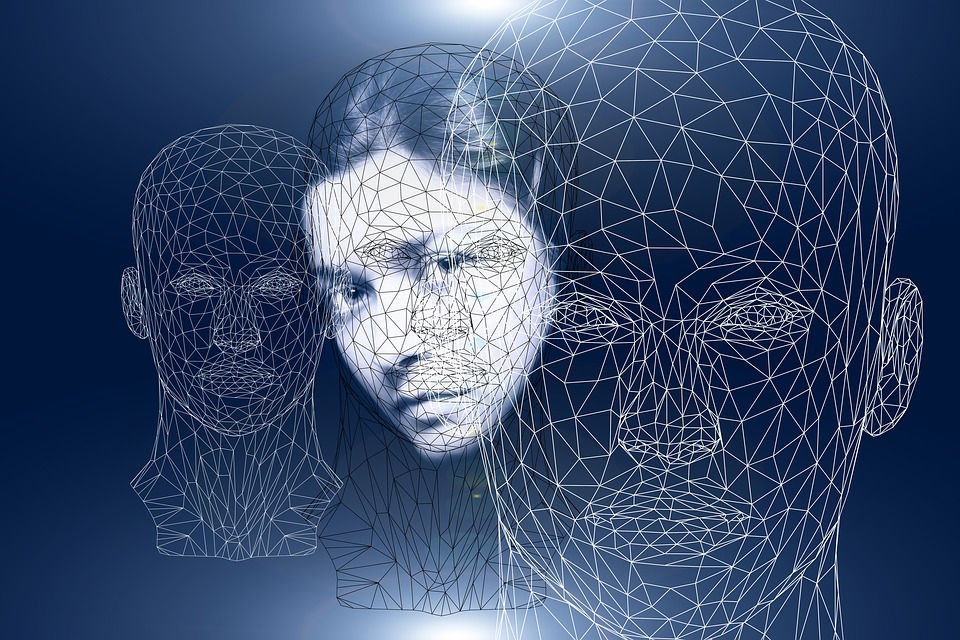
Contrary to popular beliefs, identity is not fixed or static. It is fluid, dynamic and contextually influenced. Therefore, adopting a dynamic perception of reality may help alleviate some of our collective obsessive-compulsive tendencies. This dynamism can be supported by adopting contextual identities that must be integrated to achieve a cohesive whole.
The benefits of integration
Mental Wellbeing:
While overexposure to technological devices is unhealthy for our mental wellbeing, the same logic applies to many other factors related to our psychology. Holding on to emotional baggage, fixation on specific thought patterns, attachment to certain relationship dynamics. Learning to understand that none of these defines our identity and at best, may only represent some aspects of our individuality provides us with a state of mind that is open to change.
Leadership:
Innovative working conditions are one of the main strategies that leaders have at their disposal to achieve team effectiveness. However, focusing excessively on strategy and not enough on the fluidity of their people may contribute to dysfunctions at work. By integrating the complexities of their staff members, not just as employees but as people, organisations gain a state of dynamism and adaptability to changing circumstances.
Performance:
Performance is contextually determined. What might be seen as optimal in one area may not be optimal in another. So, how we perform is also related to how we experience our identity within the context of performance. Considering this in mind, it becomes possible to perform badly at things even when having the ability to do well.
Example
An experienced and educated elite athlete came to me because of low confidence and confusion. Understandably, this was affecting his performance which was contributing to his psychological strain. While it might be tempting to assume his difficulties to be caused by his work, I believed that the athlete was too experienced and I was no sports coach to discuss the practicalities of performance. However, I could try to understand and make sense of why after so many years at the top of his field low confidence and confusion were suddenly a barrier.
We came to understand that the lifelong dedication to becoming successful in this area of sports made the athlete extremely vulnerable to contextual changes. The pandemic had brought a temporal halt to work and sports activities. This also meant a temporal halt on the skills, experience and a sense of comprehensibility of the world that this athlete had always relied on. The low confidence was a result of not knowing how to relate to close significant relationships without the identity of being an athlete. This confusion stayed even with the return of work after new Covid-19 guidelines were introduced.
By establishing a more dynamic and integrated identity, the athlete was able to regain confidence and a new sense of vigour towards work and life fuelled by more meaningful relationships and purpose. Despite many years of accumulated skills, experience and education, performance still suffered as a result of a disintegrated identity. Sometimes, the answer is in re-experiencing our inner self in new ways.
Victor Penda, Executive Contributor Brainz Magazine
Victor Penda is a researcher and consulting psychologist focusing on identity and its relationship to mental wellbeing, performance and group behaviour. Born and raised in Cameroon before emigrating to Amsterdam, The Netherlands in his early teens. He is curious about how we constantly make sense of ourselves and the environment during changing dynamics. He holds a postgraduate in occupational and organisational psychology with an emphasis on psychodynamic approaches to human behaviour. He is also trained in using schema therapeutic techniques and has applied his knowledge to improve Fortune 500 companies and elite athletes known for their participation in major tournaments such as the FIFA World Cup. His mission is to improve performance and social functioning by redefining our individual and collective identity.