The Secrets in Their Eyes: From Reaction to Response – Part 3
Written by Veronica Powell, PhD, LPC, PC, Founder & CEO
Veronica Powell, PhD, LPC, is a licensed clinician, industrial-organizational psychologist, and communication coach. As the founder and CEO of Measures4Success Academy, she empowers individuals, leaders, and organizations to master communication through Kendall’s Life Languages™ Framework, also known as Communication Intelligence (CIQ).

Parts 1 and 2 looked at the language and the system. Part 3 is about the person inside the moment and what changes when a reaction becomes a choice. If safety is a concern right now, call 911. For confidential support, trained advocates are available 24 hours a day, 7 days a week through The National Domestic Violence Hotline at 1-800-799-7233.
Why did I start asking about my own reactions?
I did not have a name for what I was living through. I had a question: Why do I keep reacting this way? I began to notice a pattern in my own responses: provocation first, reaction second, and then my reaction became the part of the story that was easiest to see. One day, I typed the words “reacting” and “provocation” into a search engine. What came back was a term I had never heard: reactive abuse.
In the early to mid-2000s, there was very little to read. Today, there is far more, but information has outpaced evidence. We have definitions and checklists without a way to classify and track these cases, so we are challenged to say how often they occur. That gap is one reason I am writing this series.
I am responsible for my own behavior no matter what the situation may be.
Naming the pattern did two things. It lifted the confusion because I could see I was not alone. It also raised my sense of responsibility. I am accountable for my own reactions, whatever the situation. Holding myself accountable and recognizing how systems misread a reaction are not in conflict. They work as partners. That insight started my study of my own communication patterns and the emotional vulnerabilities behind my reactions, and it led me to a framework that gave me a practical way to respond with intention instead of reacting.
How can Life Languages™ help?
Life Languages™ groups seven languages into three families. The graphic shows each family and the positive character qualities of its languages.
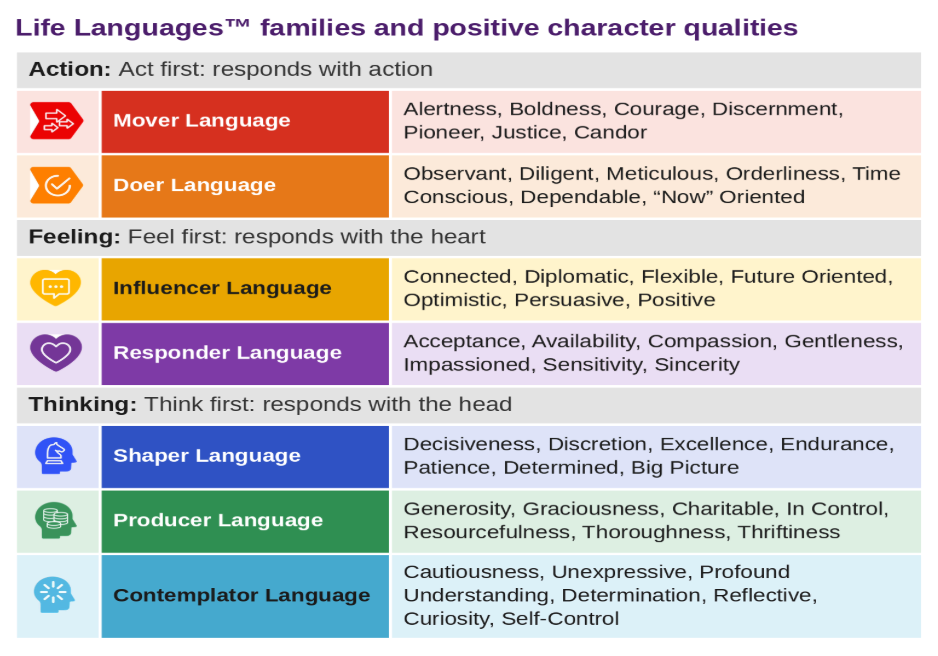
Why does this matter in a reactive situation? The first response under pressure tends to follow the family. Those in the Action family tend to move first. Those in the Feeling family tend to respond through emotion. Those in the Thinking family tend to respond through the head. Provocation can work by pressing on that first response, and knowing your own gives you a moment of choice.
Needs add another layer. For example, those who speak Responder Language need to feel heard, those who speak Influencer Language need affirmation and connectedness, and those who speak Doer Language need action and appreciation.
When a person is told that an event never happened or that their feelings are too much, the dismissal can land hardest on the very need their language carries. Each language also has its own pattern of distress, which Life Languages™ calls distress flares: ways we predictably undermine our personal and professional lives.[1] I describe them in my earlier article. Identifying your own is the next step, and the Mini Profile below is where to begin.
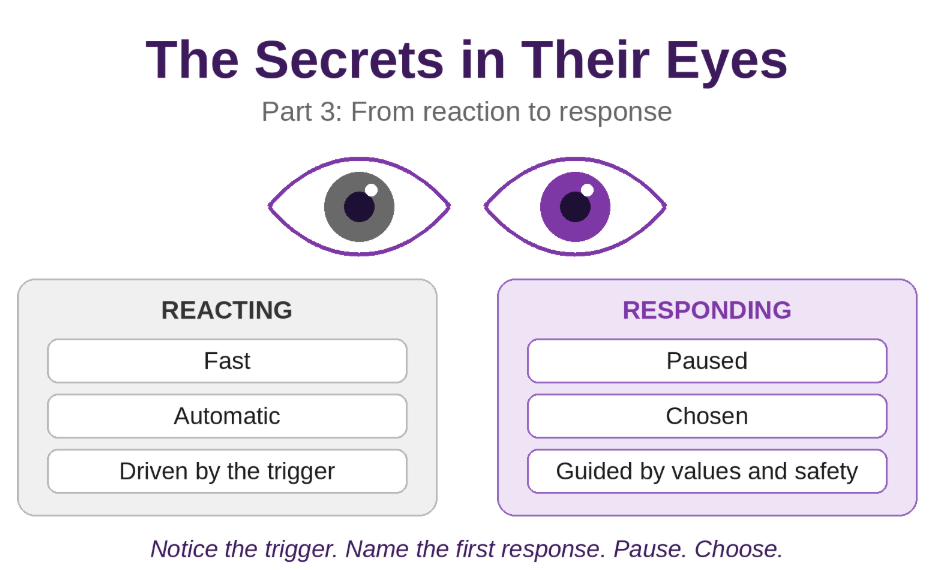
For me, the practical skill was learning to recognize my first response and interrupt it. The sequence is simple to describe and hard to practice: notice the trigger, name the first response, pause and breathe, and choose a response that fits my values and my safety.
Responding with intention does not mean absorbing mistreatment or staying in danger. Where there is fear, safety planning comes first and communication skills come second.
What can readers do?
Survivors: Keep dated records of what happened before, during, and after an incident, including what came before your reaction, and speak with a domestic violence advocate or an attorney about how to use them.
Clinicians: Ask what preceded the reaction, and screen for fear and control before labeling a conflict as mutual.
Legal professionals and advocates: Look for the pattern before the incident, ask who is afraid of whom, and weigh the full history rather than the last act.
Everyone else: When you hear a story about someone’s reaction, ask what happened before it.
Key takeaways
A reaction is automatic. A response is chosen, and the pause between them is where the choice lives.
The first response under pressure tends to follow your Life Languages™ family, and knowing yours gives you a moment of choice.
Accountability for your own responses and recognition of how systems misread them can both be true.
Where there is fear, safety comes first and communication skills come second.
Within the United States: If you are ready to respond differently but safety is a concern, support is available. In an emergency, call 911. The National Domestic Violence Hotline offers confidential support 24 hours a day, 7 days a week, at 1-800-799-SAFE (7233) or via teletypewriter (TTY) at 1-800-787-3224. You can also text START to 88788 or chat online at thehotline.org. An advocate can talk through safety planning with you, and you do not have to have it figured out before you call.
Outside the United States: If you are outside the United States, call your local emergency number. To find a domestic violence or crisis helpline in your country, visit findahelpline.com.
Discover your first primary language
If this series raised questions about how you react under pressure, take the next step with the Life Languages™ Mini Profile. It gives you access to your first primary language, a starting point for recognizing your first response and choosing how you respond. Raise Your Communication IQ to Raise Humanity, one conversation at a time.
Follow me on Facebook, LinkedIn, Instagram, and visit my website and BlueSky handle for more insights and updates!
Read more from Dr. Veronica Powell
Veronica Powell, PhD, LPC, PC, Founder & CEO
Veronica Powell, PhD, LPC, is a licensed clinician, industrial-organizational psychologist, and communication coach. As the founder and CEO of Measures4Success Academy, she empowers individuals, leaders, and organizations to master communication through Kendall’s Life Languages™ Framework, also known as Communication Intelligence (CIQ). Dr. Powell is a Senior Executive Contributor for Brainz Magazine and the creator of the Communication Matters Global Movement, where she teaches professionals how to build trust, empathy, and relational intelligence in every conversation.
References:
[1] Kendall, F., & Kendall, A. (2019). Communication IQ: A proven way to influence, lead, and motivate people. Whitaker House.
[2] Life Languages International. (2025). Overview of the CIQ languages.