The End of Ego and 16 Secrets for Great Design Leadership
Written by Craig Edis, Founder of The Wink Collective
Craig Edis is the founder of The Wink Collective, where he helps designers bridge the gap between craft and business. A product leader and service design expert, he empowers designers to develop strategic, professional, and creative skills that make them indispensable across industries.

There is a massive canyon between being a great designer and being an effective design leader. Many senior designers step into their first management role expecting to simply do more of what they love. They assume their days will be spent overseeing high-level design strategy, polishing high-fidelity prototypes, and getting the final say on visual direction. The reality is a rapid wake-up call.
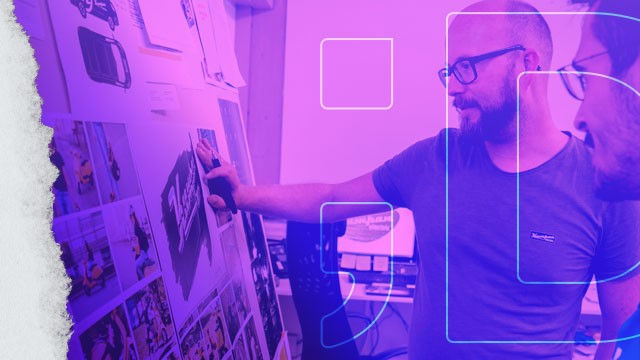
The moment you accept a design leadership title, your job fundamentally changes. You are no longer designing interfaces or systems. You are managing people. Your calendar immediately fills up with resource allocation meetings, one-on-one career development conversations, cross-departmental negotiations, and conflict resolution. You have to stop pushing pixels and start navigating complex human dynamics. As a designer, your ultimate responsibility is to the uncompromised quality of the work. As a design manager, your responsibility is the creation of the conditions in which great work can happen.
That means giving up control, replacing dictates with clarity, and putting the spotlight entirely on your design team. Too many brilliant UX professionals fail as leaders because they try to maintain their status as the best executor in the room. Creative leadership is not about getting your way. It is about equipping others to find a better way.
The evolution from pixel pusher to environment creator
A junior manager might look at a problem and say, “Here is what I would do.” A true design leader says, “Here is how I would approach figuring this out.”
Teach people how to think, not what to think. If every design decision comes back to you, you have not created a high-performing team; you have created a bottleneck of dependency. Your goal in design team management is to make them need you less by helping them become better decision-makers.
Guide, do not dictate. Your job as a leader is not to have the answer to every UX problem, but to ask the probing questions that help people arrive at better answers themselves.
Bring stability through dependable processes. Creative work is ambiguous enough without an unpredictable way of working. Create dependable structures around how design decisions are made, how work is reviewed, and what "good" looks like in your organization.
Protect your designers from the noise. Your team should not have to absorb every piece of corporate chaos. A vital part of managing designers is filtering out the stakeholder drive-bys, conflicting direction, and political distractions.
The most effective design managers focus heavily on creating a clear vision, strategy, and structure. Ambiguity should exist in the problem being solved, not in the expectations placed on the team.
Autonomy, ownership, and the science of not micromanaging
You hire talented design professionals so they can tell you what to do, not the other way around. Allow your team to feel genuine ownership of the work by giving them context and constraints, then getting out of the way.
Give people ownership, not assignments. A great test of effective design leadership is whether your designer could defend their rationale to stakeholders if you were not in the room.
Understand that everyone solves problems differently. Your team members are not going to design exactly like you. Be comfortable with people arriving at solutions you would never have considered.
Good ideas can come from anywhere. A creative director who always has the best idea eventually teaches everyone else to stop having them.
Focus on input, not just feedback. Feedback happens late in the game when a designer has already invested significant effort. Input happens early enough to influence the design outcome.
The data backs this up. Jobs deliberately designed to provide autonomy by offering clear expectations for outcomes while giving employees decision-making authority significantly reduce employee burnout and stress.
Psychological safety as a strategic growth lever
A design department that always agrees with you is a team that is not thinking hard enough. You must deliberately cultivate a culture where failure is safe and disagreement is encouraged.
Allow people to fail. If people cannot fail, they will not take risks, and they will produce the safest, most mediocre work possible. The best design teams are not afraid of being wrong; they are just highly skilled at discovering they are wrong early through rapid testing.
Make disagreement safe. Someone telling you, “I do not think that is the right design direction, and here is why,” should be celebrated.
Critique the work, never the person. Make the problem something you and the designer are solving together.
Make critique a team sport. The best design critique is collaborative problem-solving among peers, not judgment handed down from above.
In Google's landmark Project Aristotle study, researchers analyzed hundreds of teams to determine the secret to high performance. The number one defining characteristic of an effective team was psychological safety, which is the shared belief that team members are safe to take risks, ask questions, and admit mistakes without fear of punishment.
Bridging the gap between design quality and business reality
Design strategy cannot exist in a vacuum. The strongest design leaders can move comfortably between user needs, aesthetic quality, and bottom-line business outcomes.
You do not need to be right; you need to be able to reason. A design decision should never be based on personal preference. It must be anchored in the brief, user needs, business objectives, and empirical evidence.
Advocate for design without becoming defensive. Do not defend a choice simply because “it is good design.” Connect it to metrics the organization understands, such as revenue, retention, risk mitigation, operational efficiency, and brand equity.
Do not let perfectionism become procrastination. Know when to say, “This prototype is good enough to learn from.” Sometimes the fastest way to improve a product is to simply let real customers use it.
Give credit away and take responsibility upward. When things go well, your team did a fantastic job. When things fail, you own the fact that you did not give them the clarity or support they needed.
When you master this translation between design execution and business strategy, the impact is undeniable. Companies that excel at design increase their revenues and shareholder returns at nearly twice the rate of their industry peers. Yet, many design leaders fail because they cannot articulate their value to the C-suite. Research shows only a third of CEOs can confidently state what their head of design is actually accountable for.
The transition from senior designer to design leader is ultimately an ego death. You are no longer the best designer in the room; your job is to make the room better.
The transition into design leadership does not have to be a solo journey. Through The Wink Collective, I offer dedicated one-on-one mentorship for emerging design managers and professionals looking to elevate their leadership strategy. Pricing and structure are entirely adaptable based on your specific career goals and challenges.
Read more from Craig Edis
Craig Edis, Founder of The Wink Collective
Craig Edis is the founder of The Wink Collective, where he helps designers bridge the gap between craft and business. A product leader and service design expert, he teaches designers how to communicate value, lead clients, and turn creativity into measurable business impact. Through his Design For Business programs, Craig equips designers with the professional skills and confidence they need to operate strategically and be seen as indispensable. His mission is to redefine professional design, empowering designers to influence decisions, defend bold ideas, and thrive across industries.