The Case for Scheduling an Hour of Nothing – An Interview with Justin Matley
The founder of Matley Coaching brings more than two decades of experience in media, advertising, and communications to his work helping people navigate conversations, decisions, and competing demands. His perspective is also deeply personal: living with a stutter has shaped his understanding of connection and the many ways people can express themselves and be heard.
In this exclusive interview, Justin Matley discusses how stuttering and chronic pain inform his coaching, why difficult conversations need room to pause, and how practical tools, from decision scorecards to time away from devices, can help people make more deliberate choices.

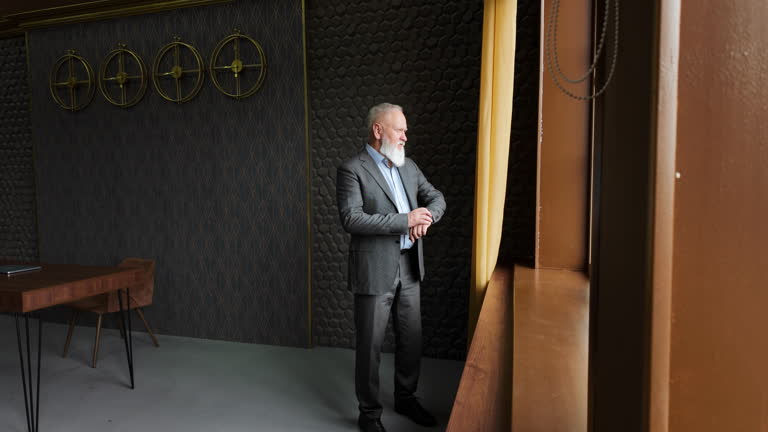
Justin Matley, Professional Coach
What led you to start Matley Coaching, and why did communication become such a central part of your approach?
I have always been someone deeply engaged in my community. It’s hard for me to sit idly by when I see an opportunity to do my very minor part to make something a little bit better. I’m generally wired to be curious and willing to take risks. Communication is deeply personal for me: I’m a stutterer. Verbal communication can be quite difficult at times. Sure, over the years I’ve worked on techniques to make it easier, but this trait is probably the seed of the practice. It’s given me a sense of empathy I’m not sure I’d have otherwise.
People have told me that I’m a good communicator, which feels like an oxymoron! But I realized good communication comes in a variety of forms, and it permeates every aspect of our lives. It can be both subtle and overt, contextual and simple. Of course, it is not exclusively verbal. Moreover, we know bad communication when we see it and the cascade of problems it can create.
After more than two decades in media, advertising, and communications, what have you learned about how people connect and build trust?
I have learned that nothing resonates better, whether it be for a multimillion-dollar Super Bowl commercial or a coffee with a neighbor, than authenticity. I know that word gets bandied about these days, but it really does hit the nail on the head. We’re consumed by a world, mostly digital in nature, that overloads, even hijacks, our brains. Connection matters. Truth and transparency matter.
Sure, in something like advertising, someone is trying to make money. That doesn’t mean it needs to be unethical or phony. This is true across communication generally. People connect in the places that you reach them, and each venue creates a predisposition: skepticism, assumptions, and so on. The best way to create real trust and connection is to be brave enough to be truthful and real, even if it feels risky. It’s probably far less risky than you think.
How have your personal experiences with stuttering and chronic pain shaped the way you support others through challenges?
When I started my coaching training, I realized something very important that, in many respects, you’re taught to avoid: bringing yourself into the work. I am who I am, and I know that what makes me helpful to people is largely informed by my own challenges and experiences. That doesn’t make them any more impactful than someone else’s or more dramatic. It just gives you data markers.
My speech and fibromyalgia are intertwined in my feelings about the world. They help shape both simple everyday decisions and how I feel about issues much bigger than me. To put them aside would be lying to myself and to my clients. It would also be a disservice because you can always find something in your own history that has connective tissue with another’s story.
What do you think people misunderstand most about effective communication, especially when navigating difficult conversations?
I think the number one thing here is that effective communication comes in a variety of forms, and every connection, every situation creates a different set of circumstances. What works here doesn’t always work there. What resonates with person A could offend person B. There’s no precise formula.
What is true is that no matter how introverted, extroverted, quiet, or loud we may be, no matter how lost we feel or confident we are, there is always a path to effectively communicating our feelings, values, or goals and, just as importantly, receiving another’s.
Why do you think so many professionals and parents struggle to manage their time, even when they seem highly organized?
Every generation has an omnipresent challenge. My dad reminds me of this when I complain about how difficult it is to work full time, raise decent kids, be a good husband, and so on. His generation had the constant fear of a nuclear holocaust. The previous one had the most terrible war in the history of the world. Before that, depression and disease. There’s no free pass.
But I think our current generation’s challenges and the digital world have collided in a way our bodies and minds are just not naturally equipped for, particularly as it relates to our children. Email and social media in particular have created these inescapable vortexes where our available brain space is a moving target, our time fragmented and dissected. The hardest part of creating good time management today is creating prolonged physical space to do, more or less, nothing, to give our brains the shutdown they demand.
What simple changes can help someone communicate more effectively when emotions are running high?
I can speak for myself and say: stopping. Listening. But first, creating the space in the conversation. I have trouble with this myself. My wife can get overwhelmed and shut down if I purge my thoughts too aggressively or with too much volume. This is not uncommon. We just process differently.
When emotions run high, it’s easy to feel like you’re rushing down the rapids, and very often we go right over the waterfall and say perhaps that one thing we didn’t want to say going into the conversation. So to prevent that, we have to inject space in the dialog. Space to process what someone says to you before responding, and space to properly say what you intend without clouding your judgement or using language you may regret.
How can someone use a decision scorecard to make better choices when juggling competing priorities?
These are the nerdiest things, but I find them so, so useful. On my Instagram page, @matleycoaching, I have a video on this where I use the example of choosing between two potential apartments. My wife and I did exactly this when we were picking a new place to move into together. It’s a way to break through the emotions that can influence decision-making and create a priority system where the most important aspects of something have more weight in the result.
That’s not to say emotions don’t or shouldn’t factor in. They can and sometimes should. But I think feelings should be a factor weighed against other, more practical ones. In the aforementioned case, it was items like cost, neighborhood quality, transportation access, number of bedrooms, and so on. You can use them for really any decision, big or small, that requires choosing between two or more things.
What has your own experience with adversity taught you about the relationship between personal struggles and growth?
For me, the biggest adversity in my life came through parentification. My mother was an alcoholic and drug addict, my dad a busy professional. I have two much younger sisters. I was put in a position where, for their well-being, I had to take on responsibilities, physically, mentally, and emotionally, that someone my age probably shouldn’t have had. This aged me pretty quickly.
I remember in my first job, I had a colleague call me “the oldest young man I know.” I found this hilarious, but coupled with my chronic pain, it felt about right. In the end, I know my story is my own. It’s no better or worse than anyone else’s. We all face adversity on some level, and I think recognizing that life is a series of victories and defeats, small and large, is important. They’re all learning opportunities.
What is one change readers can make today to build stronger relationships and feel more in control of their lives?
I think the first, most fundamental way to create a sense of control in your life is to create regular physical space somewhere in your schedule. This may mean a nap, or a run, or meditation. But it has to be an unequivocal disconnection. It doesn’t mean you have to be alone. It can be a date night even, but it does mean getting off the device, stepping away from the emails, and, if you can, getting some fresh air.
Sure, it’s not particularly sexy to schedule romance, or time to read a book, or take a walk, but the demands of modern, everyday life step on our toes in ways that lead us to never truly detach from our obligations. Amongst work, eating, kids, and any other unavoidable duty, this has to be one of them.
An easy first step: turn off your devices or put them to sleep at least two hours before going to sleep every night, without fail. This is programmable. It’s an easy way to inject some detachment into the routine.
An equally easy second step: start small and set a weekly block of one hour that just says “nothing.” Really. Don’t touch the hour. Don’t run an errand. Don’t scroll social media. Don’t do anything that decides for you what your brain has to process. Let the hour have its way. It may seem crazy, but give it a shot. You may be surprised by what you discover.
Read more from Justin Matley