The Beehive Model of Nonprofit Fundraising
Written by Kimberlli Walker, Founder of KIMI Consulting
Kimberlli Walker, founder of KIMI Consulting, coaches nonprofit leaders, staff, and boards to fundraise with confidence. With 30+ years of leadership, she leads donor development at a Bay Area community foundation, managing $1K-$200K+ gift portfolios and $500K+ sponsorships. Her approach blends data, process rigor, and storytelling.

A nonprofit fundraiser can become remarkably successful by adopting a beehive's organizational structure, collaboration, communication, and collective purpose. The central lesson of a beehive is simple, "No single bee makes the honey. The entire colony contributes to its creation."
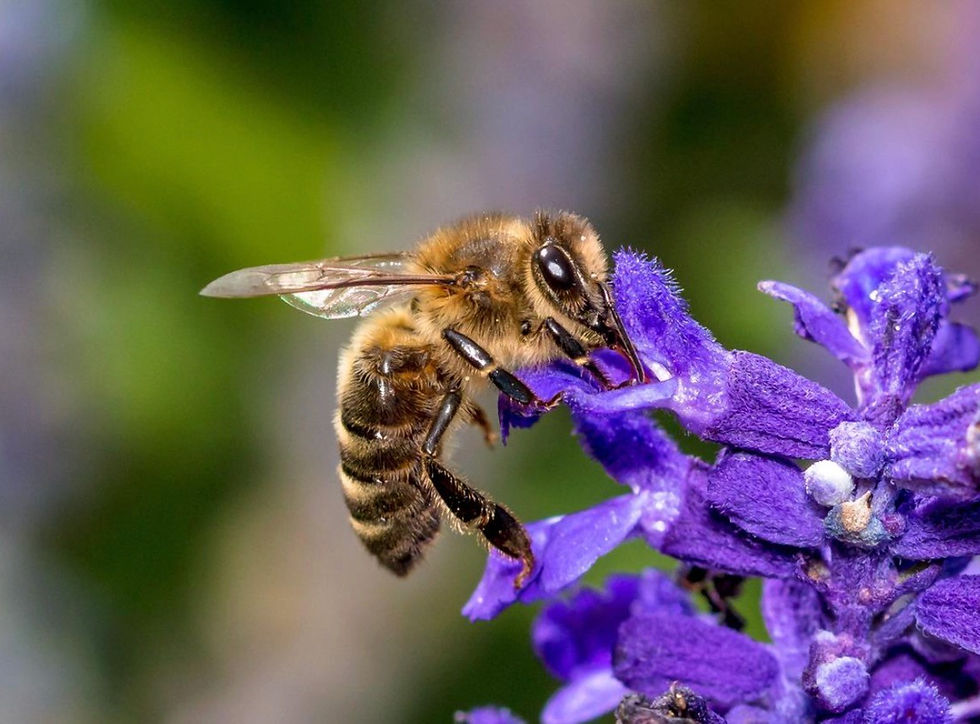
This is a powerful model for nonprofit fundraising because sustainable fundraising is not the responsibility of one development director. It is the collective work of an entire organization and its community.
1. The queen bee: Mission leadership
The queen bee plays a central reproductive role in sustaining the colony. In nonprofit fundraising, the equivalent is the organization's mission and leadership, which provide continuity and direction.
A successful nonprofit needs a compelling mission that inspires people to participate.
Fundraising application: The executive director and board communicate a shared vision, build trust, and help everyone understand what their contributions make possible.
2. Worker bees: Staff, board members, and volunteers
Worker bees perform different jobs throughout their lives, including maintaining the hive, caring for young, gathering resources, and protecting the colony.
Similarly, nonprofit fundraising succeeds when responsibilities are distributed.
Development staff cultivate donors and coordinate campaigns.
Board members open doors to relationships and resources.
Program staff share stories demonstrating impact.
Volunteers organize events and engage the community.
Communications staff amplify the mission.
Fundraising application: Build a culture where everyone contributes to fundraising based on their strengths, rather than expecting everyone to solicit donations.
3. Forager bees: Relationship builders
Forager bees leave the hive to find nectar and pollen, then return with resources that sustain the colony. In nonprofit fundraising, foragers build relationships beyond the organization.
They identify potential supporters, establish partnerships, engage corporations, and connect with foundations.
Fundraising application: Create a network of fundraising ambassadors who continually introduce new individuals and organizations to the mission.
4. The waggle dance: Communication and intelligence
One of the most fascinating aspects of a beehive is the waggle dance. Honeybees use this movement to communicate the direction and distance to valuable food sources. Imagine applying that principle to fundraising!
When a board member discovers a potential corporate sponsor, they should share that intelligence. When a development officer learns what motivates a donor, they should use that information to guide future engagement.
Fundraising application: Establish regular fundraising huddles where staff and board members exchange information about opportunities, relationships, successes, and challenges.
The goal is to create an organization where valuable knowledge circulates rather than staying with one person.
5. The honeycomb: Systems and infrastructure
A honeycomb consists of interconnected hexagonal cells that provide efficient storage and structural support. For nonprofits, the honeycomb represents the systems that make fundraising sustainable.
These include donor databases, stewardship plans, fundraising calendars, gift processing, financial accountability, and impact reporting.
Fundraising application: Build dependable systems so relationships and institutional knowledge survive staff transitions.
6. Pollination: Community impact
Here is where the beehive analogy becomes especially powerful.
Bees don't just collect nectar. As they move between flowers, they also pollinate plants, supporting the broader ecosystem.
Likewise, effective fundraising should create benefits beyond the organization itself. For example, a nonprofit working on affordable housing might bring together developers, local businesses, government agencies, philanthropists, and community residents.
These partnerships can create new housing opportunities, stronger public policies, and greater community investment.
Fundraising application: Measure success not only by dollars raised but also by the relationships, opportunities, and community benefits created along the way.
Turning the beehive into a fundraising strategy
Consider a nonprofit with an annual fundraising goal of $500,000.
Illustrative fundraising goal: $500,000
Major donors: $200,000, 40% | Corporate partnerships: $150,000, 30% |
Community giving: $100,000, 20% | Fundraising events: $50,000, 10% |
Actual targets should reflect donor history, organizational capacity, and fundraising costs.
The beehive approach would assign a coordinated team to each revenue stream, with shared responsibility for introductions, cultivation, solicitation, and stewardship.
5 principles for a successful fundraising hive
Collective purpose: Everyone understands the mission and why financial support matters.
Division of labor: People contribute according to their abilities, relationships, and expertise.
Continuous communication: Share opportunities and donor intelligence responsibly.
Mutual sustainability: The organization values and supports donors, staff, volunteers, and community partners.
Shared prosperity: Fundraising success strengthens the organization and the broader community.
The most important lesson: Don't just collect honey, grow the garden
A nonprofit that focuses only on collecting donations may meet its annual goal but struggle to sustain relationships.
A nonprofit that cultivates an ecosystem of supporters can develop lasting partnerships, recurring donations, community advocates, and new opportunities.
The beehive provides a useful distinction: Transactional fundraising asks, "How much honey can we collect?" Transformational fundraising asks, "How can we build an ecosystem that continues to flourish?"
For a nonprofit development director, this changes the leadership role from being the organization's primary fundraiser to becoming the architect of a collaborative fundraising ecosystem.
Here's a question worth exploring: What if a nonprofit organized its entire development department around the functions of a beehive, creating a fundraising model called The Hive, with defined roles for board members, donors, staff, volunteers, and corporate partners?
That could become a distinctive framework for fundraising strategy, board engagement, and organizational development.
Visit my website for more info!
Read more from Kimberlli Walker
Kimberlli Walker, Founder of KIMI Consulting
Kimberlli’s coaching pairs proven philanthropic frameworks with relationship-centered work to build fundraising confidence. She helps clients map donors through the giving pipeline using moves management, qualify prospects with the LAI model, and set goals and track progress with CRM data and sector benchmarks. She also uses Motivational Interviewing, money-story and mindset coaching, storytelling, and rapid 90- to 120-day improvement cycles (PDSA) to help fundraisers ask with authenticity and test campaigns.