Rethinking the World Cup and the Cities, Infrastructure, and Legacy Beyond the Game
Written by Monserrat Menendez, Interior Designer
Monserrat is an entrepreneur, interior architect, and sustainability advocate, as well as the founder of Senom Design, a firm dedicated to merging innovative design with sustainable solutions. With over a decade of experience across residential, commercial, and international projects, she specializes in bringing clients’ visions to life through thoughtful, high-impact interiors.

The 2026 FIFA World Cup may become the most carbon-intensive tournament in history, yet it is also redefining how global sporting events can shape cities, infrastructure, and sustainability for generations to come.
When people hear the words World Cup and sustainability together, skepticism is understandable. The conversation often centers on carbon emissions, greenwashing, and whether mega sporting events can ever be environmentally responsible.
The 2026 FIFA World Cup deserves that scrutiny. Expanding to 48 teams, 104 matches, and 16 host cities across the United States, Mexico, and Canada, it is expected to generate the largest carbon footprint of any World Cup to date. Yet focusing only on emissions overlooks another story unfolding behind the tournament, one about urban development, regional cooperation, and infrastructure that will continue serving communities long after the final whistle.
The true legacy of the 2026 World Cup may not be measured by goals scored, but by the cities it helps reshape.
A different approach to building
One of the tournament's biggest sustainability advantages is surprisingly simple: it is not building from scratch.
Unlike Qatar 2022, which required the construction of seven new stadiums, the 2026 World Cup relies almost entirely on existing venues. That decision dramatically reduces the environmental impact associated with construction while shifting investments toward modernization instead of expansion.
Several host stadiums have incorporated energy-efficient systems, water conservation strategies, and operational improvements. MetLife Stadium, the site of the 2026 Final, recently achieved LEED Gold certification, while Levi's Stadium in California continues to serve as a benchmark for renewable energy integration and efficient stadium operations.
The lesson is significant. Sustainable development is not always about building more. Sometimes, it is about building smarter.
The carbon challenge we cannot ignore
Despite these improvements, the tournament faces an undeniable reality.
Independent estimates suggest the 2026 FIFA World Cup could produce nearly 7.8 million metric tons of CO₂ equivalent, making it the most carbon-intensive tournament ever held. The primary reason is not stadium construction or energy use. It is travel.
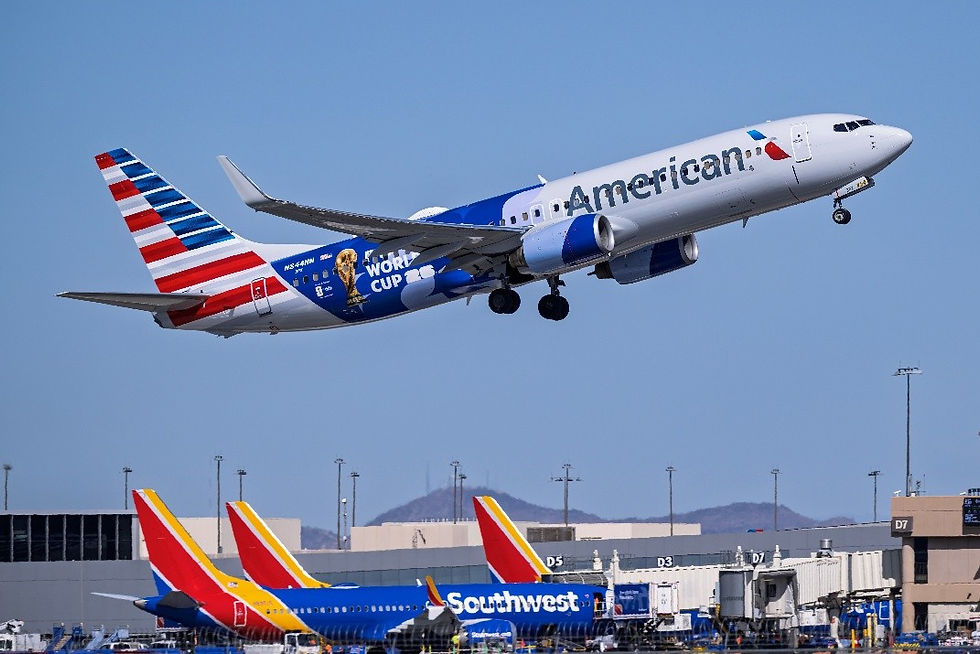
Nearly 88 percent of the tournament's projected emissions are expected to come from spectator transportation. Hosting matches across three countries means millions of fans will travel long distances, often by air, throughout the competition.
This highlights an important distinction. Stadiums can become more energy efficient. Waste management systems can improve. Renewable electricity can power venues.
But no amount of recycling or solar panels can fully offset a tournament whose geography requires extensive aviation.
That contradiction sits at the center of the 2026 World Cup. It represents meaningful progress in sustainable infrastructure while exposing the environmental limits of an ever-expanding global sporting event.
Cities, not stadiums, may become the real legacy
The most compelling sustainability story is not found inside the stadiums, but throughout the host cities themselves.
In Dallas, more than 150 public agencies, businesses, universities, and nonprofit organizations joined forces to create one of the tournament's most comprehensive sustainability strategies. Community cleanup initiatives, environmental education, and regional collaboration are designed to continue well beyond 2026, establishing partnerships that can support future international events.
Houston has focused on connectivity. Investments in public transit, pedestrian corridors, parks, and renewable energy are intended not only to improve the visitor experience, but also to leave residents with stronger urban infrastructure after the tournament concludes.
Toronto is approaching sustainability from another perspective by advocating for reusable food service systems and waste reduction strategies that could influence future sporting venues worldwide.
Each city is solving different challenges, yet all are treating the World Cup as an opportunity to accelerate improvements that would otherwise take years to achieve.
That shift, from preparing for an event to investing in long-term urban resilience, is where the tournament's greatest potential lies.
Mexico's opportunity goes beyond hosting
Mexico's contribution deserves equal attention.
Too often, discussions surrounding the 2026 World Cup focus primarily on the United States, with Canada and Mexico viewed as supporting hosts. In reality, Mexico brings not only decades of football history, but also a unique opportunity to demonstrate how sustainability can respond to local priorities rather than follow a single global formula.
Mexico City is using the tournament to strengthen public transportation, improve public spaces, and advance environmental education. Guadalajara is emphasizing mobility and metropolitan connectivity, while Monterrey is addressing infrastructure challenges linked to rapid urban growth, water scarcity, and extreme heat.
Each city reflects a different environmental context, proving that sustainability is not a universal checklist, but a response to local needs.
However, the tournament also highlights difficult conversations. Communities surrounding Estadio Azteca have raised concerns regarding redevelopment, water resources, traffic, and neighborhood impacts. These issues remind us that sustainability cannot be measured solely through energy efficiency or carbon reduction. It must also include social equity, community participation, and the long-term well-being of residents.
True sustainability succeeds only when both environmental and human outcomes improve together.
Beyond politics
The World Cup also arrives during a complicated political moment for North America.
Trade disputes, immigration debates, and shifting diplomatic relationships have strained cooperation between the United States, Mexico, and Canada. Yet despite these tensions, the tournament has required governments, transportation agencies, environmental organizations, and local authorities to collaborate across borders on an unprecedented scale.
That cooperation may become one of the tournament's most overlooked achievements. While football cannot solve geopolitical disagreements, it can create opportunities for collaboration around infrastructure, public safety, transportation, and sustainability that extend beyond sport itself.
In that sense, the World Cup serves not only as a global competition, but also as a large-scale exercise in international coordination.
The legacy begins after the final whistle
The success of the 2026 FIFA World Cup should not be judged solely by attendance figures or television ratings. Its lasting impact will depend on what remains after the fans leave.
Do upgraded transit systems continue serving residents? Do environmental standards become permanent? Do partnerships between governments, businesses, and communities continue producing results? Do investments improve daily life for the neighborhoods that hosted the tournament? Those are the questions that matter most.
The 2026 World Cup is unlikely to become a carbon-neutral event, and it should not pretend to be. Its environmental footprint is substantial, particularly because of international travel.
Yet dismissing the tournament as simply another high-emission sporting event overlooks the meaningful changes taking place in the cities themselves.
By prioritizing existing stadiums, accelerating public infrastructure, encouraging regional collaboration, and embedding sustainability into long-term urban planning, the tournament offers an important lesson: mega events should no longer be evaluated only by what they deliver during competition, but by what they continue delivering years afterward.
Perhaps that is the real legacy of the 2026 FIFA World Cup. Not simply a month of football, but a blueprint for how global events can leave cities stronger than they found them.
Read more from Monserrat Menendez
Monserrat Menendez, Interior Designer
Monserrat is an entrepreneur, interior architect, and sustainability advocate, as well as the founder of Senom Design, a firm dedicated to merging innovative design with sustainable solutions. With over a decade of experience across residential, commercial, and international projects, she specializes in bringing clients’ visions to life through thoughtful, high-impact interiors. She is the U.S. Brand Ambassador for U Green, an organization that helps companies become more profitable while empowering people and brands to follow a consistent path toward sustainability through transformative education and specialized consulting. As an Executive Contributor to Brainz Magazine, she shares her expertise in design, sustainability, and innovation. Her mission is to create spaces that are not only beautiful but also responsible and forward-thinking.