Regenerative Tourism Has to Be Taught, Not Just Promoted
Maurice Smith, CTIE, is a hospitality and travel strategist focused on regenerative tourism, place-based guest experience, cultural hospitality, and restorative approaches to travel. His insight has been sought by national travel, business, and consumer media outlets for perspective on luxury travel trends, destination value, sustainability, and evolving traveler expectations.

Regenerative tourism is not only about protecting destinations, but it is also about understanding them. Through a journey across Panama, this article explores how meaningful connections, local perspectives, and deeper awareness can transform the way we experience and care for the places we visit.
I thought I knew Panama
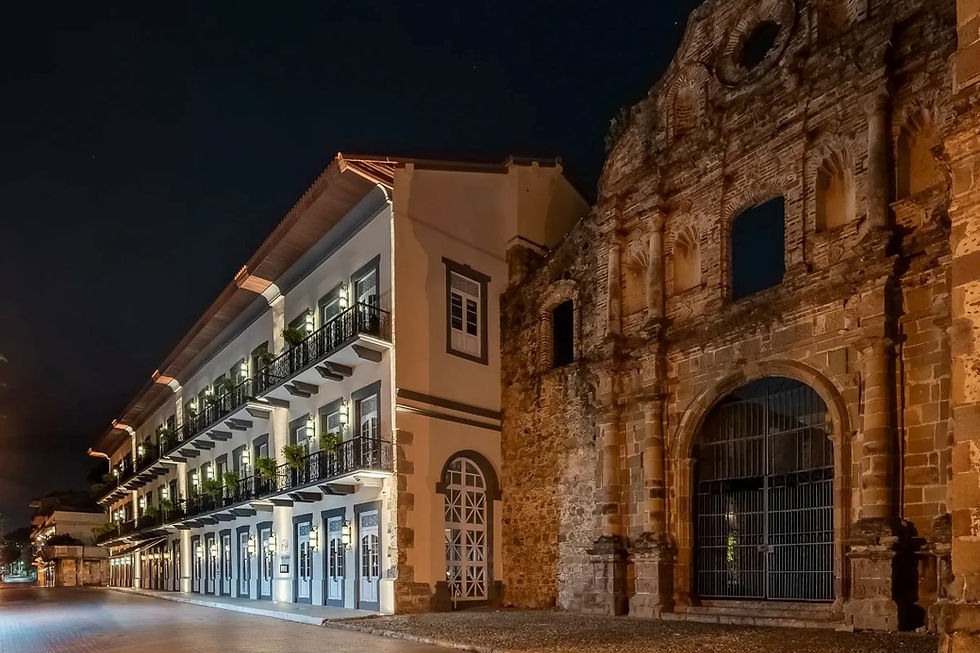
I had been to Panama several times before this trip. During my years as a travel advisor, it became one of those destinations I felt comfortable recommending because it had become familiar to me over several visits. I had stayed in Casco Viejo before, and La Compañía, where we were staying this time, had become one of my favorite hotels there. So, when one of my colleagues in Panama arranged for us to spend the day with a local business owner who would walk us through the city from his perspective, I expected to learn a few things. I didn't expect the experience to change the way I saw a place I thought I already knew.
We started just outside the hotel and walked through Casco rather than moving from one attraction to another. Within a few minutes, we were inside St. Joseph's Church looking at its elaborate Golden Altar. Our guide shared the local legend that when Henry Morgan attacked the original Panama City, a priest covered the altar so its gold would not draw the pirates' attention. I knew he was sharing a legend, but that almost wasn't the point. A few minutes earlier, I had been looking at a beautiful altar. Now I was looking at something connected to the city's memory.
As we continued walking, we spoke with people our guide knew and stopped for meals in places he chose. His version of Panama came from living and working there, not from presenting a destination to visitors. The country's history began to feel less like a timeline and more like something still visible in the streets. I also began noticing the present more closely. Once we moved beyond the most polished parts of Casco, the conditions around us changed quickly. There was more trash, some buildings and public spaces appeared to receive less care, and signs of poverty and homelessness became more visible. I had been through Casco before, but I had never experienced that transition in quite the same way.
Later, we went to the Panama Canal. I knew why it mattered long before I stood beside one of the locks, but watching a massive ship move through made its scale real in a way a textbook or documentary never had. You could see the precision of the process and the amount of coordination involved in moving something that large through the lock system. Something I had understood intellectually became physical.
By the end of the day, Panama itself had not changed. I had simply been given another way of seeing what was already there. I had recommended the country to travelers and knew many of the places a visitor might be told to see, but this time I was not only moving through Panama. I was learning how to read it.
That experience made me wonder whether our conversations about regenerative tourism sometimes begin too late. We ask travelers to care for the places they visit, but before people can care more deeply about a place, they may first need a reason to look more closely.
The city beyond the itinerary
For a long time, much of what I associated with regenerative travel in Panama was environmental. Isla Palenque and Islas Secas had shown me what that could look like when hospitality stayed closely connected to landscape and conservation, and the same idea is part of what draws me to places like Nayara Bocas del Toro. Casco Viejo had always represented another kind of regeneration to me. I was drawn to the fact that so much of its character remained intact even while old buildings were finding new lives.
Casco's World Heritage status and the preservation framework around the historic district are part of that story. Walking those streets, you can see old structures being used as hotels, restaurants, shops, and homes without the neighborhood feeling as if everything that came before has been erased. Its layers are still visible. I had always considered that kind of preservation regenerative in its own right. What I had thought about less was what happened just beyond it.
That abrupt change is not unique to Panama. I see versions of it at home in Atlanta, where a few blocks can change the mood of the city completely. A neighborhood that looks one way through a car window can reveal far more when you walk it. You notice what survived, what disappeared, where investment has reached, and where the physical condition of the city begins to shift.
South Downtown has been on my mind for that reason. The area sits within Atlanta's historic commercial core and is again going through a period of significant change. There is an enormous amount of history concentrated in those streets, but much of it is easy to pass without knowing what you are looking at.
Walking through an area like that with a guide who knows its history can give familiar streets new meaning. The buildings do not change, but the way we read them does.
This is one of the limitations of the way we sometimes experience cities as travelers. We are very good at identifying what visitors should see and where they should spend their time. I spent years doing that for clients, and those recommendations still have value. But a carefully planned itinerary can also make it possible to move through a destination without encountering much of the larger place around it.
I don't think the answer is to reject the polished parts of a city or treat development as inherently negative. Preservation requires investment, and tourism can create opportunity while bringing buildings back into use. The more interesting question for me is whether we remain curious about how that change fits into the wider community. Sometimes seeing more of a place begins with walking a little farther and listening to people who know it well.
When tourism becomes more than a lesson
When I say regenerative tourism has to be taught, I am not suggesting that every trip needs a classroom or an itinerary filled with lessons. Most of the moments that have taught me something while traveling did not feel educational at all. They happened through a conversation, a story, or a detail I might otherwise have passed without noticing.
That day in Panama made me reconsider what I had valued when planning travel for clients. Of course, I thought about hotels and experiences, but some of the recommendations that mattered most were the ones that helped a traveler get closer to the destination itself. A private guide could completely change how a traveler read a city. We could have walked the same streets in Casco on our own and probably had a great day, but we would have missed the perspective of a person who knew where to stop, who to speak with, and which details deserved another look.
Hotels can create that connection too. I have always been drawn to properties that make the destination feel present rather than insulating guests from it. That can be as simple as sharing why a building matters, introducing a guest to local people, or offering a recommendation that takes them beyond the places they would have found on their own. None of that requires turning a vacation into an educational program. It simply requires hospitality to make room for the place itself.
The same idea applies in natural environments. A beautiful landscape can remain scenery if no one helps us notice what is happening within it. Once we learn why an ecosystem functions the way it does or what is threatening it, the experience carries more weight. Cities present a different risk. Once a destination becomes popular, the travel industry can repeat the same version of its story so often that visitors begin to mistake that version for the whole place.
This is where the language around regenerative tourism can get ahead of the experience itself. We have become good at describing hotels and destinations as sustainable, responsible, or regenerative, but those words can only do so much on their own. The goal should not be to give travelers more information for the sake of it. It should be to give them enough perspective to become curious. Promotion can tell us that something matters. The experience has to help us understand why.
What changes when we understand a place
I don't think learning about a place automatically makes us more responsible travelers. People can know better and still make choices that work against what they know. But it becomes harder to treat a destination as something disposable once we have formed a real connection to it. That connection can make us more aware of where our money goes, what is being preserved, and what our presence means to the place around us. Sometimes it simply leads us to ask better questions.
This is where stewardship begins to make more sense to me. The word can sound like a responsibility reserved for people working in conservation or preservation, but travelers participate in the life of a destination too, even temporarily. Where we spend money and the stories we carry home become part of that relationship. Some of the places I care most about today are places I first encountered through travel because something I learned there gave me a reason to keep paying attention after I returned home.
Learning to see a place differently
When I think back on that day in Panama, what stays with me is not that I discovered a completely different destination. Nothing I saw had changed. What changed was the perspective I carried through it. I had visited before, recommended Panama to travelers, and spent enough time there to feel familiar with it. Yet familiarity had not shown me everything.
That may be what I value most about travel now. I still love a beautiful hotel and an exceptional meal, and I still value the simple pleasure of seeing somewhere new. But I have become just as interested in the moments that unsettle my first impression and make me look again. That day in Panama reminded me that there is always more beneath the version of a destination we think we know. Sometimes the most regenerative thing travel can do is teach us to notice what was already there.
Read more from Maurice Smith, CTIE
Maurice Smith, CTIE, Regenerative Travel & Hospitality Strategist
Maurice Smith, CTIE, is a hospitality strategist, writer, and advisor whose work sits at the intersection of regenerative tourism, place-based guest experience, cultural hospitality, and restoration-centered leadership. His perspective is shaped by a belief that the future of travel will be defined not only by access, amenities, or aesthetics, but by meaning: how a journey connects people to culture, community, ecology, memory, and place. Recognized by leading travel publications and industry platforms, Maurice has built a career around luxury travel, destination expertise, sustainability, and purpose-driven hospitality. Through his writing and advisory work, he focuses on the future of travel as a more responsible, meaningful, and culturally connected industry.