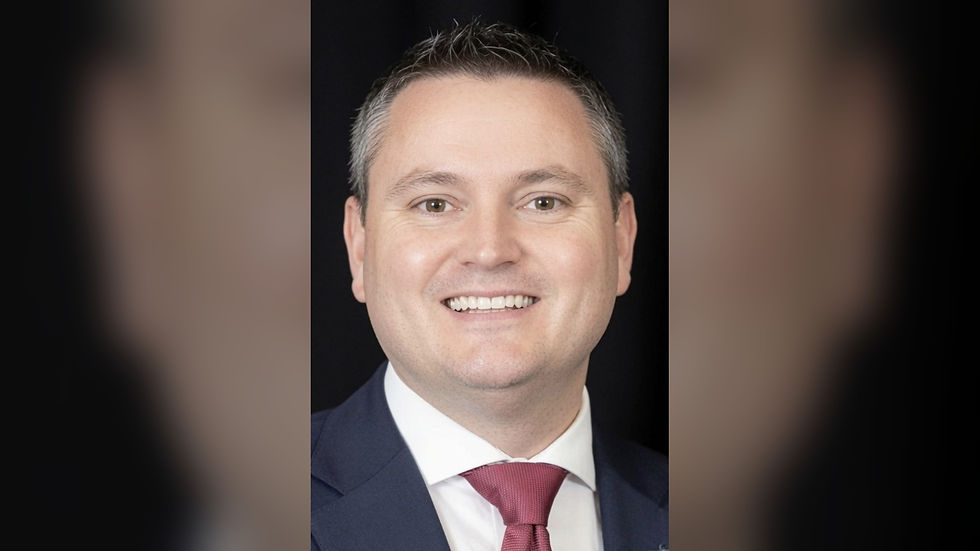
Nick Miccarelli and the Power of Turning Service Into Action
Leadership isn't about being in charge. It's about making sure the people depending on you have what they need to succeed." That's how Nick Miccarelli – military veteran, former state representative, and now CEO of DELGO Community Transit – sums up two decades of public service. His career proves the point: real leadership is less about the title, and more about what gets built behind the scenes.
How a military veteran, public official, and CEO built a career around solving real-world problems
Big ideas often sound impressive on paper. Bringing them to life is the hard part.
For Nick Miccarelli, the most important ideas have never been about headlines or attention. They have been about creating systems that work, helping communities function better, and finding practical solutions to real problems.
Over the last two decades, Miccarelli has built a career that spans military service, state government, local leadership, and executive management. Today, as CEO of DELGO Community Transit, he leads an organization focused on improving transportation access and community services across Pennsylvania.
His journey shows how leadership often comes down to one simple principle: get involved, stay committed, and follow through.
“People spend a lot of time talking about change,” Miccarelli says. “The harder part is actually building something that creates lasting results.”
How Nick Miccarelli started his leadership journey
Miccarelli grew up in Ridley Park, Pennsylvania, where he learned early the value of community involvement.
While attending Ridley High School and later the University of Pennsylvania, he developed an interest in public service and leadership. But one decision would shape much of his future.
In October 1999, he joined the Pennsylvania Army National Guard.
That commitment eventually led to deployments in Kosovo and Iraq. In 2009, he served as a door gunner aboard a UH-60 Blackhawk helicopter during a deployment with the 28th Combat Aviation Brigade.
The experiences taught lessons that would stay with him long after returning home.
“When you're serving in difficult environments, you learn very quickly that success depends on teamwork and preparation,” he says. “You have to trust the people around you and focus on the mission.”
Those lessons would later influence every leadership role he took on.
From public service to public leadership
While continuing his military career, Miccarelli became involved in politics and government.
He worked as chief of staff to Representative Ron Raymond, gaining firsthand experience in legislative operations and constituent services. That role gave him a close look at how decisions affect communities at the local level.
In 2008, he was elected to represent Pennsylvania's 162nd Legislative District.
His focus was straightforward: support economic growth, improve opportunities for residents, and make government more responsive.
One of the most notable moments of his political career came in 2012 when he was nominated by both Republican and Democratic parties and ran unopposed. He received the highest total vote count in the district's history.
For Nick Miccarelli, the achievement reflected something larger than politics.
“People want leaders who solve problems,” he says. “Most challenges aren't partisan. They're practical.”
That mindset would become a recurring theme throughout his career.
Building Community Solutions Beyond Government
One of Miccarelli's most significant contributions happened outside elected office.
Following Hurricane Katrina, he founded the Hurricane Katrina Sister Town Project, a grassroots initiative created to support communities affected by the disaster.
The project demonstrated something he had learned through military service and public leadership: large challenges often require local action.
“You don't always have to wait for someone else to step in,” he says. “Communities are strongest when people take responsibility for helping each other.”
The experience reinforced his belief that meaningful change often starts with ordinary people taking initiative.
That lesson would prove valuable in the next phase of his career.
Leading DELGO Community Transit
Today, Miccarelli serves as CEO of DELGO Community Transit, where he oversees organizational strategy, operations, partnerships, and long-term development.
The role combines many of the skills he developed over the years.
Military service taught him discipline. Government taught him accountability. Community work taught him collaboration.
At DELGO, those experiences come together through a focus on building reliable systems and improving services for the communities the organization serves.
“A good organization isn't built around one person,” Miccarelli says. “It's built around processes, people, and shared goals.”
Rather than focusing on short-term wins, he spends much of his time looking at long-term improvements that can strengthen operations and expand community impact.
His approach reflects a leadership style that values consistency over attention.
“Real progress usually happens behind the scenes,” he says. “It's often the result of small improvements made every day.”
What professionals can learn from Nick Miccarelli's career
Looking back, Miccarelli's career has followed an uncommon path.
He has served in combat zones, state government chambers, borough council meetings, nonprofit organizations, and executive offices.
Yet the common thread remains the same. Service.
Whether supporting fellow soldiers, representing constituents, helping disaster victims, or leading a transportation organization, his focus has consistently centered on solving problems and helping people.
He remains active with organizations, including the Pennsylvania Veterans Museum, Friends of the John Heinz Wildlife Refuge, First Troop Philadelphia City Cavalry, and his local church.
For Miccarelli, leadership is not about titles or recognition.
It's about responsibility.
“Leadership isn't about being in charge,” he says. “It's about making sure the people depending on you have what they need to succeed.”
That philosophy has guided him through military deployments, public office, and executive leadership.
And it continues to shape his work today.