Maryna Osadchuk – The Future of Music Education and the Role of Technology in the Digital Age
Updated: Sep 9
Written by: Olena Sudak
Digitalization, artificial intelligence, and interactive platforms are rapidly making their way into every area of our lives. It is easy to see how these innovations are transforming the way younger generations learn. Modern education systems are actively integrating global technological shifts, as the spread of digital tools can meaningfully benefit both students and teachers alike. The 2020 lockdown made it clear that digitalization can be a genuine lifeline for maintaining continuity in the learning process.
Music education is facing real changes as a result. Educators around the world are constantly searching for ways to effectively incorporate new technologies into their teaching without losing the foundational academic traditions or the living emotional connection with the student.
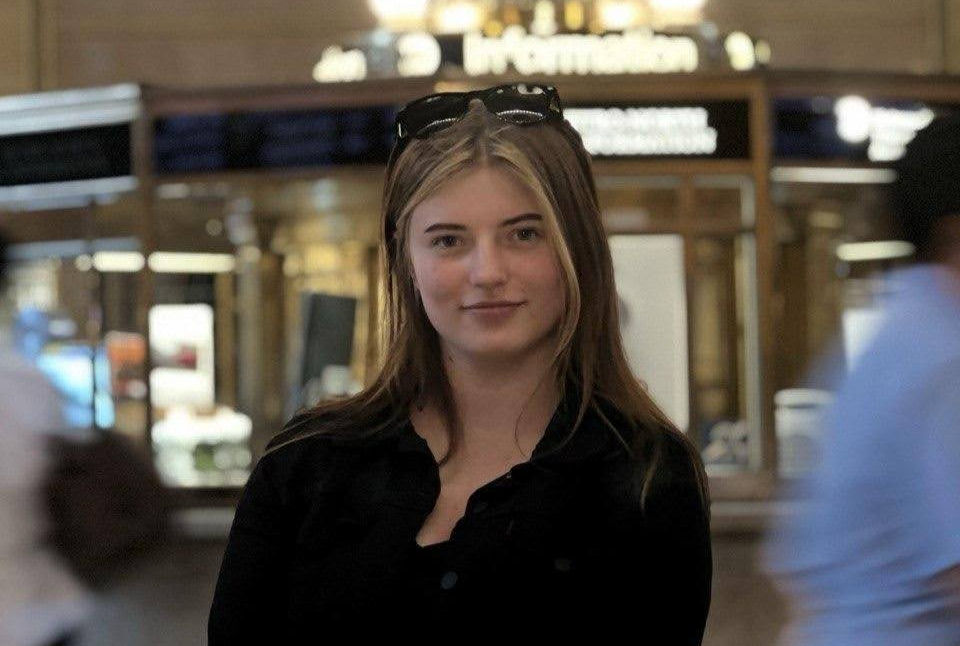
Maryna Osadchuk, who teaches private piano lessons in Brooklyn, believes that the digital age opens unprecedented opportunities for scaling quality education. Before 2020, she had already built a strong academic foundation in Ukraine. Her early professional achievements were recognized at the regional level in the Ternopil Oblast, where she won the Grand Prix at the Borshchiv Music School Competition, secured 1st place at the Terebovlia College of Culture and Arts Competition, and successfully competed in the Regional Music-Theoretical Olympiad in Chortkiv in 2017. In a relatively short teaching career, she has already worked with more than 100 students, some of whom have stayed with her for several years.
The Pandemic experience in 2020
Although Maryna had already begun teaching in 2020, she significantly expanded her teaching practice during the COVID-19 lockdown in Ukraine. As both her own studies and her teaching activities moved online, she found herself simultaneously navigating the roles of student and instructor.
“In my view, online lessons have their undeniable advantages. The biggest one is accessibility. You can work with children who live in other cities or even other countries. There is also the option to record a lesson and come back to it later if a student needs to review something,” she says of the remote format.
At the time, she found the Viber messenger to be the most practical platform, as it was the most widely used and familiar tool among Ukrainians. To maintain focus and effectiveness, she slightly shortened lesson durations and developed her own detailed approach to working on technical nuances, such as finger placement and note duration.
While many piano teachers simply used video calls as a passive substitute for in-person classes, Maryna decided to establish a unique asynchronous analytical model. She asked students to record videos of their practice at home and send them to her. She would carefully review the recordings, take screenshots of the moments where a child made an error, and send them back with detailed written comments. This allowed her to analyze technique more slowly and thoroughly than would be possible during a live lesson.
That said, Maryna acknowledges that a full transition to online teaching in music comes with significant drawbacks, “Through a camera, it is not always easy to see the fine details of hand position or the specifics of a student's movements. There are often sound issues or connection problems that seriously disrupt the work. Online, it is much harder to build the subtle rapport and trust that naturally develop through in-person interaction.”
Given that she works primarily with children, she also notes that younger students often need parental help with setting up the technology and organizing the lesson, which can slow things down. For that reason, Maryna believes that fully virtual formats work well as an alternative for older learners, while in-person lessons generally remain more effective for young beginners.
Apps and gamification: Help or hindrance?
As a wide range of music software emerged after 2020, Maryna took a close look at popular platforms such as SimplyPiano, Yousician, and Flowkey. “Some of my students came in having already used these apps or were experimenting with them alongside our lessons,” she notes.
She acknowledges that these interactive systems can genuinely help a child begin exploring an instrument on their own in a playful, low-pressure way, making the early stages feel approachable rather than intimidating. At the same time, she has seen their limitations clearly, “These apps essentially measure only the accuracy of note presses and rhythmic timing, but music is so much broader than that.”
Maryna continues, “They cannot detect hand position, breathing, phrasing, dynamics, or the emotional quality of playing. A child can successfully ‘clear a level’ in an app while playing with a completely wrong technique that becomes extremely difficult for a teacher to correct later.”
In her view, no app is currently able to read and respond to a student's mood, fatigue level, fear of making mistakes, or personal relationship with a particular piece. “But those psychological nuances are what determine whether a child will continue learning or give up within a month,” Maryna explains.
The takeaway, she emphasizes, is this, most of these programs are designed around instant gratification, while genuine music literacy, ear training, and real musical thinking can still only be developed through a living teacher.
Based on her own professional teaching experience, Maryna has observed that automated tools may not fully capture qualitative aspects of musical performance, such as emotional expression, timbre, and physical ergonomics. In her experience, relying too heavily on automated feedback without appropriate guidance from a teacher may also contribute to the development or reinforcement of poor technical habits. For this reason, she views technology as a valuable supplementary tool in music education rather than a substitute for the professional judgment and individualized guidance of an experienced educator.
Three categories of technology in a modern teacher's practice
According to Maryna Osadchuk, the digital tools that have the greatest impact on music education today can be grouped into three broad categories.
Communication platforms and digital libraries: Services such as Zoom, Skype, and Viber for conducting lessons directly, along with digital sheet music libraries like IMSLP and MuseScore, and YouTube as a source of performance examples and masterclasses from world-class musicians. However, instead of using YouTube as passive entertainment, she embeds specific video-performance analyses into her curriculum, teaching students how to visually dissect the physical movements of world-class pianists.
AI tools for the teacher: Maryna uses tools like ChatGPT to streamline lesson preparation by quickly locating rare sheet music, biographical information about composers, and generating creative ideas for exercises. The key advantage here is instant access to information. “Before, finding a specific piece meant browsing through dozens of large libraries and printed collections. Now I can find what I need much faster and come to each lesson better prepared,” she says.
Mobile utilities: A wide range of apps for ear training and solfège, along with digital metronomes and tuners on smartphones. Maryna notes that these are genuinely useful tools for a child's independent practice at home, though she herself is not a proponent of apps that ‘listen’ to a student's playing and generate automated feedback.
Her overall philosophy on technology is straightforward. “All of these innovations work best when they remain effective tools in the hands of a teacher, not a replacement for one. Technology expands access and speeds up certain processes, but the heart of learning will always be the living pedagogical relationship between teacher and student.”
She also cautions that in the rush toward total digitalization, speed, and measurable efficiency metrics, there is a real risk of losing sight of music's fundamental purpose, the transmission of deep human feeling. “If music becomes nothing more than a technical skill that can be mechanically learned through an app or an algorithm, we will lose something far more profound,” Maryna concludes.
In summary, Maryna Osadchuk's broader point is that digitalization in music education is only effective when it serves a clear pedagogical strategy. In Brooklyn, she continues to develop and apply her own methodology, one focused on working with immigrant children and bilingual students, where digital tools serve as flexible instruments that support integration rather than drive it. Over five years of teaching, the majority of her students have shown meaningful improvements in technical proficiency, along with measurable growth in concentration, discipline, and memory. Students who once had severe stage fright have gained emotional resilience through her psychological support framework, and children navigating the difficult process of adapting to life in the United States have, according to their parents, shown noticeable improvements in social skills and overall emotional well-being.
Educators like Maryna show that when technology is thoughtfully combined with an individualized human approach, it can become a powerful means of addressing social isolation and supporting integration through accessible, creative education.