Is Your Animal Companion the Teacher or the Student?
Certified holistic animal wellness and behavior consultant, speaker, facilitator, intuitive, and author of Moving Beyond Words. She blends five-element insight with holistic wellness tools to help guardians create calmer, healthier relationships with their companions.

Many discussions have explored whether our animal companions are here to learn from us or whether they are here to teach us. But perhaps we have been asking the wrong question. This article invites readers to explore a different perspective, one where life becomes the curriculum, the relationship becomes the classroom, and every shared experience offers an opportunity for mutual discovery, deeper connection, and a richer way of experiencing life together.
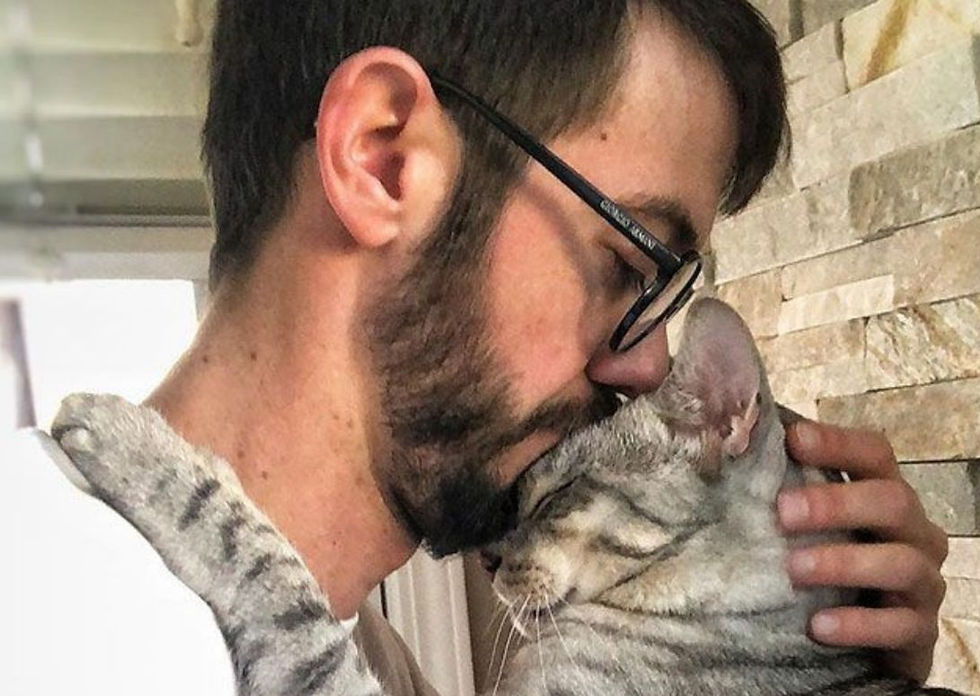
By intentionally nurturing the relationship we already share with our animal companions, we begin to see one another differently, approach life’s challenges with greater compassion, and discover one of life’s greatest gifts waiting to be unwrapped and shared.
Is your animal companion the teacher or the student?
Conversations this week have me reflecting on the remarkable depth of the relationships we share, not only with the people we love, but with our animal companions as well.
Most meaningful relationships ask something of us. They are not always easy, and they are seldom stagnant. They ebb and flow. They invite us to become more patient, more compassionate, more present, and more resilient than we were the day before.
In our relationships with our animal companions, we often think of ourselves as the caregiver, the one providing food, safety, guidance, and support. Yet, if we pause long enough to notice, we begin to realize something extraordinary. The relationship has been shaping us, too.
I was reminded of this while thinking about a senior dog whose walks had become slower with age. What was once a brisk twenty-minute walk had become a gentle journey, filled with more frequent stops to sniff the grass, watch a butterfly, or simply rest for a moment.
At first, it felt frustrating. There was always somewhere else I thought I should be, something else I needed to do. Then, one day, something shifted.
The slower pace created space to notice the birdsong that had always been there, to feel the sun and wind on my skin, and to smile at neighbours instead of hurrying past. It allowed me to appreciate the quiet beauty of moments that had too often and for too long gone unnoticed. I began to notice the softness of the moment when where we were was actually the destination, not a hurried pit stop, and to become present in that moment with her.
It was not her purposeful intention to become a gentler, slower-moving partner, but it changed our relationship nonetheless. It shifted my mindset from seeing it as something I simply had to accept to recognizing it as a relationship that was naturally evolving. It was changing whether either of us wanted it to or not. Perhaps this new phase of the relationship was inviting a different way of experiencing life and noticing what I had been missing all around me.
Many discussions have explored whether our animal companions are here to learn from us or whether they are here to teach us. Perhaps we do not need to choose one role or the other. Perhaps life is the curriculum. The relationship is the classroom.
Together, we are both student and teacher, discovering, growing, and evolving through the experiences we share. The question is, how deep do you want to go?
I invite you to consider that no two beings are exactly alike, and no two relationships are exactly alike. Every partnership is shaped by the unique personalities, experiences, needs, and ways of relating that each individual brings to it. What we discover about ourselves on this journey can be a true gift. Relationships bring us a new perspective, a new way of experiencing life that we would not have experienced on our own.
Napoleon Hill described a concept he called the “Third Mind.” He suggested that when two individuals come together with a shared purpose, something new is created, an intelligence or dynamic that belongs not to either individual alone, but to the relationship itself. No two individuals will ever share exactly the same experience. This gives us an idea of how much we can learn from time spent together and how unique and powerful our connections with others can truly be.
Whether you view this as a philosophical idea, a psychological dynamic, or simply the natural result of two lives becoming intertwined, it offers an interesting perspective. Every person and every relationship is unique. Each has its own personality, its own rhythm, its own challenges, its own strengths, and its own extraordinary potential.
There is no single approach that fits everyone because no two people or relationships tell the same story. I was once held up at gunpoint in a shopping centre. There were about ten people in the store with me. When the police arrived, we all gave our individual accounts of what had happened and descriptions of the assailant. What was bewildering to me was that we each had a different version of what had happened, and we each described the man differently. Our lives shape what we experience.
So, what if what we are here to learn is part of this partnership? Would you look at the relationship differently? Would you take time to pay closer attention to the small interactions and quiet moments?
Some companions teach us patience. Others invite us to become stronger leaders. Some encourage us to slow down, while others inspire us to become more adventurous. Some need our confidence when they cannot find their own. Others quietly remind us to soften, trust, and simply be present.
The beauty is not found in discovering the “right” way to relate. The beauty is found in discovering your way together.
That discovery does not happen overnight. It unfolds through thousands of ordinary moments, a quiet walk, a comforting glance, a difficult season, a joyful celebration, or a challenge overcome together.
Each experience becomes another opportunity to better understand one another, not to change one another, but to grow alongside one another.
Whether you see this through the lens of biology, psychology, spirituality, or simply the shared experiences of two individuals living life together, something remarkable happens when we become intentional about the relationship itself. It changes the way we see one another. It changes the way we experience life. It changes the way we respond to challenges.
Behavior becomes something to understand rather than simply correct. Difficult moments become opportunities to grow rather than obstacles to overcome. Ordinary moments become extraordinary because we begin to notice the depth that has always been there.
Sharing our lives with an animal companion is one of life’s greatest gifts. Like any beautifully wrapped gift, however, we have a choice. We can carry it through life, grateful for the companionship it brings, yet never take the time to discover everything it holds. Or we can choose to unwrap it with curiosity, mindful intention, intuitive listening, and an open heart.
As we do, the relationship begins to reveal itself, not because it suddenly becomes deeper, but because we begin to notice its depth.
We begin to discover that our companion is not simply sharing our home. They are sharing our journey.
How much of that gift we experience is, in many ways, our choice. If we never pause to explore it, we may spend years carrying one of life’s greatest gifts without ever discovering all it has to offer.
But when we intentionally nurture the relationship, we begin to uncover experiences that deepen our compassion, broaden our perspective, strengthen our partnership, and enrich the lives of both individuals.
Perhaps that is the greatest invitation our animal companions offer us, not simply to share our lives, but to experience them more fully together.
So, is your animal companion the teacher or the student? The question is no longer, “Who is teaching whom?” The more meaningful question becomes, “What gift is this relationship inviting you to unwrap today?”
Our lives with our animal companions are about so much more than companionship. They are shared journeys that can simply be observed, or they can be truly experienced.
Within every shared journey lies the opportunity to discover one of life’s greatest gifts, not simply the animal beside us, but a remarkable relationship waiting to be explored.
Continuing the conversation
If this perspective resonates with you, I invite you to continue exploring the extraordinary gift that already exists within the relationship you share with your animal companion.
Moving Beyond Words: Our Shared Journey explores the biology of connection, emotional safety, intuitive awareness, and the profound bond we share with our animal companions. It is available here.
Looking Beyond Behavior Foundations offers practical tools and guided reflections to help you build deeper understanding, trust, and partnership in everyday life. It can be found in the community below.
Join the Moving Beyond Words community, where we continue these conversations through thoughtful discussions, shared experiences, and practical exploration of what it means to consciously nurture one of life’s greatest gifts, our relationship with the animals who walk beside us. Visit here.
Read more from Arlana Tanner-Sibelle
Arlana Tanner-Sibelle, Interspecies Connection & Wellness Coach | Author
Arlana Tanner-Sibelle is the founder of We Wellness Solutions and the author of Moving Beyond Words: A Transformational Guide for Animal Guardians and Their Companions. With over 25 years of experience in holistic wellness and a lifetime of working with animals, she blends intuitive insight with integrative healing modalities to support both people and their companions. Arlana helps animal guardians create happier, healthier, and more harmonious relationships by guiding them from stress and frustration into calm, trust, and a deeper connection.