In the Age of AI, Community is Our Greatest Superpower
Written by Christophe Zoghbi, CEO & Founder of ZAKA
Christophe Zoghbi is an AI entrepreneur, strategist, CEO and founder of ZAKA, an AI transformation company advancing adoption across the MENA region. He helps organizations move from AI awareness to practical capabilities, intelligent workflows, and scalable solutions.

A few days ago, I stood on stage at the UAE AI Festival in Abu Dhabi and shared a thought that has been on my mind for quite some time, “The greatest risk of AI isn't that machines become more human. It's that humans forget how to connect with each other.”
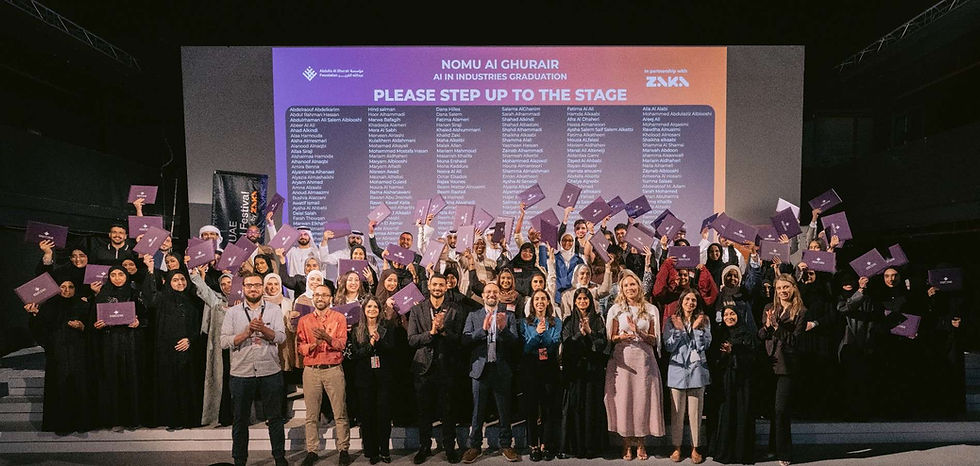
The more I think about where AI is heading, the more I believe this. We are living in an extraordinary time. AI can help us write, code, design, research, brainstorm, and solve problems that once required entire teams. We have access to more knowledge and capabilities than ever before. Yet, I believe one of the most valuable things we can invest in today has nothing to do with technology. It's community.
Technology connects us, community brings us together
When I started Beirut AI back in 2017, the idea was simple: bring together people who were curious and passionate about artificial intelligence. We didn't have all the answers, a sophisticated strategy, or a massive budget. What we had was a shared curiosity and a belief that learning is better when we learn together.
People started showing up: students, engineers, entrepreneurs, researchers, and professionals from completely different backgrounds. They came to learn about AI, but something much more interesting happened. They started learning from each other. They built friendships, found collaborators, discovered career opportunities, and launched projects together. Some of those connections eventually led to the creation of ZAKA.
That's something I've carried with me ever since: the real power of a community isn't in the number of people who join. It's in what becomes possible when those people connect.
AI is changing how we learn, but not why we need each other
Today, anyone with an internet connection can learn almost anything about AI. You can ask ChatGPT to explain a concept, generate a personalized learning plan, or help you build your first AI application.
So why would anyone still need a community? Because access to information was never the whole problem. People also need direction, encouragement, accountability, feedback, and opportunities.
You can learn how to build an AI agent from a tutorial, but talking to someone who has actually deployed one in a business environment is a completely different experience. You can ask AI to help you prepare for a job interview, but having someone in your network recommend you for an opportunity can change your career. Sometimes, all you need is to hear from someone who is facing the same challenges as you.
AI can give us answers. Communities give us perspective, belonging, and opportunities. I believe that distinction will become even more important as AI continues to evolve.
Building the next generation of AI professionals
We've spent years helping individuals and organizations build their AI capabilities through education, consulting, and hands-on programs at ZAKA. Along the way, we've connected with thousands of learners and professionals across the MENA region and beyond.
But we kept coming back to one question: What happens after the workshop ends? After someone completes a course? After the conference is over?
The learning shouldn't stop. Neither should the connections.
That's one of the reasons we recently launched ZAKA AI Professionals, our new online community on Skool. We wanted to create a space where people interested in AI can continue growing together, regardless of where they are in their journey. A place to learn practical skills, exchange ideas, ask questions, share experiences, collaborate on projects, and discover opportunities.
Not another platform where people simply consume content, but a community where they actively contribute to each other's growth.
We believe the future of AI won't be shaped by technology alone. It will be shaped by the people who know how to use it and, more importantly, by the people who come together to build with it.
The future of AI should be more human, not less
One of the things I challenged the audience to do during my keynote in Abu Dhabi was surprisingly simple: meet someone new.
Not just exchange LinkedIn profiles or scan a QR code. Have a real conversation. Learn someone's story. Find something you have in common.
Because you never know where one conversation might lead.
I've experienced firsthand how a simple connection can turn into a friendship, a partnership, a business, or an opportunity that changes someone's life. As we enter an era where AI agents can increasingly perform tasks on our behalf, I hope we don't lose sight of the things that make us human: our curiosity, our empathy, our willingness to help one another, and our desire to belong to something bigger than ourselves.
The next big breakthrough might come from an AI model. But the next great idea, company, or movement might start with two people meeting in a community. That's why I believe the more powerful AI becomes, the more valuable human communities will be.
If you're navigating your own journey in AI, don't do it alone. Find your people. Share what you know. Ask questions. Help someone else move forward.
If you're looking for a place to start, we'd love to welcome you to ZAKA AI Professionals. Because the future of AI is something we should build together.
Follow me on LinkedIn for more info!
Read more from Christophe Zoghbi
Christophe Zoghbi, CEO & Founder of ZAKA
Christophe Zoghbi is an AI entrepreneur, strategist, CEO and founder of ZAKA. He works with organizations across the MENA region to transform AI ambition into practical capabilities, intelligent workflows, and scalable solutions. Through ZAKA, he has helped build a growing AI community spanning more than 18 countries while supporting corporations, governments, universities, and professionals in adopting AI effectively. His work sits at the intersection of business strategy, technology, talent development, and ecosystem building. Christophe’s mission is to make AI accessible, actionable, and impactful while helping the region shape its own AI future.