How Feminine Yoga Helps Women Listen to Their Bodies – An Interview with Heidi Marja Norman
Updated: Sep 21
Through her work with women and Feminine Yoga, Heidi Marja Norman explores the connection between the body, emotions, and feminine power. Her approach focuses on helping women reconnect with their natural rhythms, listen to their bodies, and create more space for self-awareness and inner balance.
In this interview, Heidi shares her perspective on womb wisdom, emotional signals in the body, the importance of slowing down, and how her own journey following a head injury transformed the way she understood healing, mindfulness, and the intelligence of the body.
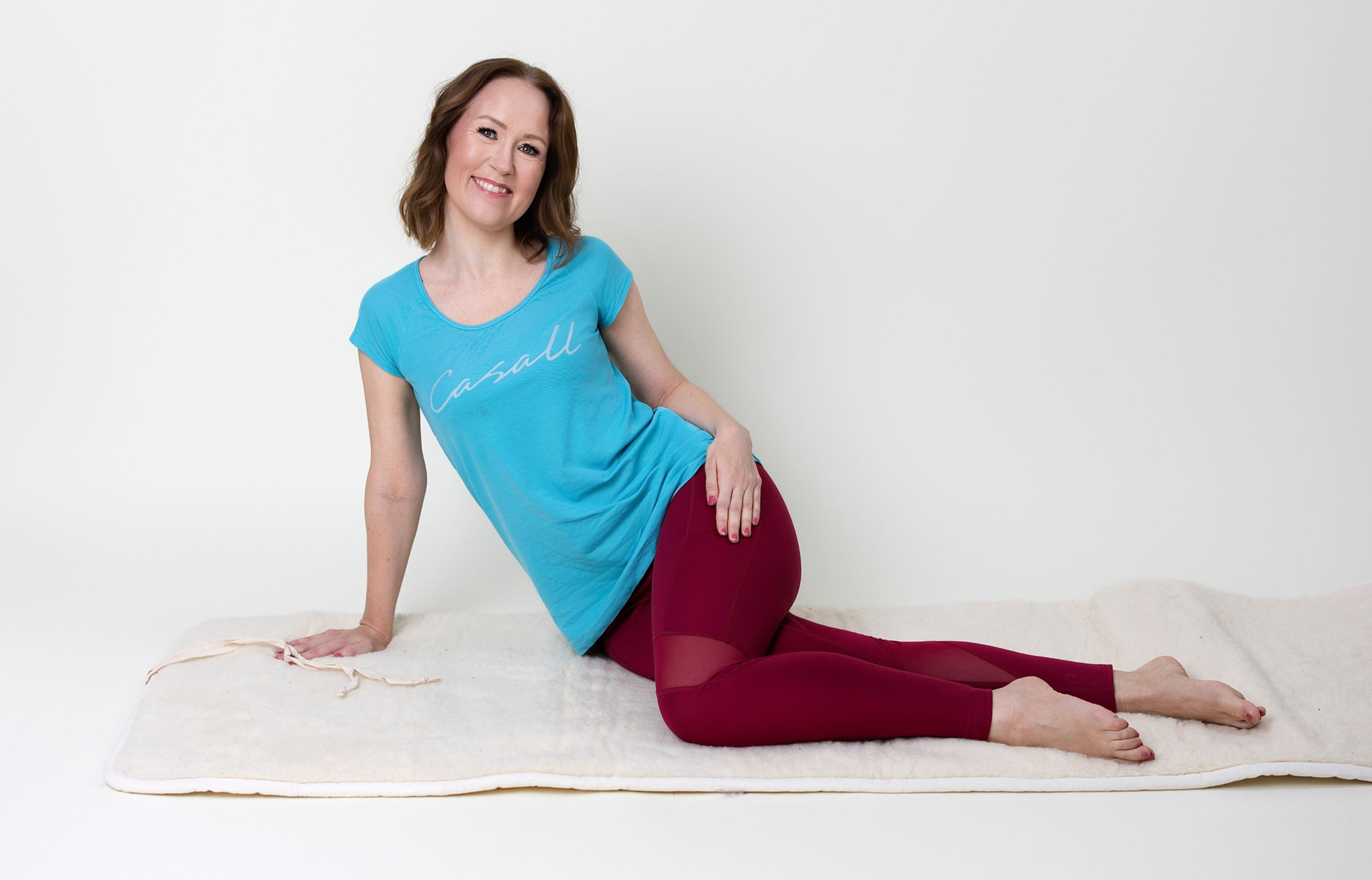
Heidi Marja Norman, Feminine Power & Sacred Womb Wisdom Expert
What does it look like for a woman to have feminine power in everyday life?
From what I have seen through years of working with women, feminine power begins with feeling grounded in yourself. A woman becomes clearer about her boundaries, what she wants, what feels right for her, and what she is no longer willing to accept.
She learns to care for herself in simple, everyday ways instead of constantly pushing until she is exhausted. She trusts her intuition more, listens to her heart, and feels more connected to her creativity, emotions, and natural rhythm.
I also believe feminine power changes the way women relate to one another. When a woman feels secure within herself, there is less comparison and competition. She can genuinely celebrate other women, support them, and also allow herself to receive support.
For me, feminine power is both strong and soft. It is standing firmly in who you are while still being open, sensitive, creative and vulnerable. It is knowing when to act and when to soften.
Ultimately, it is about becoming more at home in yourself and moving through life with greater clarity, trust and connection.
What does “womb wisdom” mean to you beyond its spiritual meaning?
For me, womb wisdom is also about understanding the female body and learning to work with it instead of constantly pushing against it.
Women are often expected to function at the same pace every day, but our bodies can move through different rhythms and life stages. For women who menstruate, the menstrual cycle can bring changes in energy, mood and physical needs. I often think of this as moving through different inner “seasons” across the month.
Womb wisdom also includes recognising the major transitions a woman may experience, such as her first period, pregnancy, birth, pregnancy loss, perimenopause and menopause. These stages can affect how she feels physically, emotionally and energetically.
To me, the deeper message is to stop treating the body as something that must always keep up with a schedule. It is about noticing when you need rest, when you have energy to create, and when your body is asking you to slow down.
Womb wisdom, in everyday life, is really about learning your body’s language and trusting that its signals are worth listening to.
How do emotions show up in the body before we consciously recognise what we are feeling?
I believe our bodies often give us clues before we are consciously able to name what we are feeling. We may notice that we are more tired than usual, restless, tense, or unable to sleep well. Our shoulders may tighten, our jaw may clench, or our body may begin to feel heavy, stiff or uncomfortable. Sometimes we simply know that something feels “off” before we understand why.
When we continually push emotions aside or do not give ourselves space to feel them, that tension can build. We may become more irritable, withdrawn, or disconnected from ourselves. Over time, we can start feeling as though we are carrying something we have never fully expressed.
I often think of emotion as something that needs movement. It needs to be acknowledged, felt, and allowed to pass through us rather than constantly pushed down.
For me, learning to notice these early signals is an important part of reconnecting with the body. Instead of immediately asking, “How do I get rid of this feeling?” we can begin by asking, “What might my body be trying to tell me?”
Why do you think so many women lose touch with their body’s signals and natural rhythms?
I think many women have simply become used to living at a pace that leaves very little space to listen to themselves.
They may be caring for children, managing the home, working full-time, supporting a partner, keeping up friendships and still feeling pressure to show up for everything. Even self-care can become another task to complete rather than a chance to slow down.
When life becomes this busy, it is easy to ignore tiredness, tension, changes in mood or the need for rest. We keep going because there is always something else that needs our attention.
I also believe many women were never taught how to understand their own rhythms, including the changes they may notice throughout the menstrual cycle. Instead of becoming curious about what the body is asking for, we often learn to override it. Over time, those quieter signals can become easier to miss.
For me, reconnecting begins with creating enough space to notice the body before it reaches a point of complete exhaustion. Sometimes the most important question is simply, “What is my body asking me for today?”
Where do you see Feminine Yoga offering something different from more conventional approaches to yoga?
For me, Feminine Yoga is less about performance and more about learning how to meet your body with softness, awareness and care.
The movements are calm, gentle and natural. Rather than pushing the body into a shape, the practice invites you to slow down, breathe, release tension and become more aware of how your body wants to move.
I often describe this as moving away from the constant “doing” energy many women are used to – always achieving, producing and performing – and creating more space for simply being. For someone new to this idea, that is what I mean when I speak about balancing masculine and feminine energy.
Women who practise with me often say they feel more relaxed, peaceful and connected to themselves. With regular practice, some also notice that they express themselves more freely and feel less guarded, both on the mat and in everyday life.
A yoga teacher once told me something I have never forgotten: “As you are on the yoga mat, you are also in life.”
That is what Feminine Yoga offers for me – a way to meet yourself with more care, warmth and freedom.
What is one sign that a woman may be living out of harmony with her body?
One sign I often notice is that a woman is constantly moving from one thing to the next, with very little time to truly rest or check in with herself. She may have low energy, feel tense or stiff, sleep poorly, or feel as though she is living on a hamster wheel.
Sometimes women also become disconnected from parts of themselves after difficult or overwhelming experiences. They may learn to push feelings aside, shut down, or simply keep functioning because that feels safer than facing what they are carrying.
Over time, this can make it harder to recognise what the body is asking for. Even relaxation may become sitting in front of a screen rather than really giving the body space to settle. Many women also tell me they lose touch with their creativity and sense of aliveness.
For me, living in harmony with the body means learning to notice these signals earlier. Feminine Yoga can help women slow down, reconnect with themselves, and begin working with their body rather than constantly pushing against it.
What simple practice can help someone begin listening to their body more closely?
One of the first practices I recommend is very simple: sit on the floor, if that is comfortable for you, with your legs extended or in another position that feels supportive. Then breathe slowly and give yourself a few minutes to simply notice your body.
Many women find even sitting still surprisingly difficult because we are so used to doing, moving, and thinking about the next thing. But when you stay there and breathe, you may begin to notice where you are holding tension, where you feel restless, or what your body is asking for.
I usually suggest beginning with just a few minutes and gradually staying longer if it feels right. The goal is not to force deep breathing or make anything happen. It is to create enough quiet to listen.
Sitting close to the ground can also create a sense of grounding and stability. Sometimes the body may naturally want to shift, stretch, or even tremble slightly. I encourage women to stay curious rather than judging what comes up.
It is a very simple practice, but it can become a powerful way of coming back into contact with yourself.
How did your head injury in 2011 change the way you understand your own body and inner wisdom?
My head injury in 2011 changed the way I understood both my body and the way I had been living. I fell backward on the ice just two days before I was due to go to a rehabilitation centre for pelvic joint problems. After the injury, even simple things became difficult. I experienced tunnel vision and double vision; I dropped things, and watching television was almost impossible.
Because I could not distract myself in the way I normally would, I began to sit quietly and listen inwardly. What surprised me was how much of my attention was always focused on everyone else – my children, my family, my work, my responsibilities – and how little attention I gave to myself.
At the rehabilitation centre, I was introduced to mindfulness. I began lying quietly after training and listening to what I was feeling in my body.
That experience made me deeply curious about the intelligence of the body and the stories we carry within ourselves. That curiosity eventually led me to explore the chakras, yoga, and many different practices that helped me understand my body more deeply and learn how to care for it differently.
What would you most like women to understand about their relationship with their bodies, emotions and feminine power?
I would love women to understand how much strength and potential they already carry within themselves.
For me, one of the most important things is learning to listen to the body and allowing ourselves to feel what we feel instead of constantly pushing everything aside. Our bodies often give us signals when something needs our attention, whether that is tension, tiredness, restlessness or simply a feeling that something is not right.
In yoga, there is a concept called Spanda, which speaks about movement, expansion and contraction. I relate this to the way life and emotions move through us. We cannot always hold everything inside and expect ourselves to continue at the same pace.
When we slow down, listen, and allow ourselves to process what we are carrying, we can feel more connected to ourselves and often more open to our creativity and energy.
This is also what Feminine Yoga means to me. It creates space to stop performing for a moment, come back into the body, and reconnect with parts of ourselves that may have been pushed aside.
I want women to know that feminine power is not something they need to find outside themselves. It begins by learning to trust and care for what is already within.
Read more from Heidi Marja Norman