From Journalism to B2B Strategy and Why Storytelling Still Matters – An Interview with Celeste Lustosa
Celeste Lustosa is a Fractional CMO and B2B marketing strategist based in Adelaide, South Australia. She founded Lustosa Marketing, a boutique agency that helps B2B businesses grow their sales pipeline through positioning, thought leadership and LinkedIn lead generation. Her clients include engineering, energy and professional services firms, as well as not-for-profits.
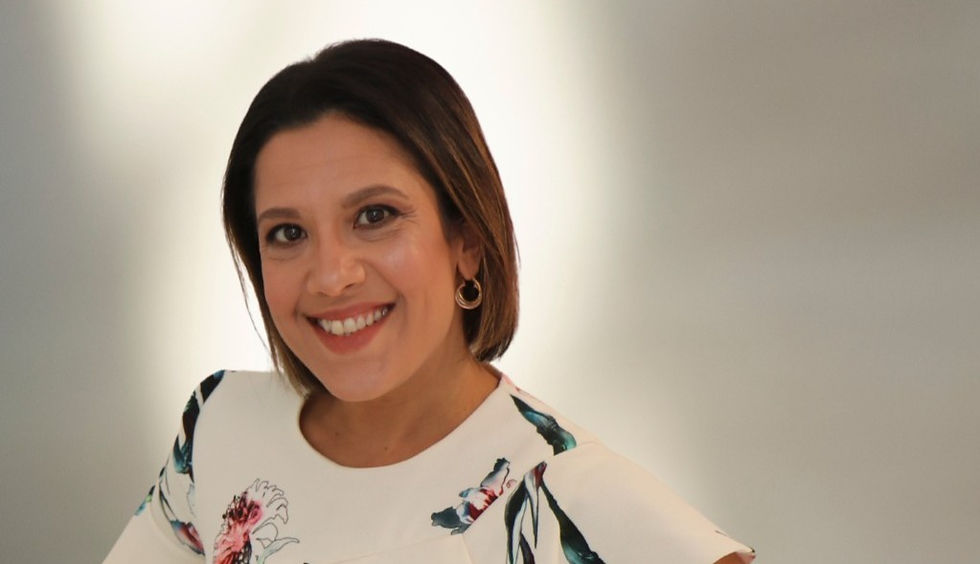
Celeste Lustosa, B2B Marketing Advisor
What led you to establish Lustosa Marketing, and what challenges are you most passionate about solving for B2B businesses?
Before I started Lustosa Marketing, I spent years in newsrooms, PR, government communications and marketing, first in Brazil and then in Australia. I kept seeing good businesses lose work they should have won. The product wasn't the problem. After the meeting, nobody on the buyer's side could explain clearly why they were the right choice.
That's the problem I set up the agency to solve. Most B2B deals are decided in conversations the seller never hears: the buyer briefing their CFO, the board asking questions, a colleague checking your LinkedIn before the next meeting. Gartner found buyers spend only 17% of their buying time meeting with potential suppliers. If you're one of three on the shortlist, you get about 5%.
I work as a Fractional CMO, so businesses get senior marketing thinking without hiring a full-time executive. My job is to make sure a client's name holds up in all the rooms they're never in. That means clear positioning, leaders who are visible and credible on LinkedIn, and a pipeline that doesn't depend on luck or one good referral.
How has your background in journalism influenced the way you approach marketing and storytelling for technical industries?
Journalism taught me to ask one question before I write anything: why would anyone care? In a newsroom you have a few seconds to earn a reader's attention, and an editor who will cut every word that isn't doing any work. That habit never left me.
Technical businesses usually have the opposite problem to the one people expect. They have plenty of substance. The story just gets buried under specifications, certifications and acronyms. An engineer will tell you the tolerance a part is machined to. A buyer wants to know what goes wrong if it isn't, and what that costs them.
So I interview my clients the way I used to interview sources. What was the customer worried about before they called you? What happened on the job that nobody else could fix? Those answers become the story.
Journalism also gave me respect for facts. Every number I publish has a named source a reader can check. B2B buyers are sceptical, and they're right to be. One loose claim can undo years of credibility.
Your upcoming book, The Room You're Never In, explores what happens after a sales pitch ends. What inspired this idea?
For most of my career I watched the same argument. Sales said marketing didn't bring good enough leads. Marketing said sales didn't close them. Nobody asked what happened to the pitch after the salesperson walked out.
Forrester's research found an average of 13 people are involved in a B2B purchase. After your meeting, your champion has to sell you to people you've never met, in their own words, without your slides. Whatever they can remember and repeat is what gets judged.
One meeting made it real for me. I was presenting to a manufacturer's leadership team, and the branding conversation hit a wall. Their view was that buyers only look at price and specs. Yet every person at that table had chosen their own phone for reasons well beyond the spec sheet.
I also surveyed B2B leaders in my network. For about half, their biggest wins started with a referral. Almost half (46%) said people in their network would speak well of them but be vague about what they actually do. The book is about closing that gap.
What did your research for the Australian B2B Marketing Trends Report 2026-2027 reveal about how B2B buyers are making decisions?
The research pointed to an uncomfortable finding. Most B2B companies don't have an effort problem. They have a clarity problem.
Forrester's State of Business Buying 2024 found that 86% of B2B purchases stall at some point, and 81% of buyers end up dissatisfied with the provider they chose. Buyers struggle to tell suppliers apart, and they struggle to agree internally.
6sense's 2025 Buyer Experience Report adds the part most sales teams don't want to hear. Ninety-five percent of the time, the winning vendor is already on the buyer's shortlist on day one. The vendor the buyer favoured before contacting anyone wins about four deals out of five. By the time someone fills in your contact form, the decision is mostly made.
These are global studies, and what I see with Australian clients matches them. So when a business tells me it needs more leads, I look at positioning first. If your message isn't clear well before a buyer is in the market, more ads and more emails just get you more of the same result.
How do you see AI changing the way B2B companies build visibility and establish credibility with potential clients?
AI has changed where buyers start. Forrester's 2025 Buyers' Journey Survey found 94% of business buyers now use generative AI somewhere in their buying process. Plenty of shortlists begin with a question typed into a chat window, long before anyone visits your website.
That puts more weight on what you've published. The 2026 Edelman-LinkedIn B2B Thought Leadership Impact Report found 84% of B2B decision-makers used AI to summarise a company's thought leadership while they were evaluating vendors. Buyers are asking a machine what you think. If all you've published is company news and generic tips, it has very little to work with.
The same report found 82% of decision-makers say thought leadership is becoming more valuable as AI becomes a common source of answers. I'm not surprised. When anyone can produce a competent article in seconds, competent stops being worth much. Original data, a clear point of view and real stories from the work still stand out.
My advice is simple. Put your expertise on the record, under your own name and your leaders' names, and keep doing it. AI tools can only repeat what already exists.
When working with engineering and other technical businesses, how do you turn complex expertise into messaging that connects with decision-makers?
I start by turning capability into consequence. Engineers are trained to describe what they do accurately. Decision-makers want to know what happens to their project, their budget and their reputation if it goes wrong.
A precision engineering firm can tell you its tolerances to a fraction of a millimetre. The general manager reading the proposal wants to know if the part will fit first time, if the line will stop, and who answers the phone at 6am when something breaks. That's the message.
I also write for the person who wasn't in the meeting. Most technical decisions go up the chain to a CFO or a board who won't read the specification. If your champion can't explain your value in two sentences, that's where you lose. So we test each main message with one question: could someone in finance repeat this accurately?
The best material usually comes from the engineers themselves, once they start telling stories about the work. The job that went wrong and how they fixed it. The problem a competitor walked away from. Buyers trust those stories because they sound like real work.
What are the clearest signs that a company's marketing is generating activity without contributing to meaningful business growth?
The first sign is a monthly report full of numbers that don't connect to revenue. Impressions, likes, website visits and open rates can all go up while the pipeline stays flat. If nobody can point to a contract marketing helped win, that's activity.
The second is a sales team that still has to explain the company from scratch on every call. If prospects arrive without knowing what you do or why you're different, your marketing hasn't done its job before the meeting.
The third is losing shortlists to bigger names with vague feedback like "we went another way". That usually means the buyer couldn't justify choosing you to someone else in their business.
The fourth is when nearly all new work comes from referrals. Referrals are great, but you can't control them. They depend on who your clients happen to talk to.
The fix starts with deciding what each piece of marketing is for, then measuring that. Ask new clients where they first heard of you, what they read before they called, and who else was involved in the decision.
What personal belief has shaped your approach to building trust and lasting relationships in business?
I believe the real test of trust happens when you're not there. That idea runs through my book, but it started long before it.
As a journalist I learned that trust is slow to build and quick to lose. A source would only talk to you again if you'd quoted them fairly the first time. One careless mistake and the door closed. I still work that way. I don't promise results I can't control, and I'd rather tell a prospect we're not the right fit than take on work we can't do well.
Moving my career from Brazil to Australia taught me the same lesson from another side. Nobody here knew my track record. I had to earn trust one client and one project at a time, mostly through people speaking for me when I wasn't in the room.
That's why I care so much about consistency. Do what you said you'd do, and say the same thing in a meeting as you do on LinkedIn. Trust is built in small, ordinary moments that add up over years.
What is one thing you believe B2B leaders should rethink about their marketing strategy to remain competitive in the coming years?
Stop treating marketing as a tap you turn on when the pipeline runs dry.
Research by Professor John Dawes of the Ehrenberg-Bass Institute, published by LinkedIn's B2B Institute, found that only about 5% of B2B buyers are in the market at any one time. The other 95% won't buy for months or even years. Most B2B marketing is aimed at that 5%, with lead magnets, discounts and sales emails. You end up competing hardest for the smallest group, and starting from zero every time.
The businesses that win bigger contracts are known before the buyer needs them. When a project comes up, their name is already on the list, and someone in the buying group has already read something they wrote.
So my advice to B2B leaders is to give brand and thought leadership a steady budget and judge it over a year or more. Put your leaders' expertise on the record. Make your message simple enough that a buyer can repeat it to their CFO. That's how you stay in the running when buyers make more of the decision without you.
Read more from Celeste Lustosa