4 Ways To Measure Your Fitness Progress
Updated: Jun 4, 2024
Written by: Atanas Piskachev, Executive Contributor
Executive Contributors at Brainz Magazine are handpicked and invited to contribute because of their knowledge and valuable insight within their area of expertise.

People have different perceptions, beliefs, and understandings when measuring how much progress they make when doing a fitness routine or program. Most believe it’s how much they lose weight, while others believe it's how much muscle they gain.
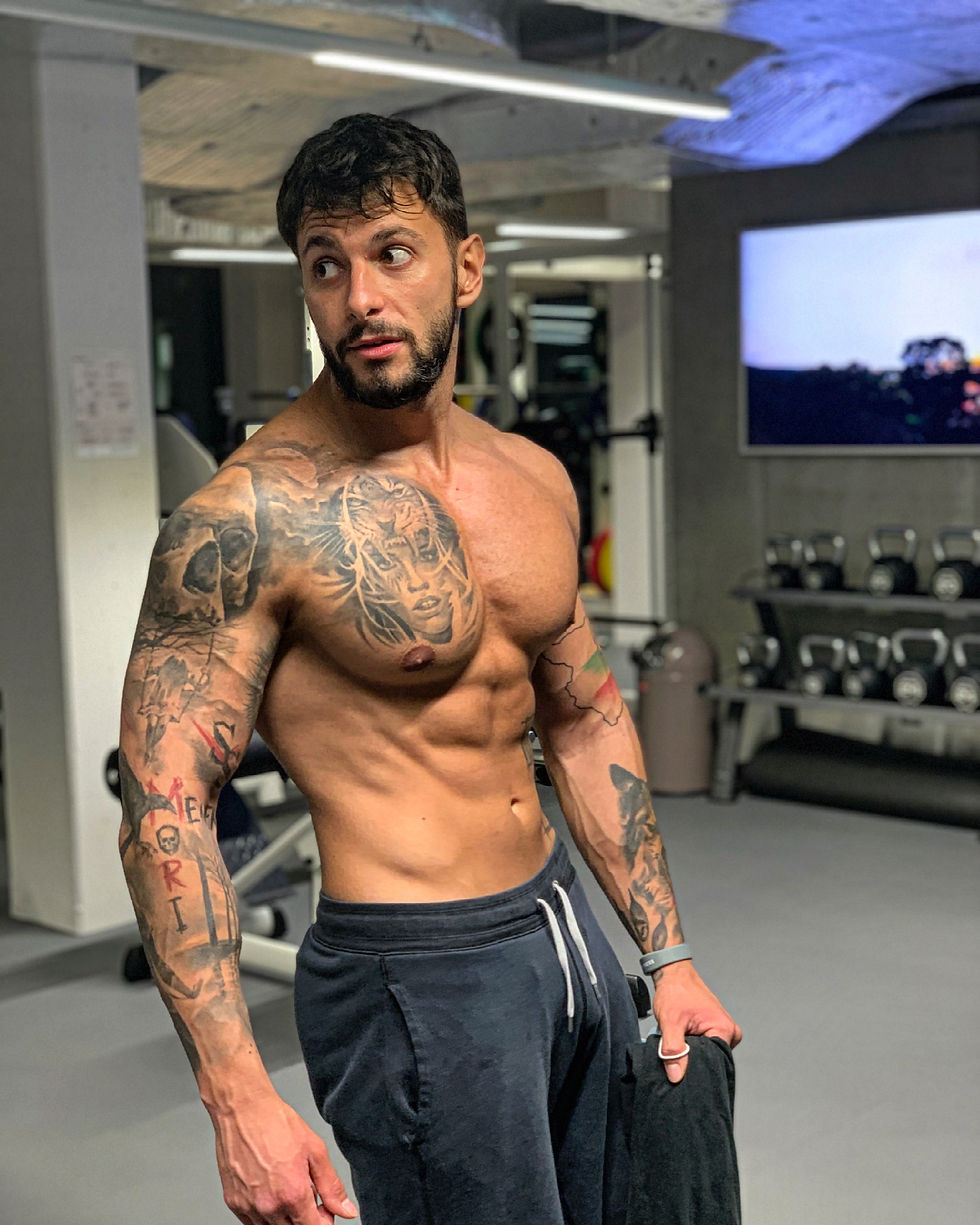
When one is asked how much progress they have made, the first thing that comes to their mind is measuring their weight. Frankly, the scale is often one of the worst tools used in measuring one's progress in a fitness program. The change in the weight on the scale isn't just due to fat reduction or muscle building. The scale only displays numbers without elaborating on their significance. It might not reflect your genuine state of health. If you place too much emphasis on your weight and not enough on your body composition (the ratio of fat to lean muscle), you’re only getting half the story. Additionally, stressing out about your weight or dreading your weigh-in might result in unhealthy habits like binge eating or self-starvation. Remember, fat loss may not necessarily accompany weight loss. Here's why the scale might deceive you.
How can someone who is participating in a health and fitness program track their progress? To know your level of fitness, you need to measure it. One way is to simply track your own workouts. Keep track of the activity you do, how long you do it, and how hard you're working. You can then look for trends. Here are four ways to measure one's progress in a health and fitness program.
1. Body Composition
Weighing 150 pounds at 20% body fat is healthier than weighing 145 pounds at 30% body fat. It’s never just about how much you weigh, but rather how healthy your weight is. Understanding your body composition gives you more in-depth knowledge about your health. Due to differences in body composition, two people who weigh the same amount can have significantly varied wellness and fitness requirements. Body composition is significant since it gauges your level of fitness and general health by calculating your body fat percentage. Your scale is unable to distinguish between how much of your weight is made up of muscle and how much is fat, but measurements of body composition can.
To measure your improvement on your body composition, you can try these most common and widely used techniques:
a. Skin Caliper
The easiest way to determine body composition is to measure skinfolds. Either three, four, or seven sites can be used (meaning parts of the body). After pinching the skin, the technician measures the thickness of each site's skin fold using a skin caliper. The numbers can be entered by the practitioners into a formula to estimate body composition.
b. DEXA (Dual-Energy X-Ray Absorptiometry)
A great way to measure your body composition accurately is through body fat testing. Although there are other ways to measure your body fat, most experts concur that the DEXA (Dual-Energy X-ray Absorptiometry) scan is the most precise diagnostic method now in use.
Think shattered bones can only be detected by X-rays? In a DEXA scan, patients are exposed to X-ray beams of varying strengths and can have their body composition and bone mineral density measured. Participants lie still on a table as a mechanical arm sweeps a high-energy X-ray beam over their entire body. The technicians can obtain measurements of the bone mineral density, lean body mass, and fat mass by observing how each beam is absorbed into various body parts.
c. BMI (Body Mass Index) ‒ BMI calculator
Your body mass index (BMI) is a measure that shows how much body fat is considered healthy for an individual. An internet calculator or BMI table can be used to calculate your BMI.
To calculate your BMI, divide your weight in kilograms by your height in meters squared.
Interpretation of BMI results:
BMI | Weight status |
Below 18.5 | Underweight |
18.5-24.9 | Normal weight |
25.0-29.9 | Overweight |
30 and above | Obesity |
2. Strength
One of the single most advantageous things you can do for your health and longevity is to increase your relative strength. Put strength training first. It's one of the most important components of any exercise program. This is mostly because it uses your bodyweight as a kind of resistance, which helps to build stronger muscles and improve muscular strength. Although strength training has many wonderful advantages, it's crucial to monitor your progress. It’s different from other types of exercise that primarily increase endurance or flexibility, explains Robert Herbst, C.P.T., weight-loss coach and powerlifter. "Strength training is important because it not only builds muscle, which people naturally lose as they get older, but it also raises metabolism. So, people burn more calories, which helps them lose fat. Figuring out just how strong you are is a great way to establish fitness goals.
To track your development in a strength-training program, you can do the following, according to Gomez, F. et al.
Test your upper body strength by performing pushups for three minutes.
To test your core, see how many crunches you can complete in a minute.
To measure lower body strength, see how long you can maintain a half-squat.
3. Flexibility
It will be very beneficial to become more flexible and better able to do foundational actions with enhanced range of motion and no pain. Both in your workouts and your ability to age gracefully. Take advantage of any chance you come across to increase your flexibility. Although it is one of the most undervalued aspects of physical fitness, flexibility is one of the most significant elements of daily life. Exercises and flexibility assessments are essential for extending overly tight muscles.
Measuring the flexibility of your joints is vital in determining whether you have postural imbalances, foot instability, or limitations in your range of motion. There are a variety of tests used to measure flexibility, including:
a. Shoulder flexibility testing
Sometimes called the zipper test, shoulder flexibility testing evaluates the flexibility and mobility of your shoulder joint. Use one hand to reach behind your neck, between your shoulders, while reaching behind your back, toward your shoulders, with the other.11 Measure how far apart your hands are.
b. Sit-and-reach testing
This is used to measure tightness in your lower back and hamstring muscles.12 The test is performed while sitting on the floor with your legs fully extended. Flexibility is measured by the number of inches your hands are from your feet when reaching forward.
c. Trunk lift testing
This is used to measure tightness in your lower back. It is performed while lying face-down on the floor. With your arms at your side, you would be asked to lift your upper body with just your back muscles. Flexibility is measured by how many inches you are able to lift yourself off the ground.
4. Cardiovascular Health
"Cardio" has gotten a bad name in the fitness industry. It's often presented (i.e., sold) as the best way to "burn fat" by trainers and gyms that don't know their stuff. The best way to burn fat and develop a stronger, leaner, more functional body is to focus on resistance training (i.e., lifting weights), with proper doses of "cardio" sprinkled throughout the week. Don't avoid cardiovascular training, as it has many health and performance benefits. Just don't overdo it. The following are ways to measure your cardiovascular system fitness:
a. Treadmill Tests
Your cardiovascular fitness can be assessed with treadmill tests. These may entail working up to a very high level and are often delivered by a professional at a gym or lab. The graded exercise test entails a lengthy series of treadmill intervals while keeping an eye on heart rate and blood pressure.
Working on a treadmill while having your heart rate, blood pressure, and level of effort measured is part of the Bruce protocol test. Although accurate, each of these tests could be expensive. You can perform other tests on your own without the use of an EKG machine or a blood pressure monitor.
b. The 3-Minute Step Test
One of the simplest techniques is the three-minute step test. You can take this test using a 12-inch step with a metronome, timer, or mobile phone app.
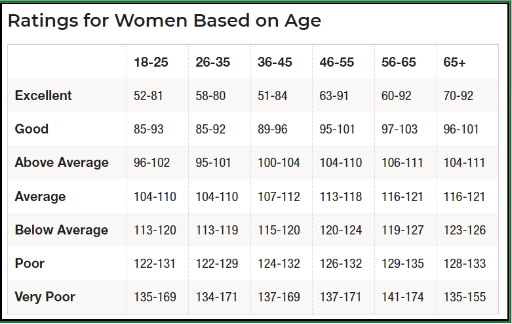
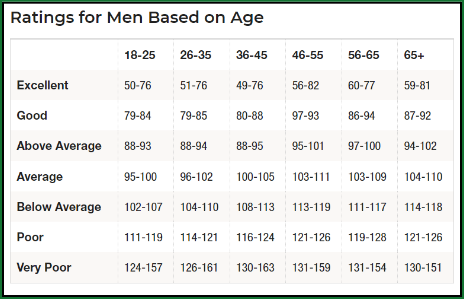
After three minutes of up-and-down pacing to the metronome, you sit down and monitor your heart rate for a full minute while counting each heartbeat. To actually see each heartbeat, it's ideal to utilize a heart rate monitor or heart rate app. Check out the ratings in the tables below.
c. The Rockport Walk Test
The Rockport walk test is even simpler than the others. For this, you warm up and then walk a mile as fast as you can, either on the treadmill or outside.
You record your heart rate and workout time and enter your results into a Rockport 1-mile walk calculator to see where you rank. It's best to do this test on a track so you know exactly how far you're going.
Conclusions
The results of your fitness assessment can help you set goals for staying active and improving fitness outcomes.
Hopefully, this gives you a few things to think about when assessing your progress with health and fitness. Life is long, but fireworks are temporary. People are inclined to be attracted to immediate gains by concentrating on what they believe to be an easy road that will make them invincible, healthier, and stronger. This way of thinking might apply to some aspects of life, but not to being physically fit and healthy, because there is no such thing as an instant in these contexts.
When one wishes to make long-lasting fitness gains, there is no rapid, instantaneous change. One must be persistently dedicated to working hard and continue tracking their progress to build a fit and strong body.
Follow me on Instagram, LinkedIn, and visit my website for more info! Read more from Atanas Piskachev!
Atanas Piskachev, Executive Contributor Brainz Magazine
Atanas is a holistic health coach specializing in mindset performance, helping entrepreneurs and executives incorporate a healthy lifestyle into their hectic schedules.
He has over 10 years of experience in the field, working with various people and organizations globally to explore many different cultures and human behaviors.
By virtue of his brand AtanasFit, Atanas is committed to helping people raise the bar for their health and fitness through direct coaching, writing articles, and creating YouTube videos.