

Edward Falk – Leadership Forged in Fire
- May 13
- 4 min read
When you speak with Edward Falk Firefighter, one theme comes up again and again: preparation. He spent 30 years as a firefighter and paramedic in Florida. He rose through the ranks. He trained others. He built systems that helped people perform under pressure.
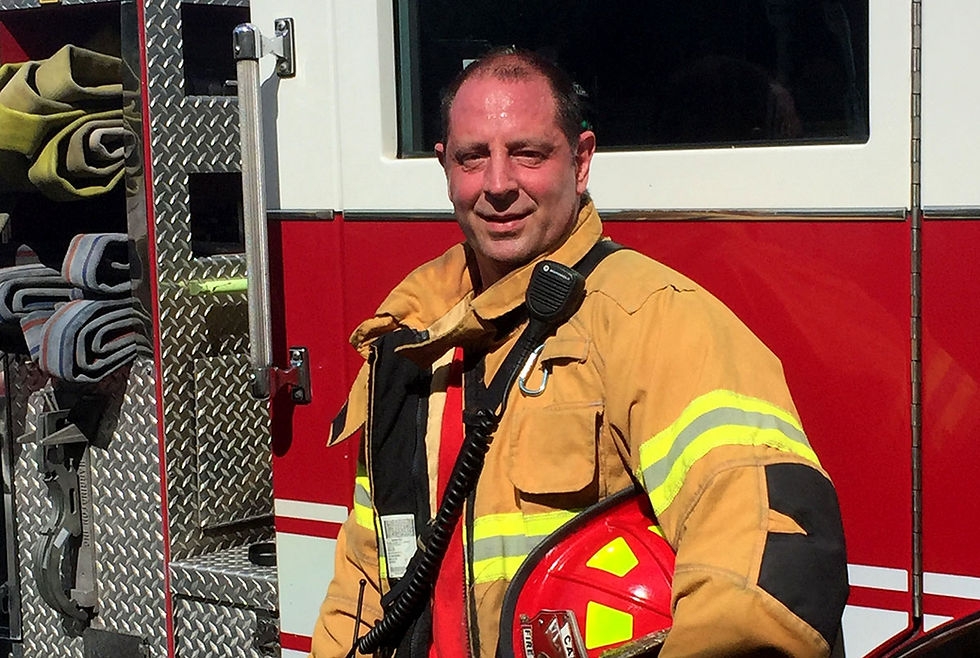
Today, he looks back on a career defined by structure, discipline, and service.
“Emergencies don’t give you time to think twice,” Edward Falk says. “Training is what you fall back on.”
That belief shaped his life from the start.
Early life and the move to Florida
Edward Falk began his journey in New York. As a teenager, he moved to Florida. The change marked a turning point.
After high school, he worked in the auto body and paint industry. It was hands-on work. It required focus and patience. But he felt drawn to something bigger.
“I knew I wanted to serve,” he says. “I wanted to be part of something that mattered when it counted.”
He enrolled in the fire academy and EMT school where he became certified in both. It was not easy. Long hours, physical demands, and classroom study…all while working his regular job.
He stayed with it.
Building a 30-year fire service career
Edward Falk began what would become a three-decade career in emergency services.
Over the years, he completed numerous courses at the Florida State Fire College. He earned certifications as an EMT, Paramedic, Fire Officer, Hazardous Materials Technician, Instructor, Fire Inspector, and Aircraft Rescue and Firefighting specialist.
He did not collect certifications for status. He did it to be ready.
“You never stop learning in this field,” he says. “If you stop learning, you stop improving. There are always more classes and other people to expand your knowledge.”
After many years of service, he was promoted to Captain.
That role changed his focus. He was no longer responsible only for himself. He was responsible for a team.
“Leadership in the firehouse isn’t about rank,” he says. “It’s about trust. I learned early on to lead by example. Respect and trust are not given, they must be earned.”
As Captain, he mentored younger firefighters. He ran calls. He made decisions that had to be clear and fast.
His final station assignment before retirement was at an airport. There, his Aircraft Rescue and Firefighting training became critical.
“Airports don’t allow guesswork,” he explains. “Every movement is planned. Every response has structure. The equipment and knowledge for Aircraft Rescue and Firefighting is unique. It was a refreshing assignment at the later part of my career.”
That environment matched his mindset.
From firehouse to classroom
While building his career in the fire service, Edward Falk also pursued education.
He earned an Associate in Science degree in Emergency Medical Services. Later, he returned to that same college as an EMT Instructor.
For 16 years, he taught future emergency responders. Even after retiring from the fire department, he continued teaching.
“Teaching was a different kind of responsibility,” he says. “You’re sharing your knowledge and shaping how someone will perform in a crisis.”
He understood that his students may one day stand in someone else’s worst moment.
That knowledge shaped how he taught.
“You don’t rush growth,” he says. “You build knowledge and skill first. Then through training and practice, you become proficient.”
What makes a strong emergency leader?
People often ask what separates a good firefighter from a great one.
Edward Falk’s answer is simple. Preparation and training.
“Preparation and training isn’t just done occasionally," he says. “It must be done on a regular basis to remain proficient in the skills you already have, plus learning new ones.”
He saw firsthand how small habits mattered. Equipment checks. Training drills. Clear communication.
“Training doesn't just build skill and proficiency, it also builds camaraderie” he says.
Households with practiced evacuation plans exit homes faster during fires. Bystander CPR can double or even triple survival rates in cardiac emergencies.
These are not abstract statistics to him. They are lived experiences.
“Training isn’t just for firefighters,” he says. “It’s for everyone.”
Life after retirement
Edward Falk has retired from the fire department, but his service did not end.
He remains active in his church and community. He continues to advocate for emergency preparedness. He enjoys golf and time outdoors.
He believes leadership is not tied to a uniform.
“Service doesn’t stop when you retire,” he says.
He encourages families to take simple steps: test smoke alarms, learn CPR, create evacuation plans.
Seconds matter.
Why Edward Falk’s story resonates
Edward Falk did not chase headlines. He built a career step by step.
He trained. He led. He taught.
He brought structure to high-risk environments. He passed knowledge to the next generation.
His big idea is not flashy.
It is steady preparation.
“Emergencies don’t give you time to think twice,” he repeats. “You rely on what you practiced.”
That mindset shaped 30 years of service. It shaped hundreds of students. It continues to shape communities today.
Leadership, in his view, is not about volume.
It is about readiness.


