Dr. Greg Schreeuwer Interview on the Hidden Patterns That Keep You Stuck
What if the biggest obstacles in your life were not random, but the result of patterns operating beneath your awareness? After more than 20 years in practice and over 30,000 patient interactions, Dr. Greg Schreeuwer has dedicated his career to understanding the behavioural patterns that shape health, relationships, performance, and personal fulfilment. In this interview, he explores why people become stuck in recurring cycles, how those patterns form, and what individuals can do to create meaningful, lasting change.
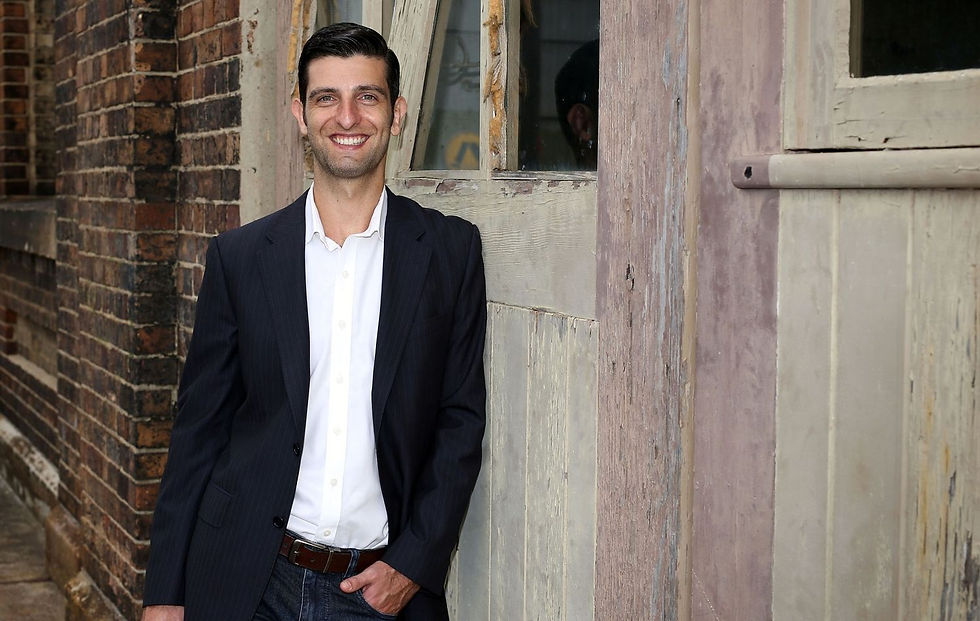
Dr. Greg Schreeuwer, Human Behaviour and Health Expert
What first sparked your interest in studying the patterns that shape human behaviour and health?
My interest in studying the patterns that shape human behaviour and health began with my own experiences growing up. As a child, I was bullied extensively because my ears stuck out. Kids would pick on me, exclude me, and often want to fight me. I endured this until high school, when I eventually had my ears surgically pinned back. I believed that would solve the problem, but it didn’t. The bullying stopped, yet I still found myself experiencing many of the same feelings and challenges. That was the first clue that something deeper was going on.
Years later, during my final year of my master’s degree, I was introduced to Neuro Emotional Technique (NET) as a patient. After experiencing profound changes over six months of care, I decided to learn the technique myself. Through NET, I was introduced to concepts such as Yin and Yang, balance, adaptation, and the impact stress can have on both the body and behaviour. It sparked a fascination with understanding why people respond so differently to similar experiences.
A major turning point came in 2011 when a colleague encouraged me to attend Dr Demartini’s Breakthrough Experience. That experience fundamentally changed how I viewed my childhood and helped me recognise patterns that had been influencing my decisions, relationships, health, and sense of self for years. It helped me understand that the events themselves were only part of the story. The meanings we assign to those events, the adaptations we develop, and the actions we take or avoid often have an even greater impact.
That realisation led me to spend years integrating aspects of Dr Demartini’s work with NET and my clinical observations. Over more than 30,000 patient interactions, I have become increasingly convinced that many of the challenges people face, whether in their health, relationships, careers, or personal growth, are influenced by patterns operating outside their awareness. Helping people recognise and change those patterns has become the foundation of my work.
After more than 30,000 patient interactions, what patterns show up most consistently in people who create lasting change?
After more than 30,000 patient interactions, I’ve noticed that many of the challenges people face stem from a surprisingly small number of recurring patterns.
One pattern I’ve repeatedly observed is that many people learned early in life that being themselves came at a cost. Whether through criticism, rejection, bullying, pressure to perform, or the need to fit in, they gradually adapted their behaviour to gain acceptance. Years later, that same pattern often appears in their health, relationships, career choices, and overall sense of fulfilment. The details change, but the underlying question is often the same: “Am I allowed to be fully myself?”
Another common pattern is that people unconsciously tie their self-worth to responsibility. They learn that being helpful, successful, reliable, or needed is how they receive recognition and approval. While this often helps them achieve great things, it can also lead to burnout, resentment, poor boundaries, and neglect of their own well-being.
What separates those who create lasting change from those who remain stuck is their willingness to become aware of these patterns and take action to change them. They stop focusing solely on the symptom or circumstance and start looking at the underlying behaviours, beliefs, and choices driving the outcome. They create new experiences, make different decisions, and gradually develop a healthier relationship with themselves.
In my experience, lasting change occurs when people stop asking, “What’s wrong with me?” and start asking, “What pattern am I repeating, and what do I need to do differently?”
How did developing Integrative Kinesiology change the way you understand the connection between behaviour and wellbeing?
Developing Integrative Kinesiology changed the way I understood behaviour and wellbeing because it highlighted the role that uncompleted actions play in maintaining many of the patterns people struggle with.
The approach combined principles from NET with two key questions from the Demartini Method: “What is the benefit if your perceived challenge didn’t exist?” and “What are the drawbacks if this perceived challenge continued?” These questions often revealed actions people knew they needed to take, but had been avoiding due to fear, uncertainty, guilt, conflict, or perceived consequences.
What became apparent was that many health, relationship, and life challenges were not driven solely by past experiences, but by the behaviours, decisions, and actions that followed those experiences, or never occurred at all. People often remained stuck because they had not developed a new reference point for dealing with similar situations.
The process was designed to help individuals reframe a memory, identify the missing action, and actively rehearse taking that action to achieve the desired outcome. My observation was that this created a new framework through which they could interpret and respond to future challenges. It reinforced my belief that lasting change often occurs when people shift both their perception of an event and the behaviour that follows it.
Why do you think people often repeat the same challenges across their health, relationships, and careers without realising it?
I believe people repeat the same challenges because they often respond to present-day situations using patterns established much earlier in life.
As children, we develop beliefs, coping strategies, and behavioural responses based on our experiences and environment. At the time, those responses often serve a purpose. They help us gain acceptance, avoid conflict, seek approval, stay safe, or navigate uncertainty. The challenge is that many of these patterns continue operating long after the original circumstances have changed. Many people are no longer responding to their current reality. They are responding to an adaptation they developed years earlier.
What makes this difficult to recognise is that people tend to focus on the surface problem rather than the underlying pattern. They see different relationships, different jobs, different health conditions, or different life circumstances, but fail to recognise the same behavioural response showing up each time.
For example, someone who learned early that their value came from meeting others' needs may repeatedly overcommit, struggle with boundaries, experience burnout, attract one-sided relationships, and neglect their own health. The circumstances appear different, but the pattern remains the same.
In my experience, lasting change begins when people stop asking, “Why does this keep happening to me?” and start asking, “What is the common pattern I keep bringing into these situations?” That question often reveals the real source of the cycle.
What are we still getting wrong about the relationship between physical symptoms and emotional well-being?
One of the biggest misconceptions is that symptoms are problems to suppress rather than feedback to understand. Whether physical, emotional, relational, or professional, symptoms often provide valuable information about how we have adapted to our experiences and where change may be needed.
I don’t view symptoms as the enemy. I view them as a form of feedback expressed through our physiology and our life circumstances. They can help us develop a deeper understanding of who we are, how we arrived at our current situation, and what patterns, behaviours, or perceptions may be contributing to the challenges we face.
What we often get wrong is reducing symptoms to a single cause. We separate physical symptoms from emotional well-being when, in reality, they constantly influence one another. Our beliefs, perceptions, behaviours, relationships, environment, and physiology all interact as part of the same system.
I’ve also observed that symptoms extend beyond the body. A recurring health challenge, a pattern of conflict in relationships, a lack of fulfilment in a career, or a persistent feeling of being stuck can all be viewed as feedback pointing towards something that requires our attention.
Rather than asking, “How do I get rid of this symptom?”, I believe a more useful question is, “What is this symptom trying to teach me about myself and the changes I need to make?”
When someone feels stuck in a recurring cycle, what is the first pattern they should start paying attention to?
When someone feels stuck in a recurring cycle, the first thing I encourage them to focus on is not what keeps happening, but how they keep responding.
Most people focus on the external circumstances. They notice the difficult relationship, the health challenge, the workplace conflict, or the setback they repeatedly encounter. What they often miss is the common denominator across situations: their own perceptions, behaviours, decisions, and emotional responses.
I often ask people to look for patterns rather than isolated events. What situations tend to trigger the same reaction? What assumptions are they making? What actions are they consistently avoiding? What conversations are they not having? What boundaries are they not setting? What opportunities are they not pursuing?
In my experience, recurring cycles are often maintained less by what happened to us and more by the behaviours that followed. Many people continue to apply the same strategy to different situations while expecting a different outcome.
The moment someone shifts their attention from the problem itself to the pattern they keep bringing into the problem, they gain something incredibly valuable: choice. Once a pattern becomes visible, it is no longer unconscious. That awareness creates the opportunity to respond differently and begin creating a new outcome.
How can people become more aware of unconscious conditioning before it starts influencing important decisions?
People become more aware of unconscious conditioning by learning to recognise the patterns that repeatedly show up in their lives. Our conditioning influences how we think, feel, behave, and make decisions, often without us realising it. If we don’t become aware of those patterns, we tend to default to the same responses and create similar outcomes again and again.
One of the things I often tell patients is that awareness is the first stage of healing. The moment we recognise that we are repeating a pattern, we create an opportunity for choice. Instead of operating on autopilot, we gain the ability to pause, reflect, and decide whether that response is still serving us.
One simple question I encourage people to ask themselves is, “Have I felt this way before?” If a situation triggers a strong emotional reaction that feels disproportionate to the present moment, an older pattern is often being activated. Many people think they are responding to what is happening now, when in reality they are responding to a learned adaptation from much earlier in life.
I encourage people to pay attention to recurring themes in their health, relationships, career, and personal life. What challenges keep appearing? What situations trigger the same reactions? What actions are they consistently avoiding? These patterns often reveal the conditioning operating beneath the surface.
The ultimate goal is not simply awareness. The goal is to change conditioning by creating new experiences, new behaviours, and new reference points. In my experience, the most lasting change occurs when people work on both the body and the mind. When physiological and behavioural patterns are addressed together, individuals are far more likely to create meaningful and sustainable change.
How has your experience with childhood bullying shaped your views on identity, resilience, and authentic self-expression?
My experience with childhood bullying had a profound impact on how I think about identity, resilience, and authentic self-expression. For many years, I believed the greatest challenge I faced was being judged for my physical appearance. As I grew older, I realised something much deeper was taking place. I was often criticised, excluded, or rejected because of how I thought, what I questioned, and the way I expressed myself.
One experience that stands out was being ostracised by my entire year group, including one of my closest friends, who told me he thought I believed I was “better than everyone else.” For several weeks, I sat alone at recess and lunch while my classmates who had once been friends ignored me. It left me questioning my worth and where I belonged. At the time, it was incredibly painful. Looking back, it became one of the most important lessons of my life.
Those experiences taught me that many people learn to suppress parts of themselves to gain acceptance and avoid rejection. They trade authenticity for belonging. As a result, they often lose sight of who they are and what matters most to them.
The greatest lesson bullying taught me is that resilience is not about becoming tougher or caring less about what people think. It is about developing the courage to remain true to yourself despite the possibility of criticism or rejection. Authentic self-expression begins when we stop asking who we need to be to gain acceptance and start asking who we truly are.
If there is one idea you would like people to remember about understanding themselves, what would it be?
If there is one idea I would like people to remember, it is that much of your life is shaped by patterns that were created long before you were aware of them, but those patterns do not have to define your future.
Many people spend years trying to change their circumstances without recognising the underlying beliefs, behaviours, and conditioned responses influencing the choices they make each day. The more we understand those patterns, the more power we have to change them.
I believe self-awareness is the foundation of meaningful change. Awareness allows us to recognise what is driving our decisions, our relationships, our health challenges, and our sense of fulfilment. Once a pattern becomes visible, we have an opportunity to make a different choice.
I also believe that symptoms, struggles, and recurring challenges are often forms of feedback. Rather than asking, “Why is this happening to me?”, a more useful question is, “What is this trying to teach me about myself?” That shift in perspective often changes everything.
Ultimately, understanding yourself is not about finding something that is missing. It is about recognising the patterns that have shaped you, deciding which ones still serve you, and having the courage to create new ones that align with the person you want to become.
Read more from Dr. Greg Schreeuwer