

Austen Hacker Built a Career by Embracing Change
For many people, a career follows a straight line. They choose a profession early, stay on that path, and gradually build experience over time. Austen Hacker's story took a different route. His career began in music before leading him into healthcare, where he has spent years improving pharmacy operations, leading teams, and helping patients navigate some of the most difficult moments of their lives.
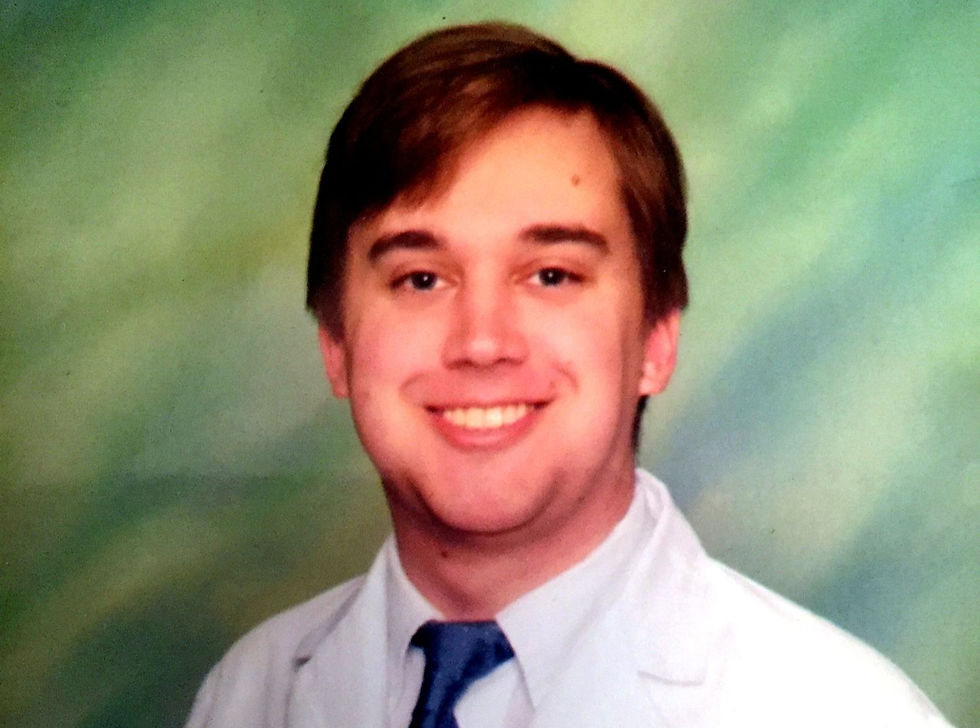
That journey has shaped the way he approaches leadership. Rather than chasing titles or recognition, Hacker has focused on building systems, solving problems, and finding practical ways to improve patient care. Along the way, he has learned that some of the biggest contributions are made through hundreds of small decisions that rarely receive attention.
"I used to think success came from getting everything right," Hacker says. "Now I think it comes from continuing to learn, staying curious, and helping the people around you do their jobs well."
How a music degree led Austen Hacker to pharmacy
Before entering healthcare, Austen Hacker studied piano performance at Baylor University. Music had been a major part of his life growing up. He played piano, participated in church music, and spent years developing the discipline required to perform at a high level.
Eventually, he reached an honest conclusion about his future.
"Before I graduated, I realized I wasn't talented enough to build the kind of career I wanted as a concert pianist," he says. "That was difficult to admit, but it also gave me the freedom to look for something that better matched my strengths."
Instead of viewing that realization as failure, Hacker treated it as an opportunity to start again. He enrolled at the University of Louisiana Monroe, where he earned both a Bachelor of Science in Pharmaceutical Science and a Doctor of Pharmacy degree.
Looking back, he believes the transition taught him one of the most valuable lessons of his career.
"Changing direction isn't always a setback. Sometimes it's the decision that puts you where you're supposed to be."
Building pharmacy operations from the ground up
After earning his pharmacy degree, Hacker worked across retail, hospital, ambulatory, institutional, and oncology pharmacy settings. Those experiences exposed him to very different healthcare environments, but they all shared one challenge.
Every system depended on people making good decisions consistently.
Over the years, Hacker helped launch and manage an oncology pharmacy, establish a surgery center pharmacy, and oversee pharmacy operations within hospital systems. Those projects required much more than clinical knowledge.
"When people hear that you're opening a pharmacy, they often think about medications," he says. "In reality, you're building workflows, developing processes, training teams, solving operational problems, and making sure patients receive safe care from the first day the doors open."
That experience reinforced his belief that successful healthcare organizations are built on reliable systems rather than heroic individual efforts.
Why leadership starts with listening
As Hacker's responsibilities grew, so did his understanding of leadership.
Earlier in his career, he believed good leaders needed to provide answers quickly. Today, he sees leadership differently.
"I've learned that listening usually comes before solving," he says. "If I assume I already understand the problem, I can end up answering the wrong question."
He recalls conversations with patients who initially asked simple questions about medications but were actually worried about organizing their daily routines after leaving the hospital. Others wanted reassurance more than technical information.
Those experiences changed the way he communicates.
"The best conversations usually happen when someone feels comfortable enough to explain what they're actually worried about."
That philosophy extends beyond patient care. Hacker believes healthcare teams perform better when people listen carefully to one another before rushing toward solutions.
Small decisions shape big outcomes
One theme appears repeatedly throughout Hacker's career.
He believes meaningful success is usually built through consistency rather than dramatic moments.
Healthcare offers countless examples of this principle. A carefully reviewed medication order, clear documentation, or one extra question before making a decision may never receive recognition. Yet those small actions often prevent much larger problems.
"I think people naturally remember the big moments," Hacker says. "What they don't see are the hundreds of small decisions that made those moments possible."
That mindset has influenced the way he approaches both leadership and patient care.
Rather than chasing perfection, he focuses on creating dependable systems that allow good decisions to happen consistently.
Finding balance beyond the pharmacy
Although Hacker is deeply committed to his profession, he believes work should never become someone's entire identity.
Running has become one of the ways he creates space away from healthcare. What began as an exercise gradually became something more valuable.
"When I run, I usually stop trying to force solutions," he says. "That's often when ideas become clearer."
His interests outside work include hiking, building computers, movies, coffee, piano, church music, and spending time with family and his faith community.
Those interests are not distractions from his career. Instead, he believes they help him return to work with greater perspective and better judgment.
A career built on continuous growth
Looking back, Hacker does not define his career by one promotion, one achievement, or one project.
Instead, he sees it as a series of thoughtful decisions that gradually built upon one another.
His path from music student to pharmacy leader was not planned from the beginning, but it reflects a willingness to adapt, continue learning, and embrace change when necessary.
"I don't think success is about reaching a finish line anymore," he says. "I think it's about becoming a little better with each experience and using what you've learned to help someone else."
That perspective has guided every stage of his career. It continues to shape the way he leads, the way he serves patients, and the way he approaches whatever challenge comes next.







