A Serial Entrepreneur's Career & The Secret To Evaluating Business Ideas - Meet Chris Oldfield
Chris Stuart Oldfield is a 4-Gen entrepreneur in multiple fields. Currently, he is the CEO and a Co-Founder of six global companies. This list includes Fitburn: a new-gen fitness app that rewards users for their workouts and helps them cut their fitness costs.
In this interview, Chris revealed where his career path started, talked about the excitement and hardships of entrepreneurship, uncovered his secrets to evaluating new business ideas - and shared some tips for CEOs-to-be.
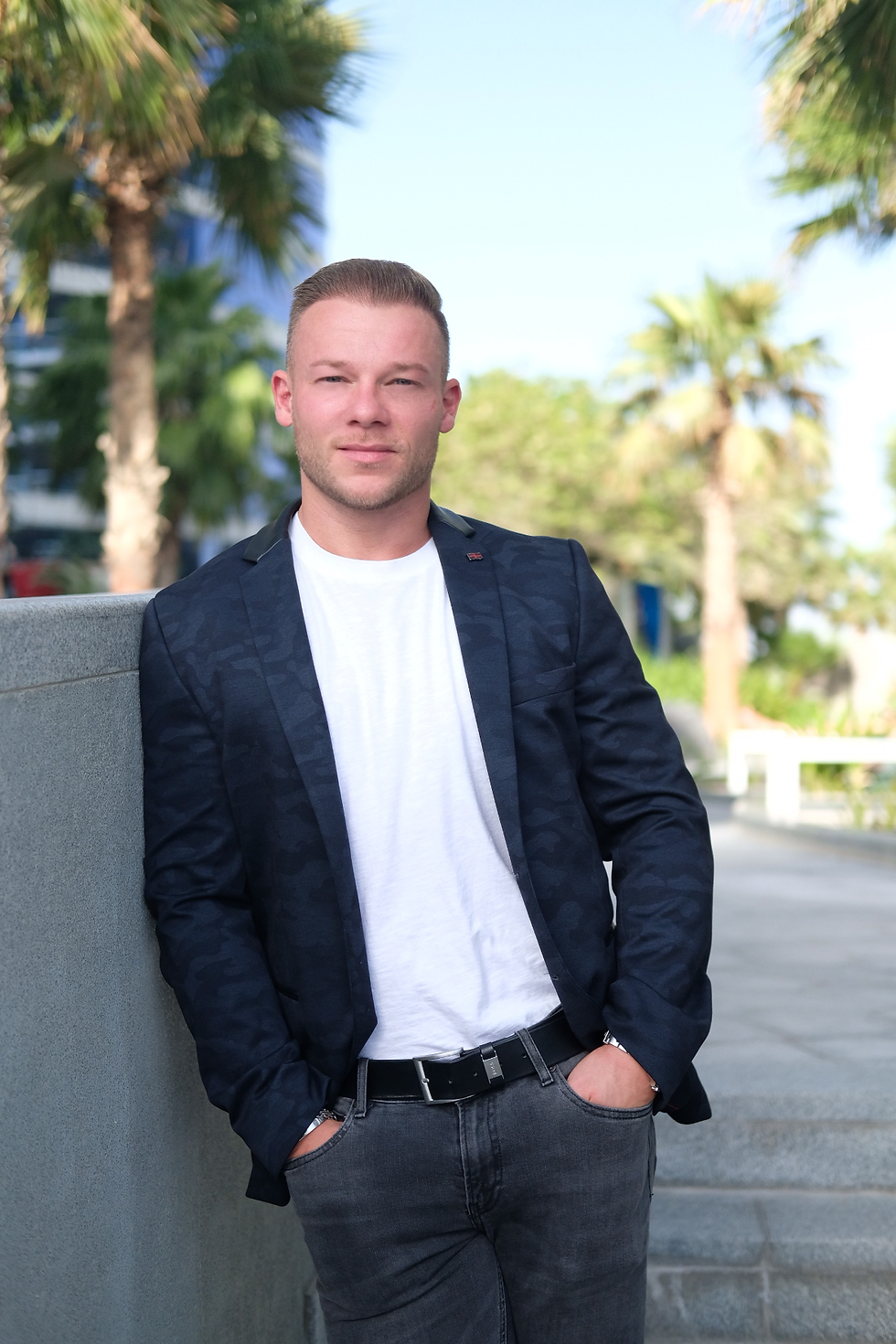
Since starting your career, you’ve run multiple businesses in trading, distribution, and crypto. Where did that journey begin - and what, in particular, attracted you as a traditional entrepreneur to the crypto space?
That's a good question. Entrepreneurship ran in the family, so I basically grew up with it. My father used to be a business manager, then went on to start his own enterprise. My mother launched a one-person trading company in the '90s; at the age of 14, I went to work there during my summer vacation for the first time. When I closed my first sale in the process, it was all over me.
As for entering the crypto space, I think it’s vital for an entrepreneur to keep in stride with the times. So when I first learned about blockchain and crypto back in 2017, I immediately felt it was worth looking into.
Can you reveal more about your current projects? What are you focused on?
In general, I focus equally on all my projects and businesses. However, one or the other sometimes needs more attention. Companies are like children; like any good father, I want my 6 "kids" to be healthy and grow up strong.
At the moment, besides Fitburn - a new-gen fitness app where users get rewarded for going through their fitness routines - I am working on developing new products in the plastic industry, supplements, healthy food, and a sports- & lifestyle wear collection.
Unfortunately, I am not allowed to reveal too much here because some of the products are in the process of patent registration.
Tell us more about Fitburn. How is it different from the fitness apps we are used to?
As I mentioned above, Fitburn is an app that aims to give users much-needed motivation for their fitness journey. With this project, we want to encourage more people to live healthy and active life.
You see, most of today’s fitness apps we know are purely statistical "diaries" that need to be maintained and are difficult for many users to implement into their daily lives. Fitburn is different! It combines classic data analysis of your sporting activity with a highly playful fun factor and monetarization, where you get paid for your workouts.
We follow three essential aspects to make sure our users stick to using the app. First, Fitburn is so user-friendly that people of any age and background can use it. Second, it’s essential to see your progress, so evaluating the training times and the intensity based on the heartbeat is meant to give you an overview of how efficient your training is - and how far you’ve gone.
And third, gamification - such as leveling up your NFT T-shirt - is another reason to keep going to the gym.
Moreover, you expand your possibilities by getting bonuses, discounts, or rewards. Fitness can be very expensive when it comes to buying sportswear, supplements, or healthy food. A gym membership can also be a significant expense, depending on the country you live in. We want to create equality and let everyone go through life healthy and active.
This helps not only you but society by increasing the health level of the population, reducing the burden on the healthcare system, and getting more people to connect through their favorite activities. And lastly, the hoped-for increase in active gym members additionally boosts the economy and helps the fitness industry recover after Covid.
What are the biggest challenges you have faced as an entrepreneur? What were your solutions?
From an entrepreneurial point of view, this was the introduction of one of my main products to the plastics market. The INB®/Mudcontrol® slab enjoyed great popularity after a short time and became the market leader for floor reinforcement without substructure.
But for this, my mother and I, with our first company, were in court about 14 times in one year. We faced warnings, injunctions, slander, character assassination, up to and including threats against us as individuals, and very high costs that almost drove us into insolvency.
This experience was exhausting but also very instructive. I learned many important lessons that still shape my decisions and perseverance today.
My solution was always to fight, stand firm, and grow from my experiences.
As a serial entrepreneur who regularly comes up with new business ideas, how do you know if one will be more successful than another?
First and foremost, it is seeing whether I have a personal interest in the project and can identify with the idea or product. I would never stand behind a project or product I didn't want to represent with 100% conviction.
Second, I conduct extensive market research to check if the idea can be introduced to it as planned or if there might be some pitfalls - so I am well prepared for possible crises.
What have you learned during your journey as a Founder and CEO? Can you give any tips to those just starting out?
You have to stop theorizing: go out there and start doing. It’s acting, not planning, that will take you places, help you reach success or get precious knowledge. Do not be discouraged by setbacks, as new opportunities will always open before you. Use both positive and negative experiences to grow and develop.