A Change Is Gonna Come
Updated: Jan 18, 2024
Written by: Jessie RM Pandya, Executive Contributor
Executive Contributors at Brainz Magazine are handpicked and invited to contribute because of their knowledge and valuable insight within their area of expertise.

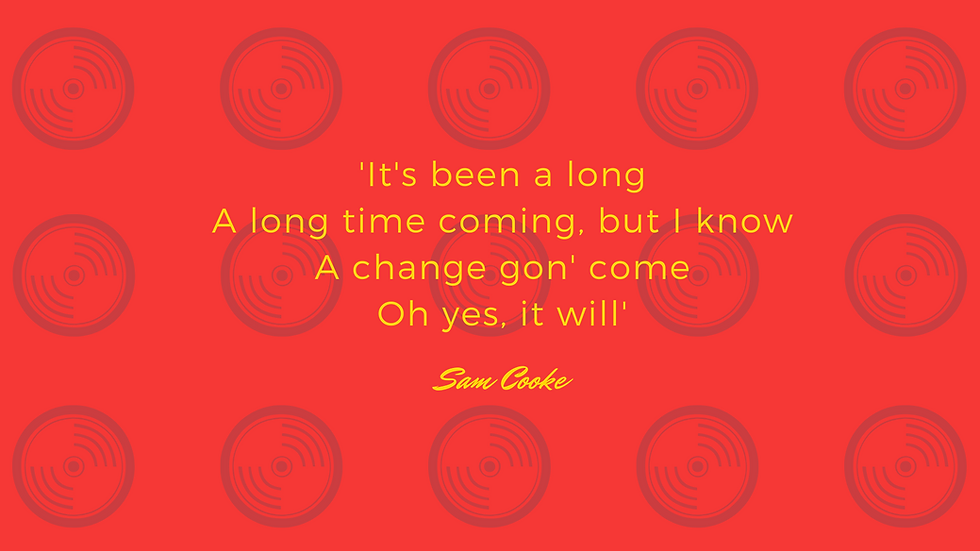
As I write this article the season has changed, winter is coming and the clocks have gone back an hour here in the UK. I’m listening to one of my favourite songs written by the famous American singer/songwriter Sam Cooke called “A Change Is Gonna Come”. The chorus of the song states “It's been a long A long time coming, but I know A change gon' come, Oh yes, it will”. Some changes are inevitable during our lifetimes. However, when we think about change or hear the word change, we feel something emotionally and are often triggered into a state of panic.
Neuroscience teaches us that we are hardwired to resist change because change represents uncertainty. The part of the brain that’s called the amygdala interprets uncertainty and change as a threat. During moments of threat it releases the hormones associated with fear, fight or flight as a way of preparing us and protecting us from uncertainty and change. The brain’s primary job is to keep us safe and alive. It perceives uncertainty and change as a life or death situation and works at protecting against it. Research shows that change creates a painful experience in the brain, much like breaking a bone or being punched. This is why so many of us would rather avoid change at all costs. Further studies have shown that any significant change, even one we welcome, triggers high levels of stress within our bodies.
However, it is often change that brings clients to seek therapy. These changes can include relocation, starting a new job, starting or ending a relationship, dealing with the loss of a loved one, being diagnosed with or dealing with a life limiting illness, or beginning a new phase of life in some form. I will share how an unexpected change occurred in my own life, how it created an upheaval in both my personal and professional life, and led me to seek help from my own therapist. Five months ago, I experienced an abrupt ending within a business coaching relationship. My one-to-one coach, who was assigned to me for twelve months, within a coaching container that I’d invested a significant amount of money in, suddenly announced that, “due to personal reasons” she would be terminating the coaching relationship and leaving. As you can imagine, this came as a huge shock and it had a detrimental impact on me, making it difficult for me to stay focused, grounded and present, especially when it came to working on my business.
As humans we’ve evolved a fight or flight response, and change often triggers a stress response in our bodies. We will typically experience one of four physical reactions: fight, flight, freeze or fawn. Least well known is the fawn response. It is, a trauma response where one tries to please and appease others whilst abandoning one’s own boundaries and needs. It is important to remember that these responses are survival responses and, therefore quick and automatic. These are pre-cognition and cannot be halted by trying to think one’s way into behaving differently.
Even though I was informed that I would be provided with a new one-to-one coach, reassured that she was highly skilled and I would be able to continue to work on my business goals with her, I still couldn’t think or rationalise my way out of feeling ‘stuck’. So, as an integrative somatic trauma therapist I sought the help of my own therapist to support me in creating a different somatic narrative to the ‘stuck’ place I found myself in.
I worked with my therapist on the survival responses, emotionally and physiologically, allowing them to cycle their way out of my body. With the fight response I felt stressed, angry, irritated, frightened, and hurt; physiologically I felt my heart racing as the primitive instinct to attack kicked in. I attended to the fight response by voicing my dissatisfaction in an email to the lead coach and to my new coach. When my numerous requests for a partial refund were denied, I cried, punched pillows, shook and danced. The flight response kicked in emotionally, I felt anxious and worried. I avoided coaching calls, over-thought, asked to leave on numerous occasions and felt a sense of numbness setting in. I sat with the flight response by taking deep breaths, using some grounding techniques and taking power walks. The freeze response showed up emotionally as I felt withdrawn, devastated, empty, shut down and lacking in motivation; physiologically I felt a lack of connection and immobilisation within my body. I tended to the freeze response by taking deep breaths, consciously checking in with my body, shaking my body and dancing. The fawn response manifested emotionally with feelings of apathy and overwhelm. Physiologically, I struggled to connect with myself and my own needs. I addressed the fawn response by shaking my body, checking in with and sharing my feelings and needs with my new coach and creating boundaries to further look after myself.
This unwelcome change, like all changes, provided an opportunity for me to bring the survival responses into an embodied awareness. By allowing them to cycle through my body, I created space to grieve the loss of my coach, be open to the present and focus on what is important for me and my business. I felt empowered to celebrate the gift of a blessed, beautiful and transformative coaching relationship with my previous coach, one I will be forever grateful for and to be reassured by Sam Cooke’s words, “It’s been a long, long time coming but I know a change is gonna come”.
Visit my website for more info!
Jessie RM Pandya, Executive Contributor Brainz Magazine
Jessie RM Pandya, is a U.K. registered Integrative Somatic Trauma Therapist & Coach (MBACP), with over 25 years of experience in the Health, Wellness & Lifestyle industry. Jessie is a dedicated Trauma specialist, with a background in Nursing and Coaching. She is passionate about helping clients to address the root causes of Anxiety, Depression, Burn out, P.T.S.D, and Stress, which might be the result of a past or current traumatic event. Jessie has helped many clients to break free from the Trauma cycle and live to their fullest potential, without years of therapy. Jessie has undertaken further intensive Somatic Trauma Therapy training with world renowned author and trainer in the field of trauma Babette Rothschild. Jessie is passionate about transforming lives, through healing Trauma.