To Treat Or Not To Treat – How Does That Work Again?!
Written by: Alexandra Malone, Executive Contributor
Executive Contributors at Brainz Magazine are handpicked and invited to contribute because of their knowledge and valuable insight within their area of expertise.

In my previous article (which you can find here), I defined motivation and behavior as well as expanded on the definition of operant and classical behavior conditioning. Today I will be focusing on punishment and reinforcement.
Let’s get some definitions out of the way first and then I will expand further on their application in dog training.
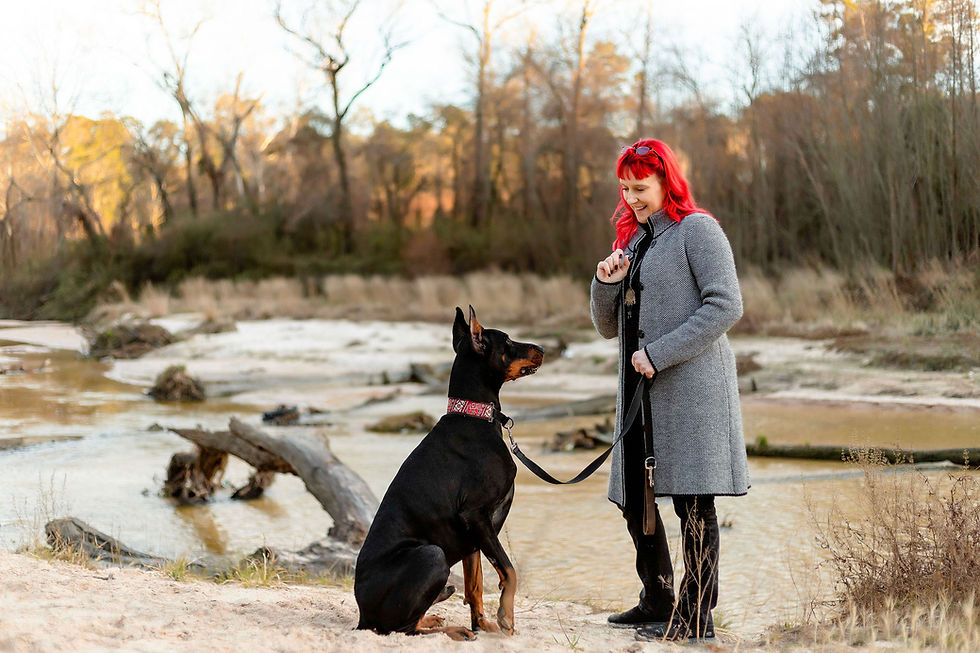
A reinforcer is an event following a behavior that increases the future probability of the behavior. Think of you getting paid twice as you usually would for delivering an article on a subject you love to write about; the likelihood or probability of you writing another article will most likely increase.
A punisher is an event following a behavior that increases the future probability of the behavior. Think of you being yielded at for storing food items in the wrong place while helping to organize the kitchen pantry; the likelihood or probability of you helping again will most likely decrease.
As a quick refresher, let’s look at the 4 types of contingencies of reinforcement and punishment:
Positive Reinforcement is the presentation of a stimulus (usually pleasant) after a response that will lead to the increase of the future response or strength of the behavior. An example would be smiling at a person and the person smiles back at you.
Negative Reinforcement is the removal of a stimulus (usually aversive) after a response that will lead to the increase of the future response or strength of the behavior. An example would be taking headache medication and eliminating the headache.
Within negative reinforcement, we can consider two different types of behavior: escape and avoidance.
Escape behavior results in stopping the aversive stimulus. For example, opening an umbrella as it starts raining stops me from getting rained on so I am escaping from the rain.
Avoidance behavior, on the other hand, is similar to escape but the behavior occurs before the aversive stimulus is presented. For example, if I open an umbrella before the rain starts then I avoid getting rained on.
Positive punishment is the presentation of a stimulus (usually aversive) after a response that will decrease the future response or strength of the behavior. An example would be a dog barking constantly and getting hit with a newspaper.
Negative Punishment is the removal of a stimulus (usually pleasant) after a response that will decrease the future response or strength of the behavior. An example would be a dog jumping on people for attention is put into another room (losing social interaction).
Operant Conditioning is at the forefront of dog training (as well as human training and social interactions). Any dog trainer knows these definitions well and, in one way or another, may use the 4 types of contingencies to train other animals. Nowadays, many trainers avoid – pun intended ‒ using punishment and negative reinforcement in favor of positive reinforcement. A positive reinforcement trainer (also called an R+ trainer) never leaves the home without their treat bag!!
What types of reinforcers can we use in dog training?
There are quite a few choices for us to use from food items to toys, to praise, and a few others in between but for the sake of this discussion, let’s consider a food item – dog treat – as our reinforcer.
In the dog training world, we can present the reinforcer immediately after the behavior occurs or following a delay. The more immediate the reinforcer the stronger the effect on the behavior. For example, if I am teaching a dog to sit, I should give the treat while the dog is sitting. If I instead, give the dog the treat after he gets up, I may be reinforcing the getting up rather than the sit. So, knowing what we are reinforcing and when is very important in dog training.
We can all agree that positive reinforcement is a great way to strengthen behavior. But what are we to do if the behavior we what from a dog never happens?? This is where shaping comes into play!
What is Shaping?
Shaping is the gradual approximation of a new behavior through reinforcement of successive approximations to that behavior. For example, I want to teach my dog to press a lever to automatically feed herself. I can start this process by rewarding my dog as she stands close to the lever. She will stand close to the lever more often. Then I start feeding her only when she faces the lever. She will start facing the lever more often. Next, I will start feeding her only when she touches the lever, and will keep reinforcing approximations to the behavior until she presses the lever hard enough that food will dispense from it. So now my dog has learned to feed herself.
Shaping is a fundamental tool to teach other animals to learn tricks but it also can be used to teach many other behaviors.
So now that we know how to positively reinforce behavior what happens if we stop reinforcing?
In very simple terms, extinction will eventually happen. This means the non-reinforcement of the previously reinforced response will cause a decrease in its strength. For example, if a dog learns to press a button to get a treat from an automated feeder and the feeder will drop a treat every time the dog presses then the dog is reinforced to press the button. However, if the dog presses the button and the feeder is not dropping treats anymore then the dog will slowly decrease his button pressing and eventually stop pressing the button altogether because there is nothing in it for him/her.
With all this psychology behind us now, it is time to go train our dogs. But where do we start? Timing! The timing of the delivery is paramount to the reinforcement of the correct behavior. Once the behavior is learned then the treat delivery timing defines if you are rewarding the behavior or just falling into the trap of having to use a treat every time you would like your dog to display a specific behavior. So, use those treats but watch your timing!
Alexandra Malone, Executive Contributor Brainz Magazine
Alexandra Malone is an accredited and certified dog trainer as well as a certified dog separation anxiety pro trainer and the Founder of The Yin Yang Dog.
She supports and coaches owners of dogs suffering from separation anxiety navigating the process of acclimating their dog to calmly staying home alone using systematic desensitization.
With over 20 years in the animal industry as a veterinary technician, boarding manager, certified dog trainer and separation anxiety coach, elite fear free certified professional, along with graduate work in psychology and anthrozoology, Alexandra has helped hundreds of owners and their dogs overcome behavioral challenges while focusing on their emotional wellbeing.
When she’s not helping owners help their dogs with separation anxiety, she’s probably working with her dogs, or creating oil and acrylic paintings.
Her motto: Keep calm and trust your dog.