Paris, Where Love Never Goes Out of Style
Updated: Oct 16
Written by Alexandra Bronckaers, Independent Journalist
Alexandra Bronckaers, an independent journalist who blends fashion, technology, and culture into sharp, contemporary storytelling. Moving seamlessly from entertainment television to print publishing, she now writes globally on beauty-tech and the trends shaping creative industries.

It has travelled through the centuries without ever truly growing old. Monumental yet intimate, popular yet sophisticated, Paris belongs as much to Piaf as it does to Fashion Week, to the cafés of Saint-Germain as to the nights that stretch until dawn. A city that is not content simply to be beautiful, it continues, tirelessly, to seduce.
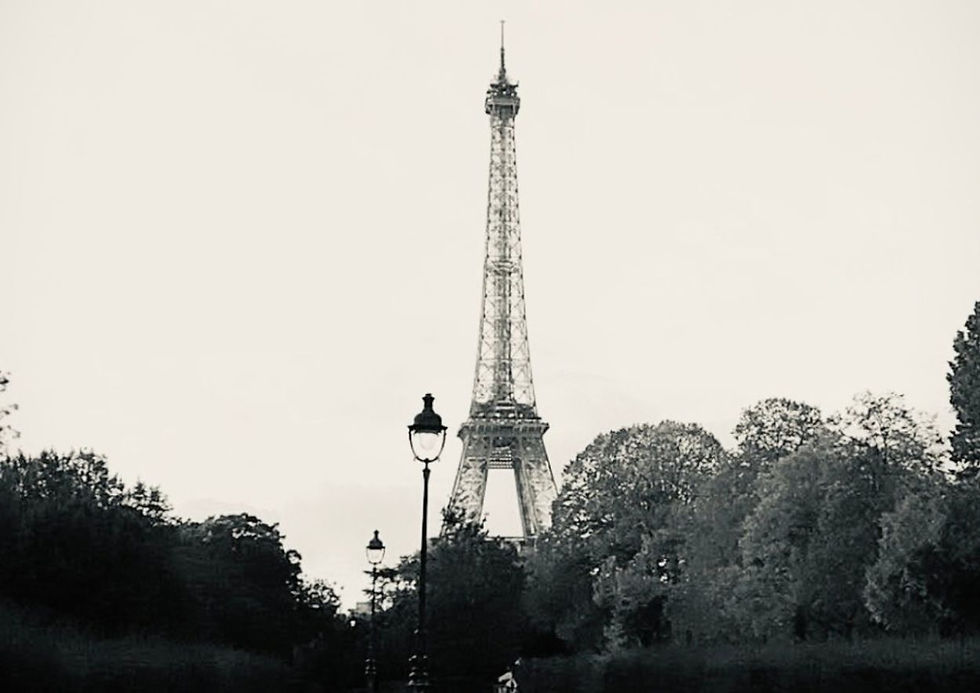
There are cities you visit, others you admire. Then there is Paris. A city you feel. Sometimes, a few hours are enough. A certain light on the Seine, the reflection of a building in a window, the sound of a café terrace, a hurried silhouette on Boulevard Saint-Germain. Paris possesses that strange ability to transform perfectly ordinary scenes into images that stay with you.
Of course, there are the monuments. The Eiffel Tower appearing suddenly behind the façades of the Trocadéro. Notre-Dame reclaiming its place in the Paris skyline. The Louvre and its pyramid, the Arc de Triomphe at the end of the Champs-Élysées, the Sacré-Cœur overlooking Montmartre. The Musée d’Orsay, housed in its former railway station, and, at the other end of the spectrum, the extraordinary industrial architecture of the Centre Pompidou, currently undergoing a major transformation.
But to reduce Paris to its monuments would be to miss the essential.
A city made for walking
Paris is perhaps best discovered without a plan. Stroll along the banks of the Seine, cross the Latin Quarter, wander up towards Saint-Michel, lose yourself in the Marais, slip through a covered passage, step into a bookshop, emerge an hour later, and sit down at the first café terrace you find.
There are the Tuileries, the Luxembourg Gardens, the gardens of the Palais-Royal, Parc Monceau, and the Buttes-Chaumont. The bouquinistes, the markets, the florists, the corner bakeries. The Haussmann buildings, with their wrought-iron balconies and grand carriage entrances, but also Art Deco, private mansions, courtyards invisible from the street, and those architectural details you sometimes notice only after walking past them a hundred times.
Paris has a knack for hiding its treasures in plain sight. Above all, it does not have one face, but dozens. There is an extremely bourgeois Paris and a popular Paris. The Paris of Avenue Montaigne and the Paris of Belleville. That of Saint-Germain-des-Prés, the Batignolles, Canal Saint-Martin, Montmartre, or the Marais. A few stops on the Métro are enough to change the scenery, the people, the restaurants, the music, and, sometimes, almost the country itself.
That too is Paris, a global city that has somehow preserved an astonishing collection of villages.
The past is never far away
Because behind the Paris of 2026, another Paris is always wandering. The Paris of Édith Piaf and Maurice Chevalier, of Colette, chansonniers, cabarets, and dance halls. The Paris of accordions, brasseries with velvet banquettes, cafés where artists, writers, and intellectuals spent entire afternoons talking, writing, falling in love, or putting the world to rights.
Yet this memory feels nothing like a museum. It coexists with sneakers, bicycles, concept stores, and phones resting on café tables. In Paris, the eras seem to have reached an arrangement, none has ever truly agreed to give way to the next.
It is probably this mixture that makes the city so singular. You can have lunch beneath century-old mouldings and, a few hours later, discover a radically contemporary installation. Have coffee where writers and painters once had their favourite tables, then dine in a restaurant whose cuisine seems to belong to tomorrow.
A capital that creates
Paris, after all, does not live on its heritage alone. It continues to create something new.
Paris Fashion Week and Haute Couture Week still set the rhythm of the international fashion calendar. There is Chanel, Dior, Louis Vuitton, Saint Laurent, Balenciaga, and all the great houses that helped build the mythology of the capital. But Paris also knows how to make room for young designers, independent ateliers, vintage, new boutiques, and those who come here precisely to invent the next silhouette.
The same energy runs through the art world. The Louvre, Orsay, the Orangerie, Picasso, Rodin, the Palais de Tokyo, the Musée du Quai Branly, Jacques Chirac, the Bourse de Commerce, the Fondation Louis Vuitton, alongside galleries and private foundations. The Fondation Cartier, now established on Place du Palais-Royal within Jean Nouvel’s architecture, illustrates in its own way this distinctly Parisian ability to bring contemporary creation into the very heart of its history.
Exhibitions, fairs, photography, design, cinema, theatre, dance, concerts, in Paris, culture is not a backdrop. It is part of the city’s movement.
At the table
Then, of course, one has to eat. Paris knows how to make the Michelin-starred restaurant coexist with the twenty-seat bistro, the palace hotel with the counter, the world-famous chef with the tiny address you almost hesitate to share with friends for fear of never getting a table again.
There are the great brasseries, the white tablecloths, the mirrors, the platters of oysters, the pastries that look like jewels. But there is also the morning croissant, coffee taken at the counter, the lunch that lingers on, and that very Parisian moment when, towards the end of the afternoon, the terraces slowly begin to fill again.
Then comes the hour when a bottle of champagne appears in an ice bucket. Paris changes tempo.
When the light fades
Night does not erase Paris. It reveals another version of it. The monuments light up, the bridges are reflected in the Seine, boats glide across the water, and the Eiffel Tower sparkles above the city. In fine weather, the riverbanks fill with people, terraces spill onto the pavements, and bars grow crowded. There is a particular elegance to seeing Paris at night. The streets empty. The noise softens. The façades reappear. The Seine turns almost black, and the lights sketch out a city that feels far more secret.
Then come the clubs. Paris also has that cosmopolitan nightlife that draws artists, models, stars, and billionaires from around the world. Some nights begin over dinner, continue in a hotel bar, veer towards a party whose address no one really knew a few hours earlier, and end just as the first cafés are already beginning to serve their espressos.
Always in motion
Perhaps this is where the Parisian paradox lies. Everything seems already to have been said about this city, and yet it continues to produce new stories. It is called classic, yet it adores the avant-garde. It is thought of as bourgeois, yet it can be bohemian. It cultivates luxury but cherishes its markets. It protects its monuments while building tomorrow. It can be spectacular and then, two streets later, become almost provincial.
Parisians themselves continue to discover it. A new exhibition, a hidden terrace, a garden they had never entered, a street taken by chance. Perhaps the true privilege of Paris lies there, being able to live in it for years without ever quite reaching the end of it.
Paris, of course
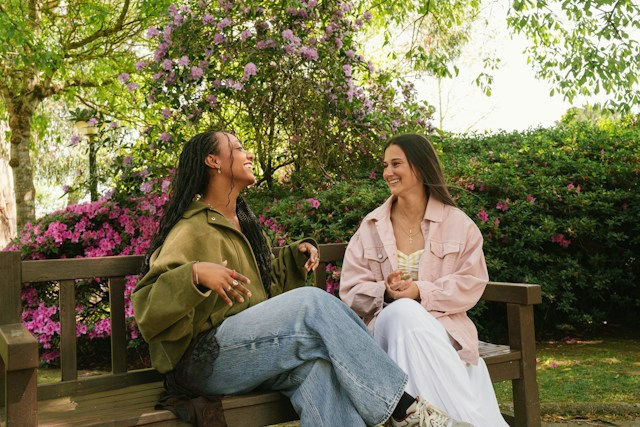
Then there is love. The love that has clung to Paris for so long it might seem like a cliché, were it not still everywhere. On the riverbanks, where two people sit facing the Seine. On café terraces, where stories begin. In front of the Eiffel Tower, where marriage proposals continue to take place. On the Pont des Arts, once covered in padlocks left by lovers from all over the world. The padlocks have disappeared from the railings. The symbol remains. Because Paris, in the end, never needed a lock to hold on to those who love it.
People come to Paris for the architecture, the fashion, the art, the gastronomy, the history, the nights, or simply to walk. They often return for one reason alone.
Because one day, without quite knowing when it happened, they fell in love with it.
Visit my website for more info!
Read more from Alexandra Bronckaers
Alexandra Bronckaers, Independent Journalist
Alexandra Bronckaers is a widely recognized independent journalist, former editor-in-chief and publisher, with 30+ years of expertise across fashion, beauty-tech, art, culture, and lifestyle. Her work blends sharp analysis with modern storytelling, exploring innovation, creative shifts, and industry transformation. Working internationally, she highlights the leaders, creators, disruptors, and cultural forces reshaping our era.