The “President’s Way” to Effectively Manage Time — And he Made it!
Written by: Rodolfo Parlati, Executive Contributor
Executive Contributors at Brainz Magazine are handpicked and invited to contribute because of their knowledge and valuable insight within their area of expertise.

Everything started from a famous quote attributed to US President Dwight D. Eisenhower, "I have two kinds of problems, the urgent and the important. The urgent are not important, and the important are never urgent.”
It is well known that during his whole life, he held several positions. He was 34th President of the United States, 1st Supreme Commander of NATO, General of the US Army, President of Columbia University, husband, father, and a passionate golf player, to name a few. So, it’s easily understandable how time management could be important for him.
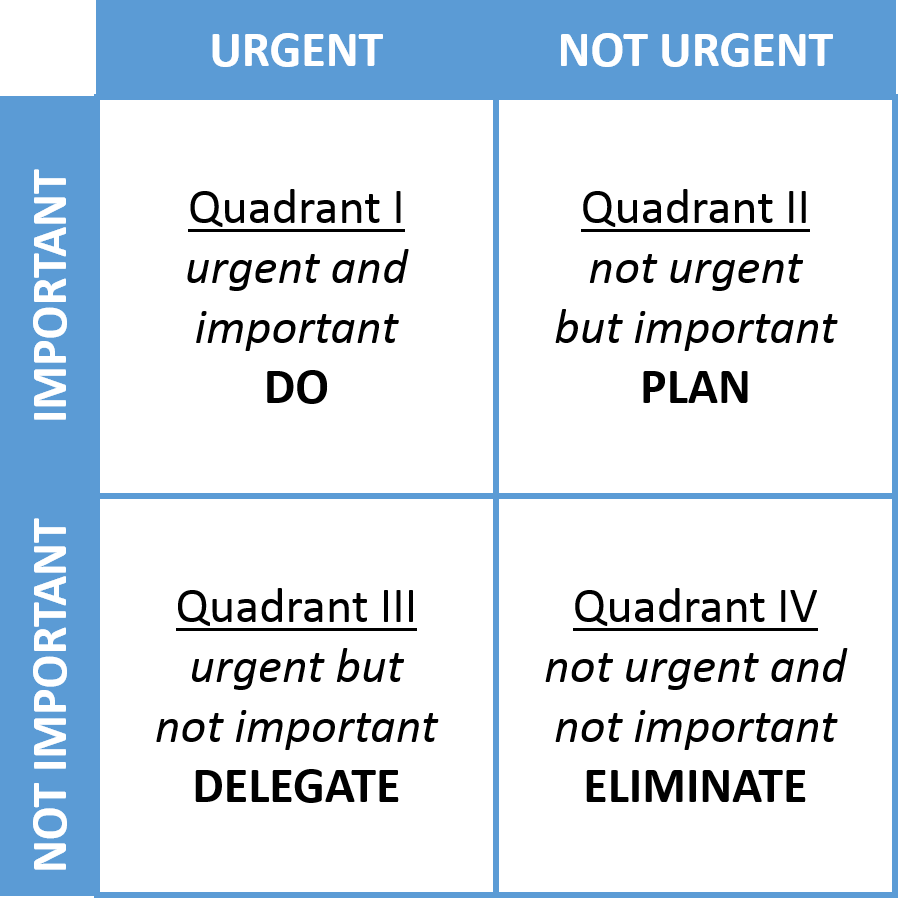
Starting from the two principles mentioned in the quote, urgency and importance, it was possible to subsequently generate a tool, known as “Eisenhower Matrix,” in which you can evaluate your tasks based on the two principles and then choose which ones deserve your focus, and which ones not. Let’s take a closer look at it!
Quadrant I: Urgent And Important Tasks
In this quadrant, the activities are considered both urgent and important. They require our immediate attention and are also crucial to achieving our long-term goals, values, and fulfillment in life. These tasks usually relate to aspects like urgent and important deadlines, problems, or crises. Here are some examples of these:
Health problems
Unforeseen events related to home, children, accidents, and similar
Tax deadlines
Some important communications
Housework
In this case, the “trap” can be to confuse urgency with importance. Urgency leads to more anxiety and nervousness, while importance refers to rationality and calmness. With effective planning, organization, and prevention, many of these tasks can be better managed or significantly limited. The key question to make is always: “Do I need to do this?”
Quadrant II: Non-Urgent And Important Tasks
The activities of this quadrant are the ones that, despite the absence of a pressing deadline, help you achieve your important personal and professional goals. These tasks are generally focused on planning for the future, improving yourself, and strengthening relationships. Here are some examples:
Long-term planning
Learning
Quality family time
Exercising
Financial planning
Meditation
These are the ones that can guarantee you happiness, success, and a deep sense of accomplishment. So, you should mainly focus on these activities because they are the ones that can make a big difference.
There are often some blocks and limitations that prevent you from dedicating the necessary time and efforts to this kind of task. In particular, every time you have a distorted perception of the present moment or when you don’t have a clear idea of what it’s important for you. So, you need to live your life intentionally, consciously, and proactively.
Quadrant III: Urgent And Unimportant Tasks
In this quadrant, the activities require your immediate attention, but, at the same time, they do not help you fulfill your mission or achieve your goals. In most cases, it’s about interruptions from other people asking for your help in meeting their goals and fulfill their priorities. Some examples of these activities are:
Phone calls
Most emails
Text messages
Requests for solving trivial problems
People just dropping in unannounced and interrupting your work.
Many people love helping others find solutions or solve their problems, but the fact is that these are important for them, not for you. This can lead you to distrust your abilities, higher frustration, or even resentment towards those people in the long run. Therefore, it’s crucial to delegate as much as possible and create the right balance by prioritizing your tasks and goals and overshadowing the other requests.
Quadrant IV: Non-Urgent And Unimportant Tasks
In this case, the activities are neither urgent nor important. It’s mostly about distractions. Some examples of such activities involve:
Playing video games
Watching TV
Browsing the web mechanically
Gambling
Scrolling through social networks mindlessly
Shopping
Such activities are completely time wasters and do not add value to your lives. Hence, be aware and pay attention to give them the right amount of time. Precisely, only 5% of your waking hours should be spent in these activities. After all, casually surfing the Internet or watching your favorite TV show for a short time can help you relax after a busy day. What counts is not to exaggerate!
Act as the President
At this point, I hope you are considering to have invested your time in reading this article! Yes, because time is the most precious resource you have in your life. It slowly erodes without prior notice. So, why not invest rather than spend it? Seriously think of maximizing the tasks contained in quadrant II. They are the ones that help you move the ball and feel to improve and make progress in your lives. When involved in an activity, ask yourself: “Am I doing it because it’s important, or because it’s urgent?” Begin to act as the President, but mostly be your own President!
Rodolfo Parlati, Executive Contributor Brainz Magazine
Rodolfo Parlati is a Professional Life & Executive Coach. Always inspired by the desire to impact others positively, his mission is to help people and professionals be happy and successful by finding out their inner potential and exploring the right path to follow to "give shape" to their goals. Passionate about building connections, the key elements of his coaching strategy are creating meaningful actions to attain the clients' goals, knowing what is holding them back, and supporting them in finding higher awareness. His natural curiosity has always driven him to be an eager lifelong learner, explore new fields, and look for the answers to any question.