The “Aha” Moment ‒ How Patterns Will Help You Understand Quickly
Written by: Prakash Rao, Executive Contributor
Executive Contributors at Brainz Magazine are handpicked and invited to contribute because of their knowledge and valuable insight within their area of expertise.

When do you “get” something? When someone explains a concept to you, at what point does it “click”? In his landmark work “Lateral Thinking”, Edward de Bono explained that the mind is a pattern-making, pattern-matching machine.

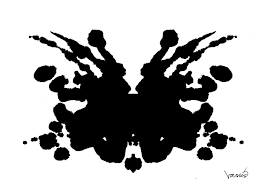
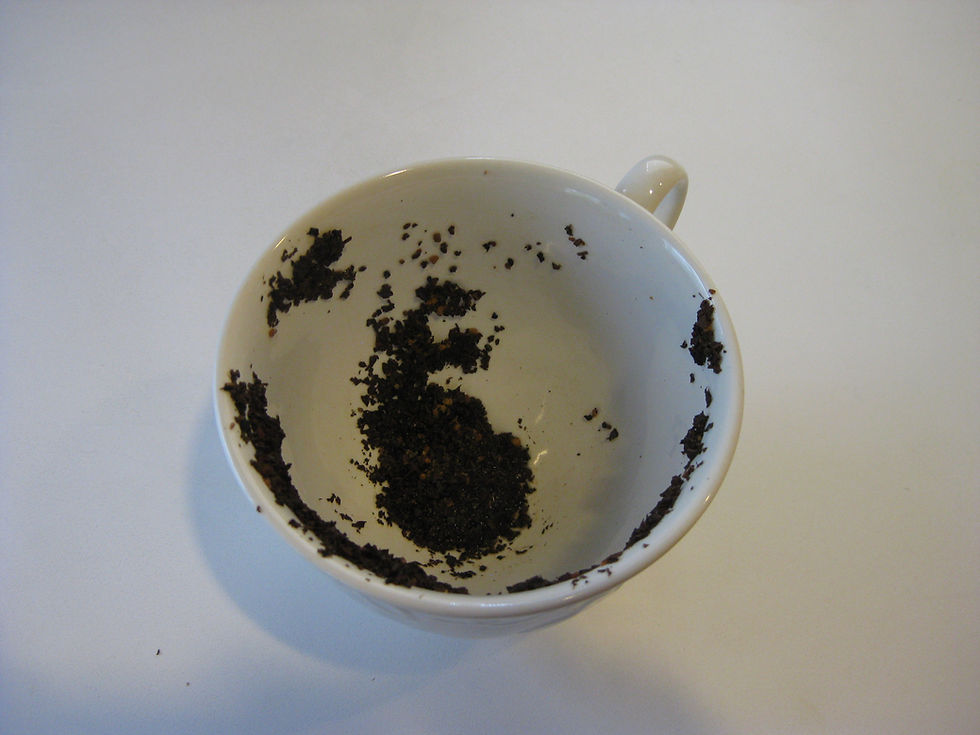
This is why we see patterns in clouds, ink blots, and tea leaves. We see patterns in everything everywhere. This is the insight that we have, the fundamental block of knowledge that everything is built upon. When we encounter new information, we try to fit it into the existing pattern. If it does not fit the pattern, the mind is supposed to restructure the inner pattern in order to accommodate the new information. This is the process of “broadening the mind”. Some people reject new information that does not fit the pattern already in their minds. They are the “narrow-minded” ones, those who ultimately become bigots and fanatics. Those who accommodate the new information learn and grow.
Back to the original question: The “Aha” moment happens when the brain expands its inner pattern to fit the new information and the new information literally “clicks” into place. The analogy of a lightbulb going on in the brain is more apt than you can imagine. The creation of a new pattern is almost always accompanied by a burst of mental energy which is why you feel elated when you “get” it. It is a positive feeling, an uplifting experience.
The trick to understanding, therefore, is to be willing to broaden your mind. When you encounter new information, try to fit it within your mental pattern. If you find a natural fit, see how you can expand your pattern to fit in the new information.
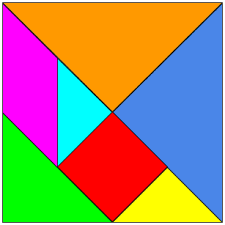
The best analogy I have is the same as Edward de Bono used: If I present you with a set of tangrams one at a time, you must constantly disrupt the neat arrangement you have created in order to accommodate the new piece. Imagine that the world is a large tangram set and that you are indeed being fed the pieces one at a time. Visualize that large, expanding tangram arrangement. This is your mind at its best.
Pattern-making and pattern-matching come naturally to children. As we grow older, we impose restrictions on the patterns. These restrictions are artificial. In truth, there are no restrictions, and thus no limit to what we can learn and when. The world belongs to lifelong learners. As Eric Hoffer said, “In times of change, the learners will inherit the earth while the learned will be beautifully equipped to deal with a world that no longer exists.”
Here's to lifelong learners.
Prakash Rao, Executive Contributor Brainz Magazine
Prakash Rao is learning skills guru. He transforms middle school and high school students into super learners. After a career in software development and consulting, Prakash pursued his interest in self development and helping children learn to learn. In this, he is following in his mother's footsteps - Dr. Indira S. Rao developed this methodology as part of her Ph.D. program with Prakash as the subject. Prakash is now the preeminent expert in Dr. Rao's methodology and has made it his mission to unlock children's learning potential and unleash the inner genius.