It’s Not The Year, It’s The Mileage
Written by: Deirdre Morrison, Executive Contributor
Executive Contributors at Brainz Magazine are handpicked and invited to contribute because of their knowledge and valuable insight within their area of expertise.

When you love driving, and get behind the wheel of a classic, it’s not unlike your brain in a way, and here's why.
First, for transparency, I love cars. I’m not a total petrol head, but I’ve got a minor collection of classics (putting the fun in the kids’ college fund…), including two Peugeot 205 GTi 1.9s. These iconic hot-hatches would have broken the internet, had there been an internet when they first burst onto the scene. There’s no doubt that they’re well into the category of motoring history now.
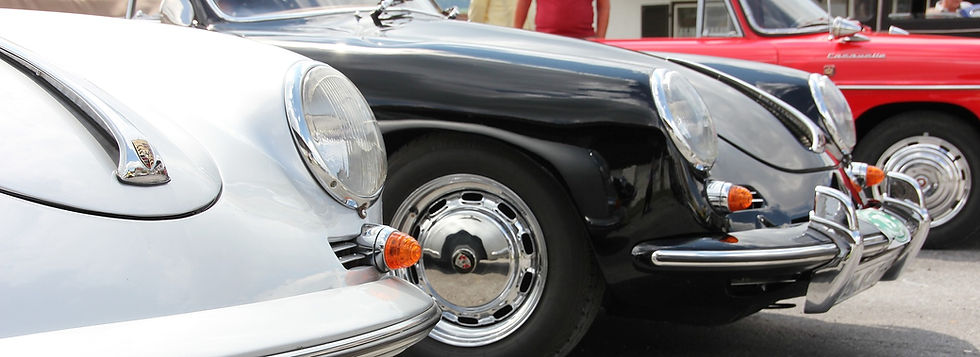
Now, apart from their classic looks, sporty performance, and ability to attract cash offers wherever they go, there’s another thing I really love about them – and that’s how different these two cars are from each other.
They were both built in the same year, to the same spec.
And yet they are distinctly different to drive. And this is actually a great analogy for our brains.
See, they had previous owners before I got them.
And in the years before they came to me, various aspects of how they were driven and cared for, along with the inherent variance and tolerance of the engineering, started to create these divergent characteristics.
And this is why I say it’s like the human brain. We’ve all got one, and biologically, they’re fairly similar. But the things that have gone into making our lifetime of experience mean they end up handling things pretty differently.
If I were to describe the two cars, I’d say that the Miami Blue is the wild one. It feels skittish, like a colt, just wanting to break all the rules and go waay too fast.
By contrast, my black one feels far more self-assured, and dare I say it, a little smarmy.
The fact that I’m describing two inanimate objects as though they have personalities is not the point.
The point is that over time, our care, handling, and biological variance and tolerance, also help create traits that make us different from each other. Some of those qualities and characteristics are helpful and effective in our lives, and some are not.
When a car develops an issue, we notice and send it to a mechanic to be fixed, or it’ll get picked up during a regular inspection. But quite often, we develop our characteristics so slowly, or they've been part of us for so long, that we don’t even consider changing them. We may not even notice them, or assume that they’re ‘just the way we are’. And that’s great if these are characteristics or traits that are helping us be at our most effective.
If they’re getting in the way, and negatively impacting our actions, reactions or interactions, then it’s not so good.
So, on a day to day basis, having a brain is a bit like these sporty little classics. You don’t need a mechanic to drive your brain – I mean let’s face it you’ve been doing that your entire life. But let’s look at it this way, you’re going to get a lot more out of it, and have a lot more fun depending on how good your driving skills are right? I mean, the charms of a 205 GTi are totally lost on my mum, for example.
But if you know a few pro driving tips, and have an idea what’s going on under the hood, it’s going to help, right? Just the day to day stuff – you don’t need to be able to rebuild the engine! We’re not talking about brain surgery or rocket science here – just some of the useful things that come out of the field of neuroscience. It’s actually incredibly fun, and can help you take the brakes off your progress as well as enhancing performance, and generally making the ride through life a lot less like being stuck in a frustrating gridlock, and a lot more like an epic road trip.
I’m not taking offers for either of the cars, btw, but, as it happens, if you want to find out how you can use neuroscience tools and techniques to learn some advanced driving skills for your brain, there is still time to get a call booked with me to see how it can help you tune up your performance, so you can make hit milestone along the journey, and make 2022 one to remember. Ambitionincubator.com is the place to go to find out more.
Deirdre Morrison, Executive Contributor Brainz Magazine Deirdre Morrison is the founder of The Learn for Life Hub, including the Ambition Incubator platform and podcast. Her mission is to deliver practical tools from the field of neuroscience to help entrepreneurs and leaders be happier, healthier, more effective and successful in all the areas of their lives that matter to them.
Deirdre is an advocate of life-long learning, an interest that ultimately led her to study applied neuroscience.
She works with individual clients primarily through her N=1 programme, which creates a unique brain-science informed toolkit, based on the client’s unique circumstances and needs. She also hosts a number of small group events, including monthly TED Circles, and development groups based on dynamic co-readings of business classics. Registration for these is available via ambitionincubator.com
Her other interests include the Japanese sword art of Kendo, road cycling, and reading.