Interview With Hilary Rowland, Co-Founder Of Next Chapter Retreats
Hilary Rowland founded Next Chapter Retreats with her business partner Peter Hyson following an accomplished career, with more than 30 years experience in business advice, professional speaking, coaching and HR. She has worked with senior executives across numerous companies including the BBC, PWC, Academy for Chief Executives, and a variety of SMEs.She's passionate about helping individuals find their sense of purpose and then live it.
They have had considerable success with their unique retreats over many years working with senior executives in groups, witnessing how effective the power of people working together can be on their personal development. This approach allows the creation of an environment for true reflection and exploration by taking participants ‘off-grid’, free from the distractions of their professional and personal lives, and with the time to work at real depth.
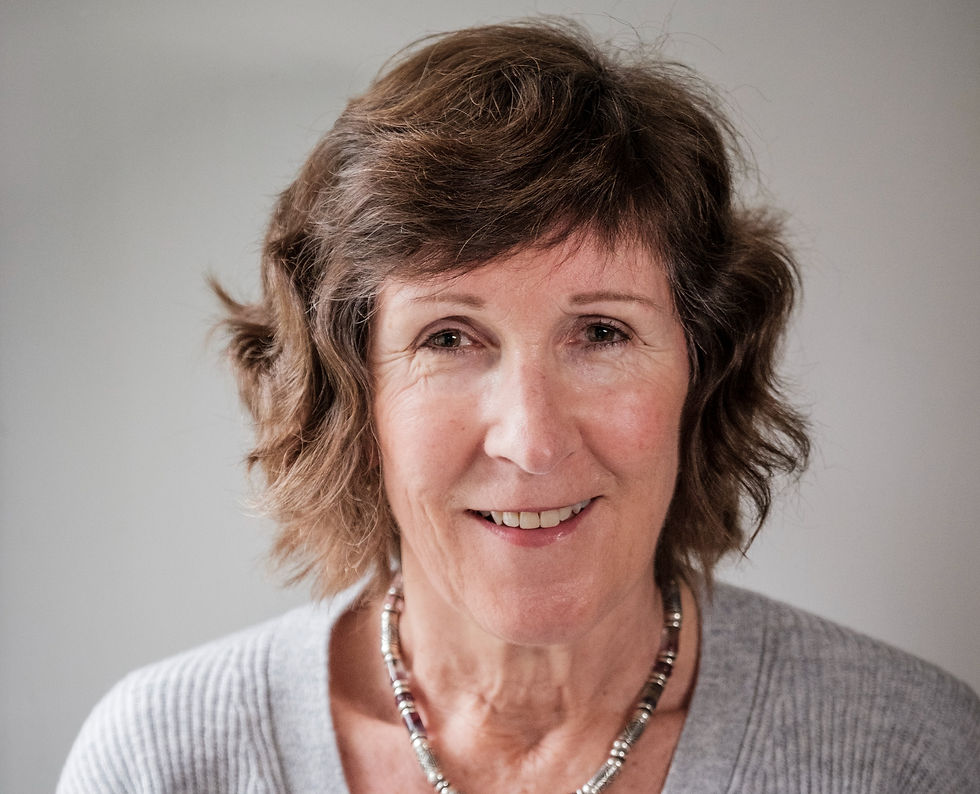
Hilary Rowland, Co-Founder Of Next Chapter Retreats
1. What does Next Chapter Retreats do? We work with successful people who may have lost a sense of purpose and direction, have run out of steam, gone off the boil and those who want to get back to their best. Our clients know the power of investing in their own personal growth and development, they are emotionally intelligent and self-aware. We help nurture that awareness into action, leading to a more fulfilled life, bringing focus, renewed energy and impact for themselves, their business and their family. 2. What led you to start Next Chapter Retreats? Two things:
Someone once said, ‘Many people die with their best music un-played’ and we think that’s a tragedy.
We’ve been running retreats for CEOs of SMEs in peer learning groups for some years and we were struck by the extent they were valued. New people joining the groups were told by other group members, ‘Listen up, you mustn’t miss this. This is the highlight of the year’. One person changed the dates of their surgery to be there.
We thought to ourselves, ‘We’ve got something really important here and it’s too valuable to be restricted only to people who have signed up to a peer learning group.’ We wanted to take them to a wider audience. Both my business and life partner Peter Hyson and I had suffered our fair share of crossroads moments in our lives, including cancer diagnosis, divorce and redundancy. We didn’t want our best music to go un-played so we embarked on Next Chapter Retreats in 2019.
3. Who is it for? What would lead someone to think about going on one of your retreats? People get knocked off course in many different ways. Sometimes they suffer a traumatic event such as a relationship breakdown or a medical diagnosis or they might hit a brick wall like redundancy or looming retirement. It might have to do with the stages of their life, for example, a midlife crisis. Sometimes people have a chronic sense of dissatisfaction, a sense that something in their life isn’t working for them anymore and they need to make some changes, for example, a change of career. For example, people who came on our last retreat included a partner in an accountancy firm who wanted to change careers, an MD who wanted to take their leadership to the next level, someone in their early sixties who wanted to think about the last years of their working life and someone whose lifestyle was killing them. We were able to work with them all successfully, seeing some real breakthroughs.
4. How do the retreats work? We give people the opportunity to step back, have space and time to think, plan and write their next chapter. We offer structured activities which enable them to tell stories of themselves at their best, when things haven’t gone so well and what really matters to them. This enables them to connect or reconnect with a sense of purpose and direction. Our core product is a five-day retreat over three months. We have a break of ten or eleven weeks between the first part and the second part which gives people the opportunity to explore new opportunities and /or embed new mindsets and habits. We can cover the same ground in three months in a retreat as it might take in a year with one-to-one life coaching. We work in small groups as we find that is much more powerful than individual coaching, though we offer that if people need it. In groups, people support each other, provide a range of new perspectives and ideas. Obviously, confidentiality is crucial to building this kind of enabling environment. 5. What major challenges have you encountered and how did you overcome them? Our retreats are designed as residential breaks, so when the pandemic hit in our second year of trading it railroaded our growth plans. We had to try to switch to virtual delivery almost overnight and it took its toll on us. We didn’t embrace virtual because that’s not the nature of our retreats, we were strong enough to know our product and our audience and survived the pandemic by being true to ourselves and using it as time on the business to get everything business ready. We’re people and not being in front of our audiences was very difficult. But we were not defeated. We focused on business planning, growing and engaging with our target audience, business development, and personal brand growth. We spent a long time testing our concept, reiterating, preparing new content, stress testing it and refining what we do. What was particularly rewarding was running our first post-lockdown retreat in June which went extraordinarily well and completely surpassed our expectations. 6. What keeps you motivated? Just seeing the enormous changes in people’s lives. We work at depth but in a gentle, light touch kind of way. We never force people to go anywhere they don’t want to, but we find that people are prepared to open up and look at difficult areas of their lives that are holding them back.
7. What holds you back?
Comparing myself with other entrepreneurs who look much more successful, trying to live up to my own unrealistic expectations, pushing myself too hard, not saying ‘no’ enough.
8. What’s next?
We’re seeing many people in senior management teams who have been adversely affected by lockdowns and working from home. They have taken to working long hours and working in unproductive ways which have diminished their energy and contribution. What’s worse is that it’s happened slowly and unnoticeably to the point where burnout and languishing are ‘normal’ ways of being.
Not only that but they’ve been cut off from each other. The endless Zoom meetings, which were certainly better than nothing, but now that we’re meeting face-to-face, it makes us realise how much we’ve missed. Senior management teams have become quite dislocated and disconnected from each other, operating at a transactional level rather than in an engaged committed way which would be required of them.
We’re offering in-company team retreats which provide the opportunity for senior management teams to reconnect, a combination of reflection and discussion both at a personal and at a business level. Being able to be honest about their current state paves the way for further openness about what the real issues are. Retreats are a great opportunity for the team to spot the gaps, see what’s not working and start to sort it out there and then.
Hilary Rowland
November 2021
www.thenextchapter.guru
hilary@nextchapterretreats.guru