Empowering Black Women's Mental Health – Exclusive Interview With Dominique Flint
Dominique Flint is the owner of Free To Be Counseling Services, LLC which is a virtual counseling private practice committed to providing mental health care to Black women. She started this practice understanding that Black women have unique mental health care needs. This practice is invested in meeting Black women where they are and empowering them to create the kinds of lives they desire. Her areas of expertise include anxiety, trauma, stress, PTSD, relationships, and women's issues. She is a Certified Clinical Trauma Professional with plans to continue growing her expertise as her priority is to provide interventions and services that are current, evidence-based, and individualized.
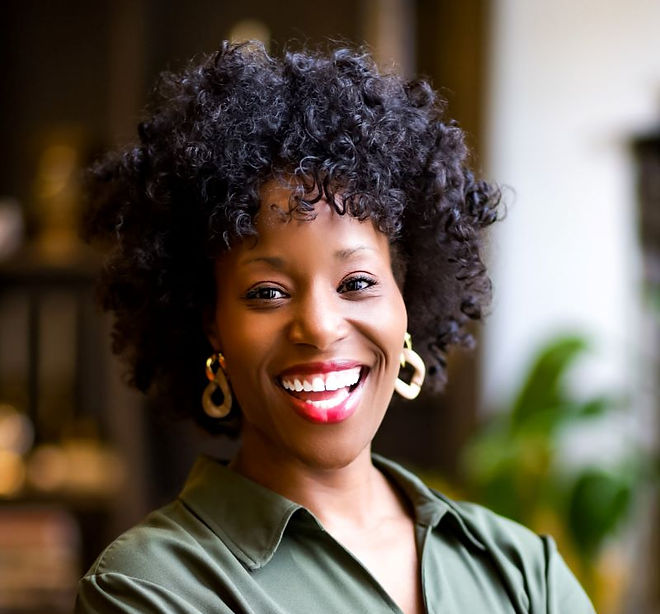
Dominique Flint, Licensed Professional Counselor
Introduce yourself! Please tell us about yourself and your life so we can get to know you better.
Hello! My name is Dominique Flint, and I am a Licensed Professional Counselor. I currently work as a therapist in an extensive private practice, and I own a private practice called Free To Be Counseling Services, LLC. I initially got into Counseling because my father is in recovery, and I always wanted to be part of an industry committed to serving people. I completed my Master of Science in Education in 2013 at Youngstown State University. My clinical emphasis was in addiction counseling. I enjoy spending time with my family. I love learning, and like most therapists, I have tons of books, but I do not have enough time to read them all. I am committed to being a lifelong learner and continuing to improve my clinical skills professionally and in my personal life. I have a son who is four years old, so he was born six months before the COVID-19 shutdown. It was an exciting and stressful time for all of us. At that time, so much was happening, motivating me to want to learn as much as possible. For me, there was something about the protests of 2020 and having a Black son that gave me this desire to know about the meaning of blackness in a way that was not only comforting but also enlightening, as I am now responsible for making sure this person understands himself. That felt important to me. It also allowed me to get to know myself.
Can you share more about your experiences working as an Intensive Outpatient (IOP) adolescent drug and alcohol therapist, particularly in developing programs such as anger management and young adult IOP programs?
Working as an Intensive Outpatient (IOP) therapist was such an incredible experience. I started working in an outpatient facility in September 2013 as an IOP adolescent drug and alcohol therapist, and it was an experience! The population I was working to support was primarily mandated clients, as they were part of the juvenile justice/legal system. Many of them had experiences I could not at all imagine. One of the needs that we found while I worked in this role was that many of our adolescents had challenges managing anger. Many of those adolescents were struggling with anger because they were also experiencing trauma and, more specifically, complex PTSD. We decided that creating a curriculum that discussed anger but also incorporated psycho-education related to understanding the impacts of stress, anxiety, and trauma and its impacts on the body, relationships, and our ability to manage our emotions would be more advantageous to that population. I was also allowed to develop a curriculum for a young adult IOP program. We noticed at the time that I was working for this facility that there were so many young adults who committed to IOP after completing Inpatient (IP) detox and rehab, but many of them did not feel seen or understood in an adult IOP group. At the time, my colleague, who also became my supervisor, helped position me to create a curriculum for the young adult IOP program that would address young adults' specific and unique needs. These two experiences were pivotal in my career, allowing me to work in program development.
In your current private practice setting, what specific techniques or methodologies do you employ to help adult clients understand their attachment styles, manage stress, cope with complex PTSD, and navigate anxiety effectively?
Working in private practice is its own experience. The beauty is that people seeking services do so because they are interested and invested in improving. Some of the strategies that I utilize include psycho-education about stress, anxiety, trauma, and PTSD, and attachment theory and the impact it has on their relationships with themselves and with others. Some other techniques I use include Motivational Interviewing, techniques from Cognitive Behavioral Therapy (CBT), Dialectical Behavioral Therapy (DBT), self-compassion, mindfulness, grounding, and other self-soothing techniques. The most important techniques are rapport building, empathy, collaboration, unconditional positive regard, and non-judgmentalness; the therapeutic experience is fostered through these functions and is essential for connection and trust.
As a counseling private practice owner, what are your primary goals and priorities in terms of fostering a supportive and inclusive environment for both clients and staff and how do you envision the future growth and direction of your practice?
The goals and priorities of my practice are to provide counseling services to Black women who are looking to improve the areas of their lives that have resulted in experiences of anxiety and trauma and to help them live authentic lives. The reason why I named my practice Free To Be Counseling Services is that, on the other side of anxiety and trauma is freedom. These experiences and conditions can be so limiting. When you are free to be whatever you want, there are opportunities to be authentic, develop trust in yourself, and practice self-love. My main goal is that anyone who meets the criteria for services receives individualized care that is well-researched, contemporary, and clinically sound. I believe in a therapeutic setting, it is essential to work collaboratively.
Collaboration means that my expertise does not dismiss your lived experience. I value my client's lived experiences as it is vital to the work we are doing together, and it validates their existence. My future goals for the practice would be to add supervision services for therapists looking to become licensed, as well as coaching services for parents and those experiencing trauma.
Tell us about your greatest career achievement so far?
My most outstanding career achievement is that every position since graduate school that I have accepted has been unique and, as a result, has given me great opportunities to perfect my clinical skills and build confidence in my clinical orientation. While on this career journey, I have worked in community mental health and drug and alcohol settings, which were both outpatient settings. I have worked as a family therapist and an emergency department social worker in inpatient settings. I have also worked as an Employee Assistance Program (EAP) advisor for an insurance company in a more corporate setting. Now, I work as a private practice therapist and own a counseling practice. All of those experiences have prepared me for this moment. Those experiences have helped me understand what I like about the field, what clinical settings precisely align with my skills and my goals for supporting clients, and what areas of the clinical relationship are my strengths. I appreciate that each career opportunity has taught me something profound about myself and the work I am privileged to do.
If you could change one thing about your industry, what would it be and why?
One of the things that I would change about the industry is the challenge that companies face regarding the need to balance the capitalistic agenda of excelling financially and finding ways to expand the work being practiced clinically. One of the things that I think is lacking is an infrastructure that properly trains clinicians to broaden their expertise, knowledge, and skill set. I also noticed little emphasis placed on quality supervision, which is essential in helping new clinicians develop confidence in their clinical skills, develop their clinical philosophy, and discuss and explore any countertransference issues that occur while building therapeutic relationships with clients. Some of my experiences in this field have shown that companies tend to favor the need to grow and maximize profits while giving little energy to train clinicians to transform their skills effectively. Some of these decisions are not just about a lack of resources, which I believe is a part of this systemic issue. As a result of these decisions, the product loses investment. In my experience, investing in the product creates opportunities for clinicians to feel supported and valued.
Tell us about a pivotal moment in your life that brought you to where you are today.
As a therapist, I also have my struggles with anxiety. I have experienced childhood traumas that have resulted in my journey through perfectionism, issues with control, symptoms of Complex PTSD (CPTSD), and unrealistic expectations about my future and every decision I make. What has been so pivotal about these experiences is that I never understood, until doing the work, that healing is about embracing who you are, not getting rid of the parts of you that have experienced hard things. It is also about accepting that I will never be who I was before the trauma. That person is gone. I now have to embrace this new individual. The moment I started to accept myself, working through my traumas and anxiety became much more manageable. Another thing that I have grown to learn is understanding that the healing process is an inside job that requires grace, self-compassion, personal accountability, honesty, strategy, support, and self-acceptance.
Read more from Dominique Flint