Integrating Gender Neutrality Into Leadership Pronouns
Written by: Santarvis Brown, Senior Level Executive Contributor
Executive Contributors at Brainz Magazine are handpicked and invited to contribute because of their knowledge and valuable insight within their area of expertise.

In my previous article, I wrote about the importance of using gender identity pronouns to bring inclusivity into the workplace. By using gender pronouns, you, as an empowered leader, are showing your employees and colleagues that you respect and value who they are. Respect and value are the keys to becoming an empowered leader. These are the catalyst for an empowered workplace where everyone contributes, and the leader provides a supporting role for success and advancement among employees.
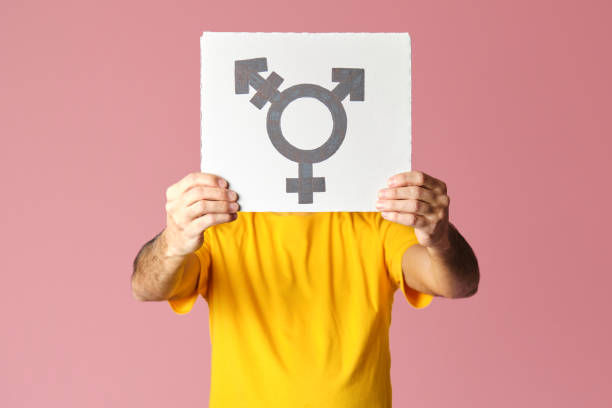
Individual gender pronouns are important to understand and use in the workplace. Today, I would like to discuss the importance of pronouns for a collective purpose. The goal is to respect and value individuals while at the same time bringing people together to accomplish the big picture.
Recently, I read an article that caught my attention, “Why We Decided to Add We/Us/Ours to Our Pronouns.” (Lind, Trevino 2021). The article presented why the LGBTQI+ and gender-inclusive communities have added these beyond gender identity pronouns to their list of gender pronouns.
This excerpt provides a good explanation, “…we added three other pronouns beyond gender identity (we/us/ours) to honor and identify other salient and collectivist social identities. As a Chicano and a woman, respectively, the pronouns we/us/ours signals that we are members of groups that consider themselves a “people.” That is, we are in solidarity within our respective groups, see ourselves in community, and have a history and a culture that bind us together with those social categories.”
That excerpt got me thinking about our workplace. Are we, at work, much different than we are in our own social or cultural groups at home and where we grew up? I don’t think so. In our workgroups, we share common goals, common needs, and common understanding among our peers. We, from different cultures, backgrounds, and life experiences, come together to form our own collective group with unique and shared interests.
The pronouns We/Us/Ours help to build unity in the workplace while also respecting individualism. There is also another reason why gender-neutral pronouns are important. It is a way of leading with inclusiveness in the workplace while also appreciating that gender identity is often fluid. Meaning one’s gender identity may change over time. In fact, a 2019 Pew Research survey showed that about 20% of Americans know someone who prefers to go by a gender-neutral pronoun. And 25% of Gen Z polled said that they expect to change their pronouns at least one time in their lifetime. Gen. Z represents people born between 1997 and 2012 and is the youngest group in today’s workforce. Other studies have shown that Millennials, the first real internet-influenced generation, shares many social cues with Gen. Z. This is a simple indication of the importance of gender identity pronouns as well as gender-neutral pronouns in the workforce.
As empowered leaders’ gender-neutral pronouns develop a habit in the workplace that respects the fluidity of a person’s gender as well as brings together the team, your workgroup, as a collective social identity.
We are Going to Succeed.
The Common Goal Belongs to Us.
The Future is Ours.
Santarvis Brown, Senior Level Executive Contributor Brainz Magazine
Dr. Santarvis Brown has spent 15+ years serving as a leader, innovator, and changemaker in education, showcasing in-depth insight as an administrator, educator, and program director. A noted speaker, researcher, and full professor, he has lent his speaking talent to many community and educational forums, serving as a keynote speaker. He has also penned several publications tackling issues in civic service, faith, leadership, and education.